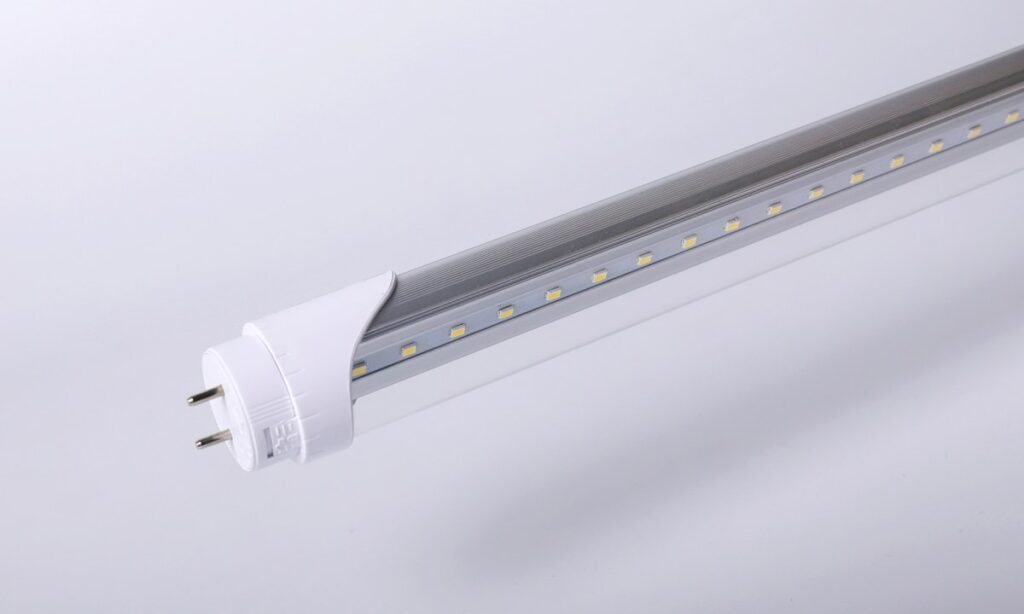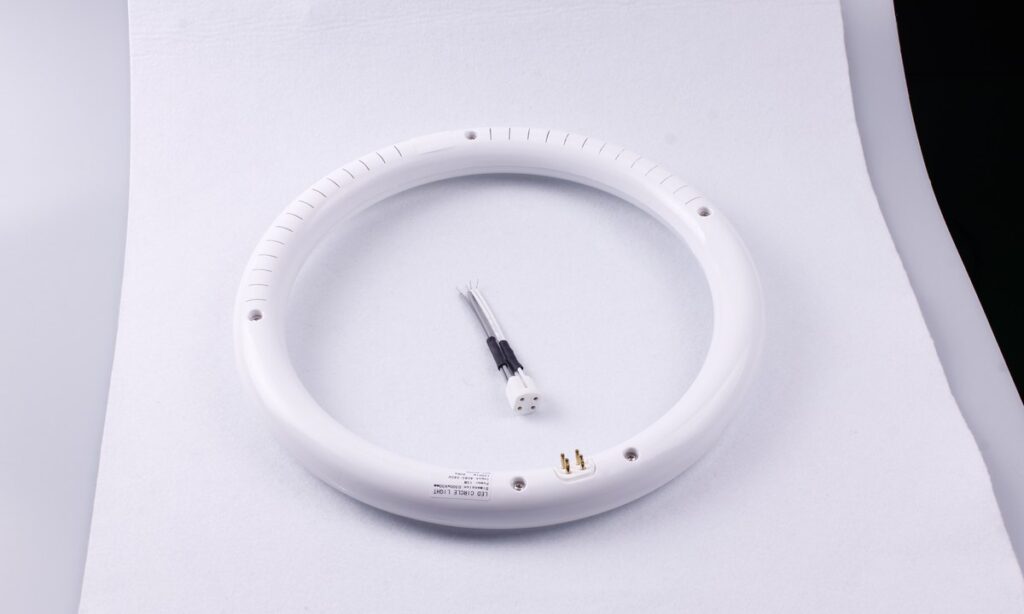


High-bay fixtures can hang above warehouses, production equipment or plant canopies, but a similar round housing does not make their lighting data interchangeable. A warehouse needs light for human vision and tasks. A horticultural space needs photons delivered to plants.
This distinction changes the units, data files, layout calculations and acceptance test. The current New Lights product is a horticultural UFO LED high bay, so this guide focuses on crop lighting. Wattage alone cannot determine canopy PPFD, uniformity or daily light integral.
| Decision layer | Define | Evidence |
|---|---|---|
| Crop target | Crop, stage, photoperiod and target DLI | Cultivation brief |
| Source output | PPF, spectrum and input power | Model-level test report |
| Spatial delivery | Mounting height, spacing and canopy area | PPFD map and layout |
| Operating environment | Temperature, humidity and airflow | Rated limits and site survey |
| Installation | Suspension, retention, cable and controls | Approved drawing and inspection |
Decide Whether the User Is a Person or a Plant
For warehouses, workshops, sports or retail areas, define illuminance on relevant horizontal and vertical task planes. Review lumens, intensity distribution, uniformity, glare, color rendering, correlated color temperature and temporal light modulation.
For horticulture, define crop, cultivar, growth stage and whether electric light supplements daylight or provides the sole source. Review spectral power distribution, photosynthetic photon flux, canopy-level PPFD, daily light integral and spatial uniformity.
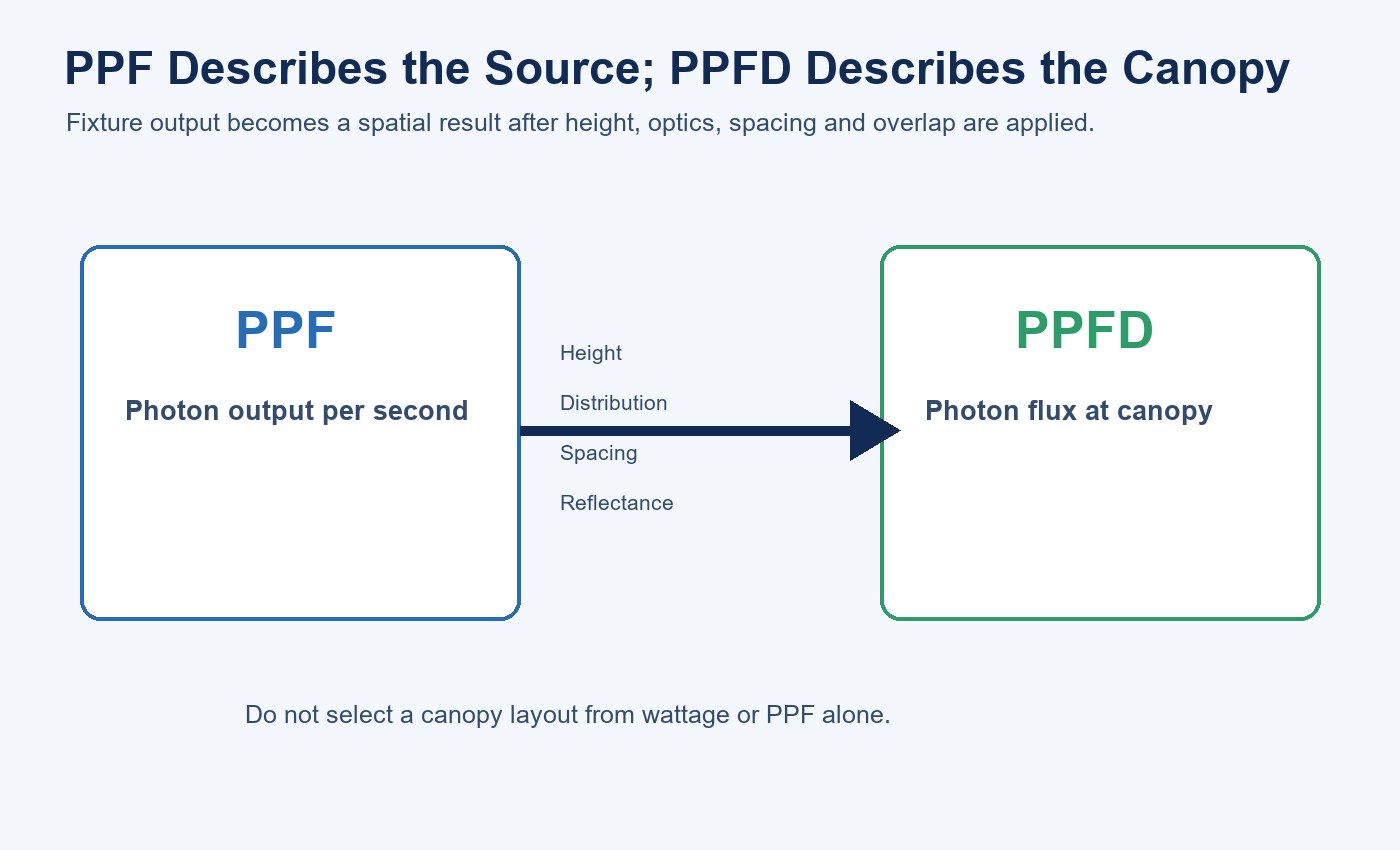
These data sets are not interchangeable. PPF tells how many photosynthetic photons a fixture emits each second; it does not tell a warehouse designer the task illuminance. Lumens are weighted for human visual response; they do not define the photon dose a crop receives.
If a space combines workers and plants, design and verify both requirements separately.
Survey the Space Before Choosing a Product
Record room length, width and clear height. Measure the proposed mounting height above the task plane or canopy, not only the floor-to-roof distance. Map racks, cranes, ducts, machinery, skylights and high-reflectance surfaces.
Identify work zones, aisles, storage faces, loading areas and emergency routes. Tasks on vertical rack faces may require a different distribution from open-floor work. Moving equipment can create shadows and glare.
Document ambient temperature, humidity, dust, water exposure, chemicals and electrical supply. Note how the fixture will be reached for cleaning, driver service or replacement. The best initial layout can become costly if maintenance requires disruptive access equipment.
The horticultural lighting system planning guide provides a full crop-brief-to-commissioning workflow, while the desktop grow-light temperature guide explains why the canopy microclimate must be measured rather than inferred from room temperature.
Set Measurable Lighting Targets
For human visual tasks, use applicable project, workplace and destination-market criteria. Define maintained average and minimum illuminance, uniformity and glare limits for each zone. Measure on the plane where the task occurs.
For crops, set target PPFD and DLI with the cultivation team. Include daylight contribution, photoperiod and expected canopy height over the cycle. Define a uniformity measure and acceptable edge loss.
The grow-light coverage and PPFD method shows how to convert a crop target into a measurement grid. For linear systems, the T5 grow-light PPFD, spacing and DLI guide provides a useful comparison of source output and spatial delivery.
Do not copy a generic wattage-by-height chart without checking its assumptions. Ceiling height does not reveal floor reflectance, aisle width, fixture distribution, target light level or obstructions.
Request the Correct Photometric Package
A warehouse high bay should have model-level lumen output and an IES or LDT file. The file allows calculation of intensity and illuminance across the actual geometry. Request input power, efficacy, CRI, CCT, color tolerance and flicker data for the offered driver and optical option.
A horticultural high bay should have an SPD and PPFD distribution maps at defined heights and footprints. PPF and PPE support source comparison but do not reveal canopy intensity or uniformity.
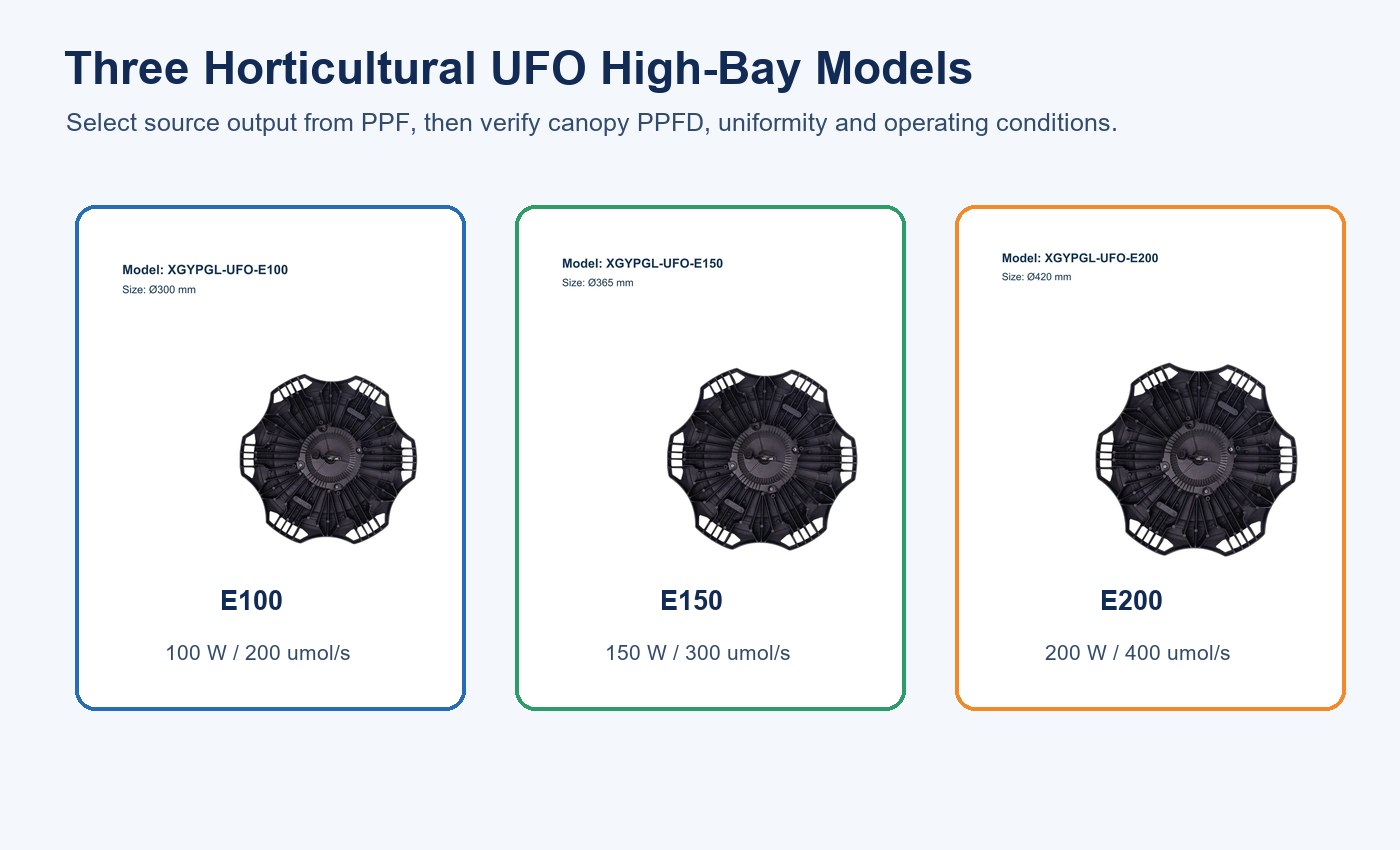
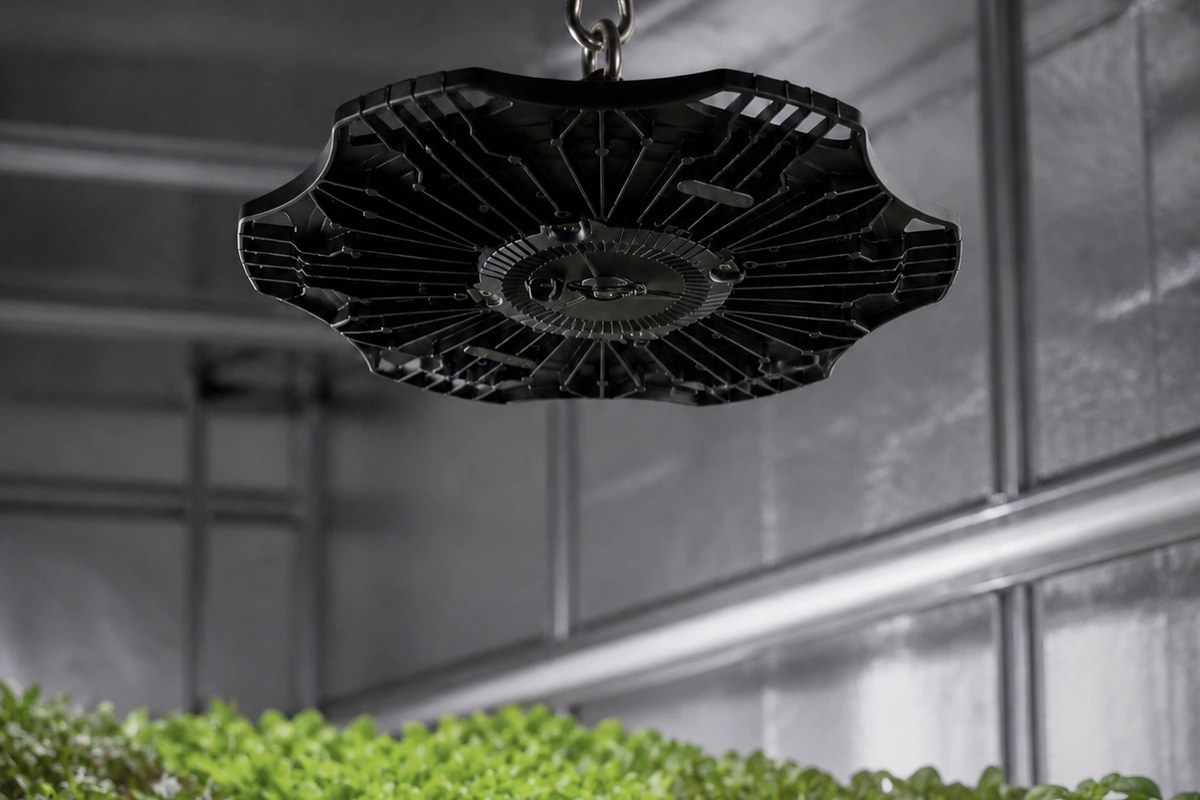
The current New Lights Horticultural UFO LED High Bay family lists XGYPGL-UFO-E100, E150 and E200 at 100, 150 and 200 W. Their listed PPF values are 200, 300 and 400 micromoles per second, with a listed PPE of 2 micromoles per joule. Those are plant-lighting fields. The current product page does not position the family as general warehouse lighting.
| Model | Listed input power | Listed PPF | Listed PPE |
|---|---|---|---|
| XGYPGL-UFO-E100 | 100 W | 200 μmol/s | 2 μmol/J |
| XGYPGL-UFO-E150 | 150 W | 300 μmol/s | 2 μmol/J |
| XGYPGL-UFO-E200 | 200 W | 400 μmol/s | 2 μmol/J |
Treat Product Identity as a Hard Gate
The same round UFO form can house different LED spectra, optics and drivers. A horticultural spectrum should not be relabeled as a warehouse high bay because the enclosure looks familiar.
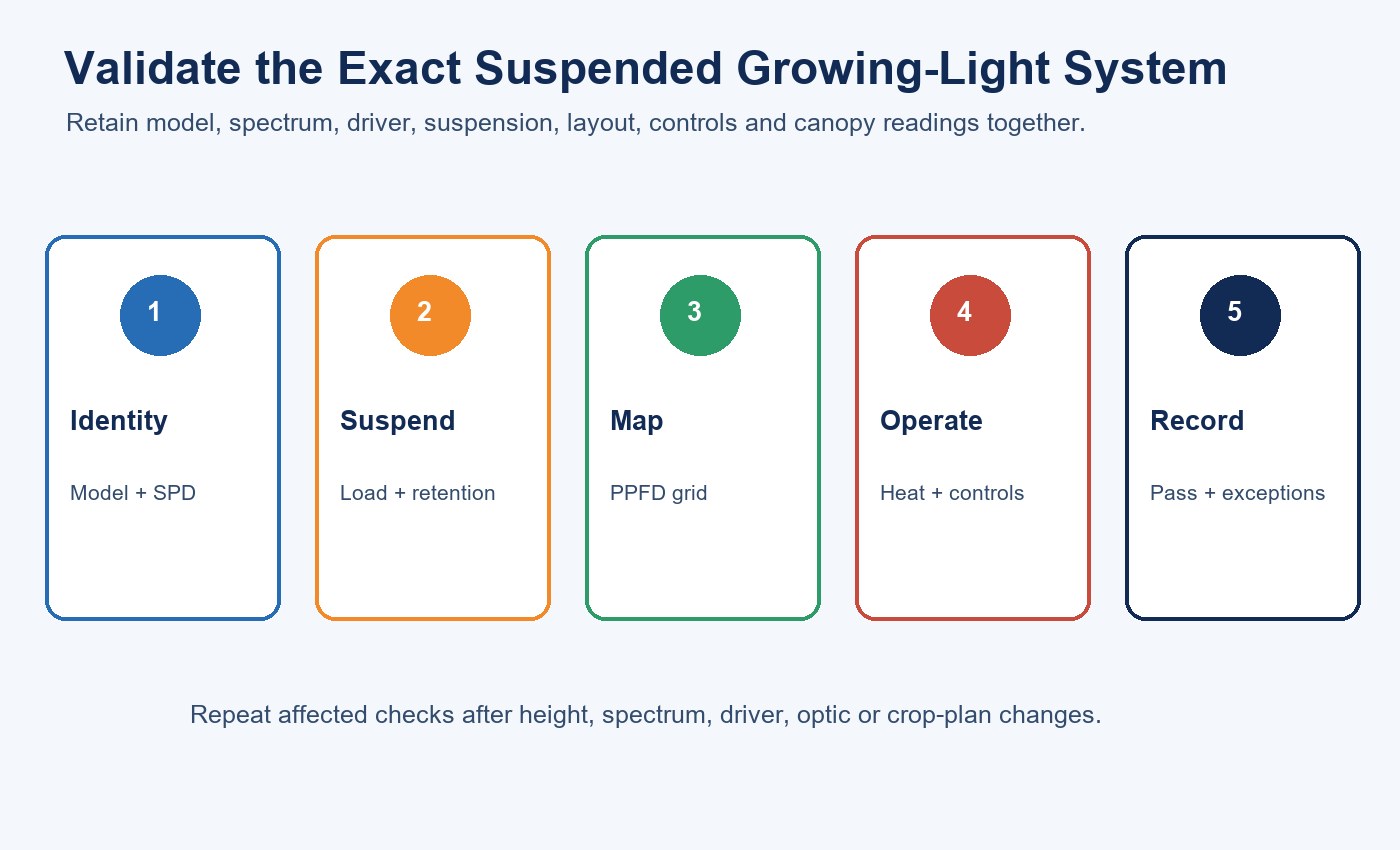
The quotation, sample, test report, label and production order should all carry the same model and configuration identity. The broader horticultural lighting system guide helps connect that identity to the crop brief and commissioning plan.
If chips or spectrum are customized, obtain revised power and photometric data. Do not continue using the standard catalogue row after a change that affects output.
Choose Distribution and Spacing Together
A broad distribution can cover a wider area at moderate height, while a narrower distribution can project more intensity from a higher position. Neither is universally better. The layout must control dark areas, hot spots and glare.
Use photometric software to test fixture spacing, mounting height and orientation. Review horizontal floor or task planes and relevant vertical surfaces. Check areas under racks, between machines and near walls.
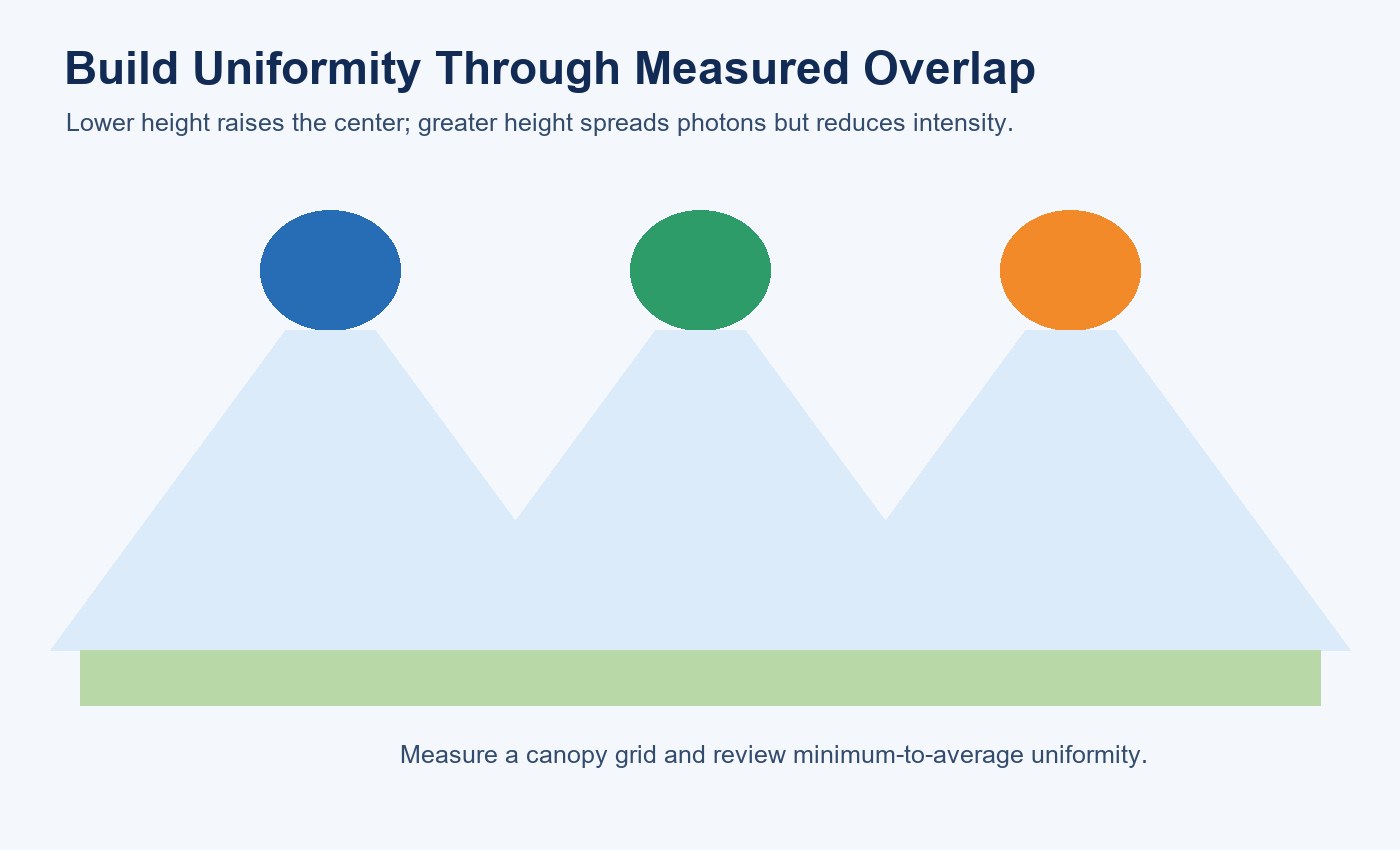
For horticulture, map overlap between fixtures on the canopy grid. Lower mounting may increase center PPFD but reduce the effective footprint. Higher mounting can improve overlap while reducing intensity.
Do not calculate spacing from a nominal beam angle alone. Real distributions, room reflectances and obstructions matter.
| PPFD-map input | Record | Decision supported |
|---|---|---|
| Canopy plane | Height, dimensions and expected crop growth | Grid position and mounting reference |
| Fixture configuration | Exact model, spectrum and driver | Source identity |
| Layout | Height, spacing and orientation | Center level and overlap |
| Environment | Walls, racks, reflectance and daylight | Edge behavior and supplemental-light contribution |
| Schedule | Photoperiod and dimming state | DLI calculation |
Control Glare and Visual Contrast
High-output sources can be uncomfortable when directly visible from normal viewing positions. Review fixture luminance, optics, shields and mounting relative to workers and vehicle operators. Computer screens, polished floors and metal surfaces can reflect bright images.
Observe the proposed layout from forklifts, platforms and elevated walkways. A fixture that appears above the usual standing view may be directly in an operator’s line of sight.
Extreme contrast between bright work zones and dark surrounding areas can reduce visibility. Improve background and vertical illumination instead of increasing only the central high-bay output.
Select Color and Temporal Performance
Choose CCT and CRI according to the visual task, material identification and neighboring light. For inspections involving color, request detailed color-quality evidence rather than relying only on a minimum CRI.
Review temporal-light-modulation data where rotating machinery, fast motion, cameras or sensitive occupants are present. A “no flicker” icon without waveform and conditions is not enough.
For horticulture, spectrum is a crop input. Keep human color-rendering claims separate from plant spectral objectives. Confirm any working-light requirement for staff independently.
The full-spectrum versus red-blue grow-light guide explains why spectrum comparisons must remain tied to crop objectives rather than color appearance alone.
Plan Controls from the Operating Pattern
Warehouses often have intermittent aisle occupancy, daylight at doors or skylights and different shift patterns. Occupancy sensors, daylight control, scheduling and zoning can reduce unnecessary operation when properly commissioned.
Confirm the dimming protocol, sensor compatibility, minimum level, standby behavior and power-recovery state. Check detection at full rack height and with moving equipment. Avoid one large control zone that turns on an entire building for a single aisle.
Horticultural controls follow photoperiod and DLI strategy. They may also respond to daylight. Do not use an occupancy-based logic that interrupts the crop schedule.
| Control item | Verify | Acceptance evidence |
|---|---|---|
| Dimming interface | Protocol, range and minimum level | Command and output test |
| Schedule | Time base, override and recovery state | Multi-cycle observation |
| Daylight response | Sensor position and target | Logged PPFD or DLI behavior |
| Power recovery | Default state and restart timing | Controlled outage test |
| Zoning | Group boundaries and crop stages | Commissioning record |
Check Environment and Mounting Safety
Verify operating temperature at the luminaire, not only room average. Heat can collect near a roof. Cold starts, dust, humidity and chemical exposure require documented limits. Match the IP rating to the exact model and assembled cable entry.
Obtain fixture weight, suspension hardware, mounting torque and safety-cable requirements. Confirm structure capacity and seismic or vibration requirements where applicable. High-bay installation should be performed by qualified personnel with safe access and electrical isolation.
Plan driver access. If the driver is replaceable, verify the procedure and parts. If it is integral, include full-luminaire replacement in lifecycle planning.
The indoor grow-light safety and certification guide can be used to structure market, electrical, mounting and labeling evidence for the exact configuration.
Evaluate a Retrofit with Measurements
Do not promise one-for-one replacement based on old and new wattage. Survey existing light levels and operating conditions, then model the proposed layout. Existing spacing may have been designed for a different distribution.
Measure baseline energy and illumination. Include controls, emergency circuits and maintenance condition. After installation, repeat measurements at the same grid and operating state.
Calculate savings using verified input power, schedules and control behavior. Avoid generic percentage claims. Check whether reduced heat affects the facility’s heating or cooling loads only when the project analysis includes it.
Build a Mockup and Acceptance Grid
Install representative units at the intended height and spacing. For visual lighting, measure task-plane and vertical illuminance, uniformity, glare observations, color and flicker. Include workers and equipment in the review.
For horticulture, map PPFD across the canopy and calculate DLI from the operating schedule. Record temperature and crop protocol before drawing biological conclusions.
Define acceptance criteria before the mockup. Preserve model labels, data files, meter information, grid positions and control settings. For a bounded review, provide the application, dimensions, mounting height, task or crop target, obstructions, supply and control requirements when you contact New Lights.
Use the LED lighting sample evaluation checklist to retain production-intent evidence. Add the supplier factory audit checklist and New Lights factory and manufacturing overview when lot consistency and change control are part of the purchase decision. If symptoms appear during operation, the indoor grow-light troubleshooting guide provides a measurement-first diagnostic sequence.
FAQ
How many watts should an LED high bay have?
There is no universal answer. Use the target illuminance or PPFD, photometric distribution, mounting geometry, spacing and environment to select output.
Can PPF be used to select a warehouse high bay?
No. PPF is a plant-lighting source quantity. Warehouse design requires visual-lighting data such as lumens, intensity distribution and calculated illuminance.
How does mounting height affect spacing?
It changes both intensity and footprint. Evaluate height and spacing together with a model-level distribution file or PPFD map.
Is a UFO high bay automatically suitable for warehouses?
No. UFO describes the form. Confirm spectrum, lumens, distribution, color, driver and application certification for the exact model.
Can an LED high bay replace an old fixture one for one?
Only after a layout calculation or mockup confirms required light levels, uniformity and glare at the existing locations.
Which controls are useful in warehouses?
Occupancy, daylight, scheduling and zoning can be useful when they match the operating pattern and are commissioned for the actual space.
Editorial Sources
- New Lights, “Horticultural Lighting” catalogue: https://new-lights.com/new-lights/2024/12/06/horticulturallighting.pdf
- U.S. Department of Energy/GSA, “LED Lighting and Controls Guidance for Federal Buildings”: https://integratedlightingcampaign.energy.gov/sites/default/files/2024-10/LED%20and%20Controls%20Guidance%20for%20GSA_0.pdf
- OSHA, “1918.92 Illumination”: https://www.osha.gov/laws-regs/regulations/standardnumber/1918/1918.92