


TECHNICAL PLANT-LIGHTING SOLUTION CENTER
Horticultural & Plant Growth Lighting
Match grow-light structure, spectrum direction and canopy data to the physical arrangement of racks, rooms, greenhouses, propagation areas and compact growing systems.
Multi-Layer RacksLow-profile linear formats for repeated shelf geometry.
Indoor Growing RoomsCanopy coverage planned around room and crop layout.
Greenhouse SupplementationLighting coordinated with daylight and operating schedule.
Propagation & Seedling AreasUniform early-stage coverage with practical protection.
Compact Indoor GrowingIntegrated or replaceable formats for smaller systems.
DEFINE YOUR GROWING SYSTEM
Tell Us How the Growing System Is Arranged
A useful horticultural-lighting inquiry begins with the physical system. The same electrical power can behave very differently when shelf spacing, canopy dimensions, mounting height, daylight and environmental protection change.
01How is the growing area arranged?Rack / room / greenhouse / compact
02What is the crop or production stage?Propagation / vegetative / flowering / mixed
03What are the key dimensions?Canopy width / length / mounting height
04What operating environment applies?Open / humid / enclosed / daylight-assisted
05What data is available?Spectrum / PPF / PPFD map / photoperiod
Example Selection Route
A multi-layer propagation rack with limited clearance normally points first toward a low-profile linear format. The next step is to confirm usable length, mounting distance, environment and measured canopy coverage.
Likely structure T8 grow tube or linear fixture
Confirm next dimensions, spectrum direction, PPF and canopy PPFD map
Do not infer crop result from wattage alone
UNDERSTAND THE CANOPY
Understand What Reaches the Plant Canopy
Plant-lighting decisions should separate source output from the distribution received by the canopy. Measurement distance, grid layout, fixture arrangement and operating duration all affect how technical data should be interpreted.
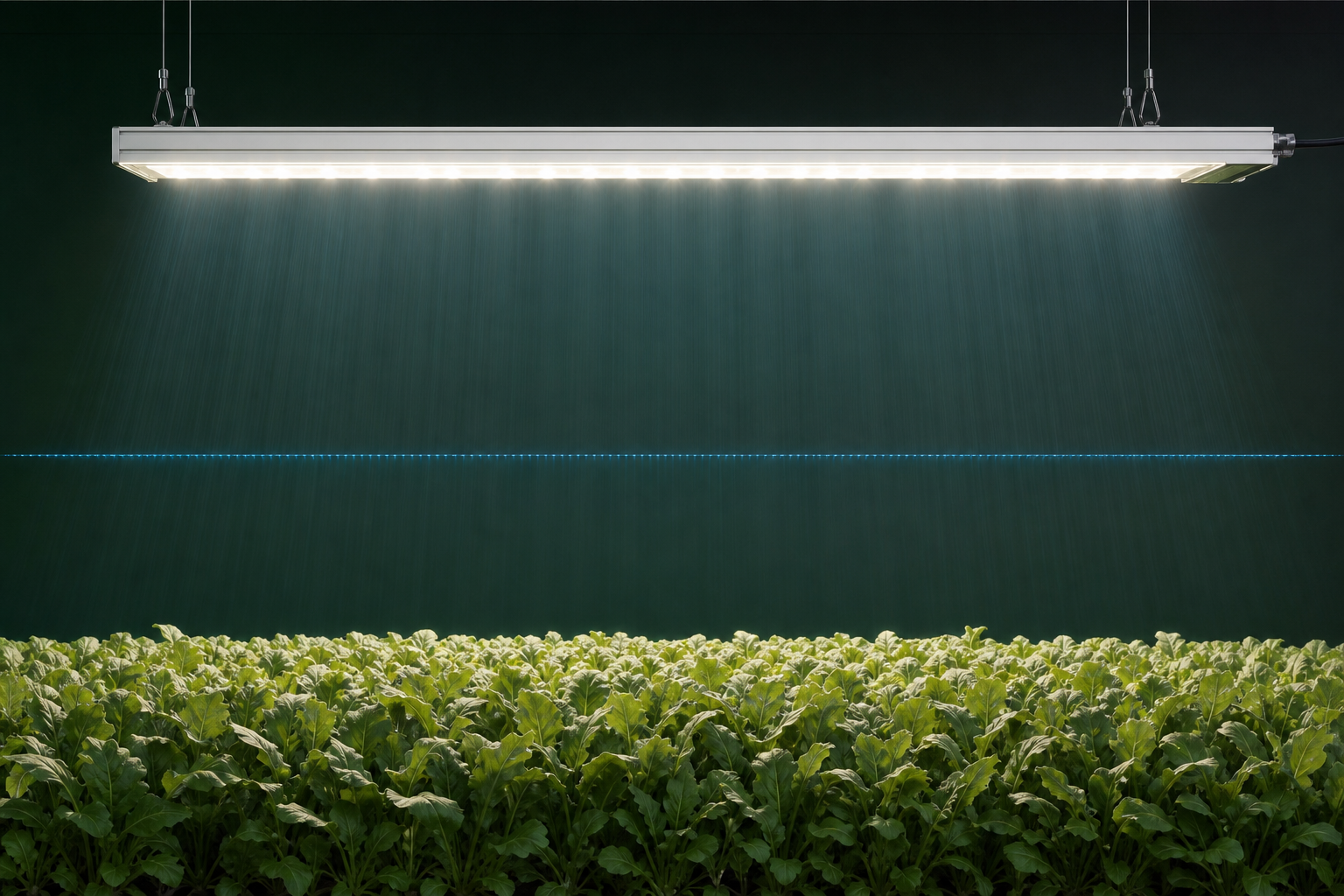
Grow LightSource format and optical direction
Fixture Optics & StructureDistribution, shielding and thermal path
Mounting DistancePhysical gap between source and crop
Measurement GridWhere canopy readings are collected
Plant CanopyThe plane where usable light matters
Spectrum
Photon distribution by wavelength. It describes light quality, not total quantity.
PPF
Photosynthetic photon flux: total PAR photons emitted per second, commonly reported in µmol/s.
PPFD
Photosynthetic photon flux density at a defined surface, commonly reported in µmol/m²/s.
DLI
Daily light integral combines PPFD with lighting duration and is commonly reported in mol/m²/day.
Incomplete Request
“We need a 100 W grow light.” This does not define spectrum, source geometry, mounting distance, coverage area, crop stage, photoperiod or environment.
Better Technical Request
“We need lighting for a defined canopy at a stated mounting height. Please provide spectrum direction, product dimensions, PPF and a PPFD map for review.”
03 / PHYSICAL LAYOUT
Match the Fixture to the Space Before Comparing Models
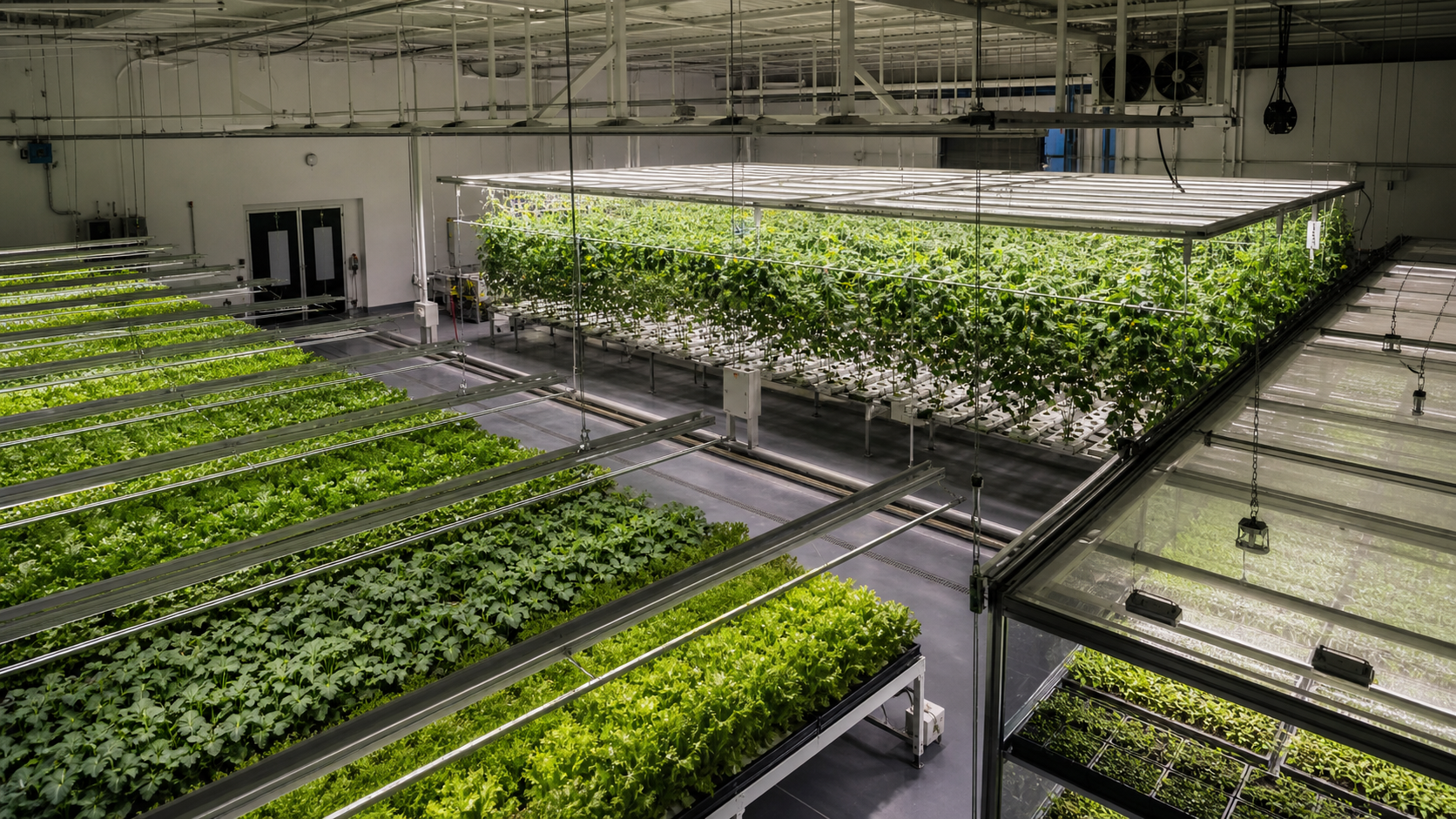
Fixture shape is a system decision. Begin with the direction of light, the available mounting envelope and the area that must be covered.
Repeated shelves
Low-profile linear sources can follow rack geometry and reduce unused vertical space.
Open canopy zones
Wider fixtures can distribute output across benches or room-scale layouts.
Protected propagation
Environmental exposure and cleaning method may point toward a protected linear direction.
Greenhouse support
Fixture layout must be reviewed with daylight, shading, structure and operating schedule.
PRODUCT ECOSYSTEM
Explore the New Lights Horticultural Product Ecosystem
The product family map is organized by physical format and system role. Exact wavelength, spectrum, power, output, dimensions and certification remain model-specific and must be confirmed in the relevant technical file.
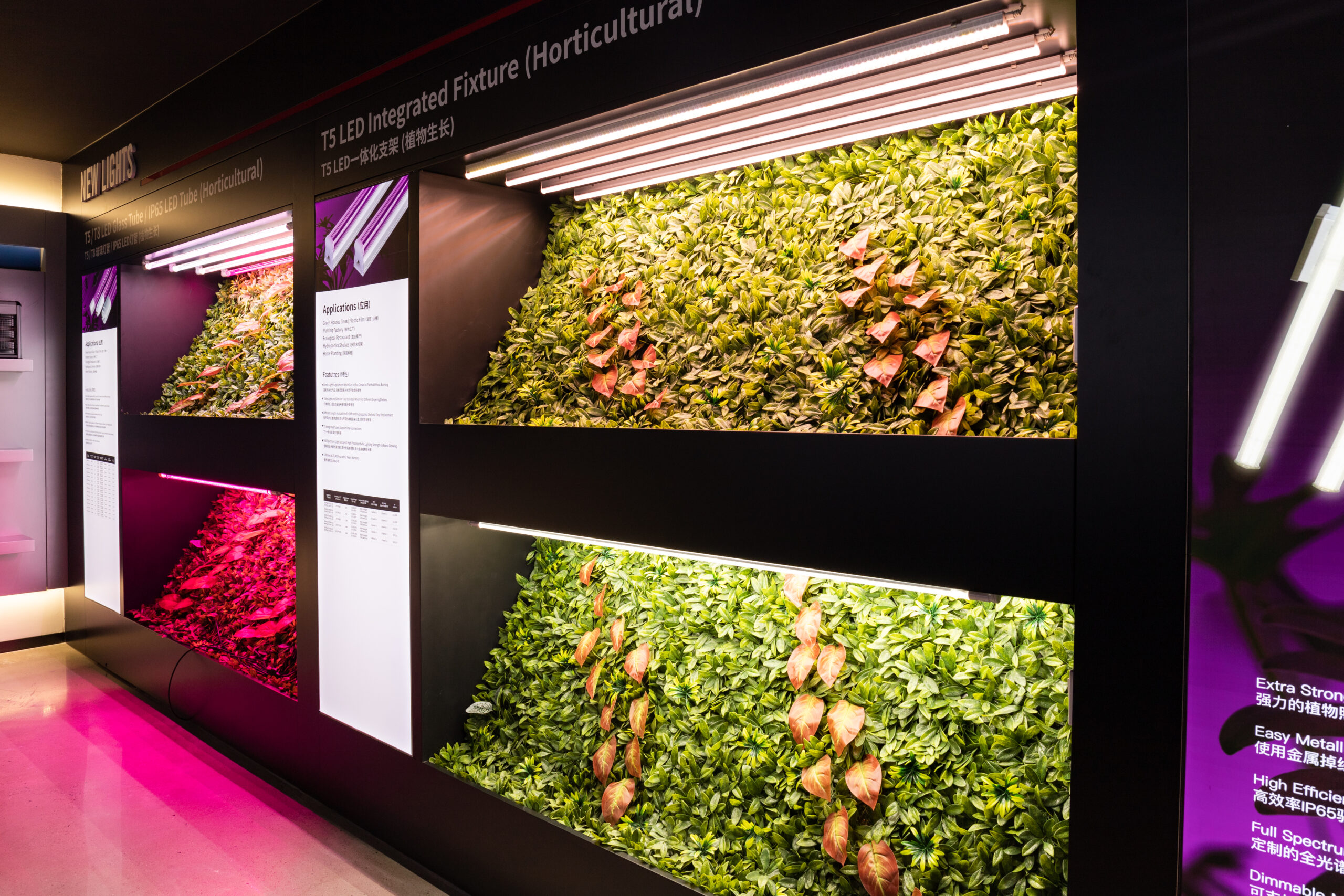
T8 Grow Tube & Linear Fixture
For shelf, rack and elongated growing layouts where physical fit and repeated spacing matter.
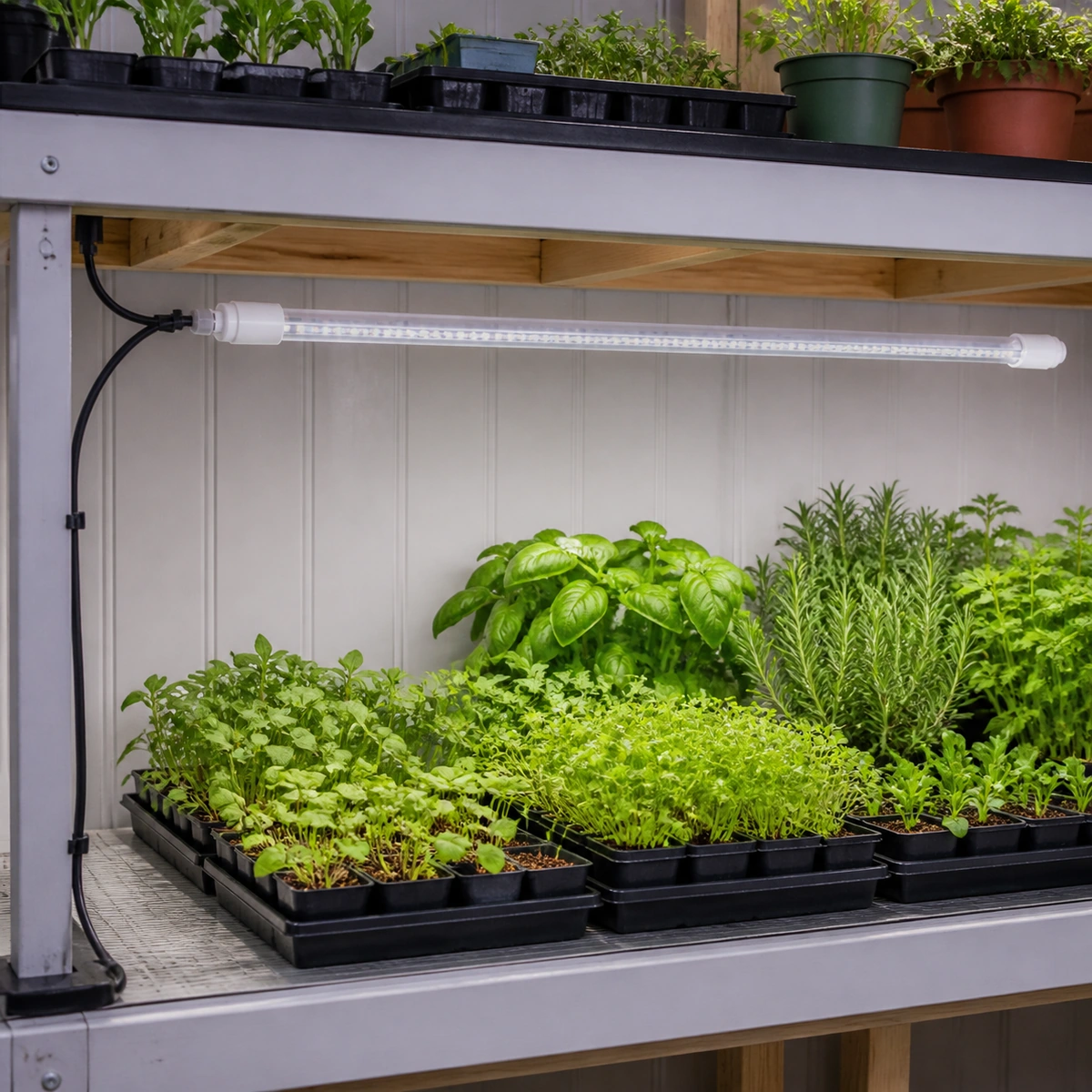
IP65 T8 LED Tube
A protected-product direction for environments where exposure conditions require confirmation.
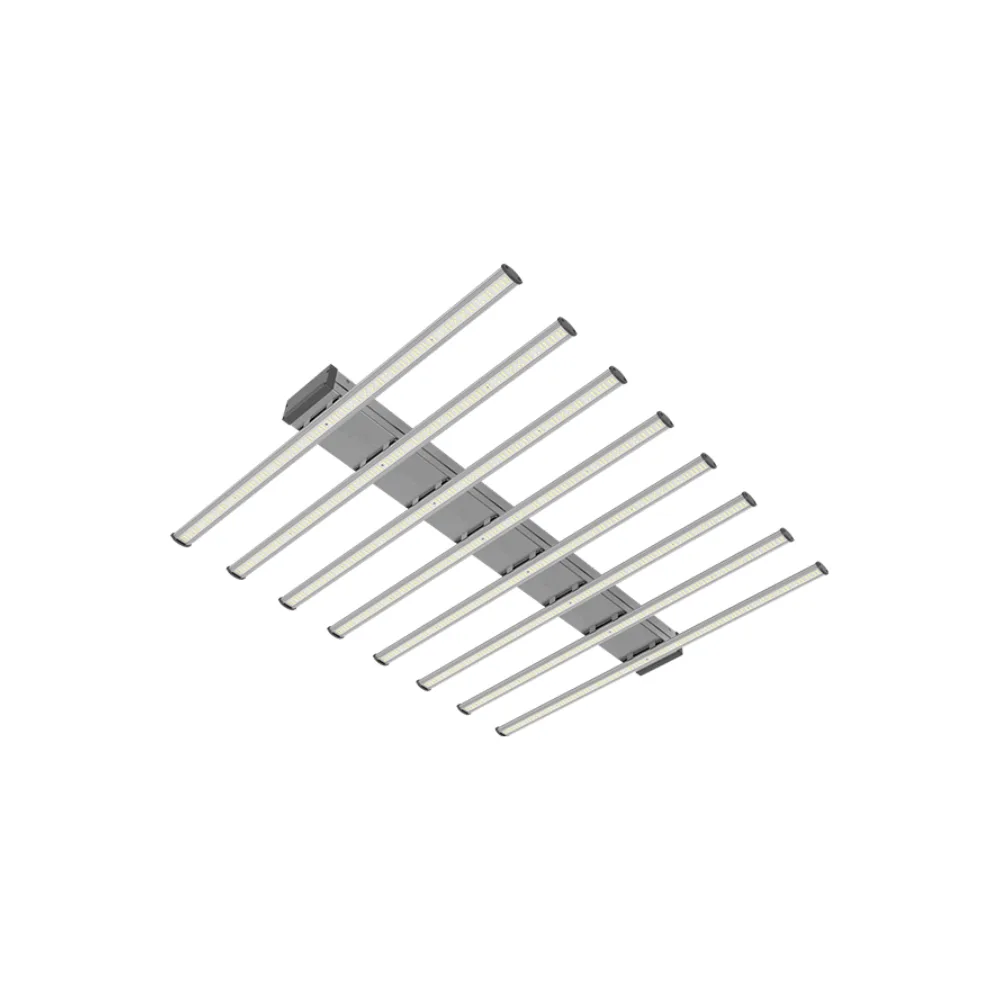
LED Newlights Harvest Lamp
A horticultural product family to review against room, crop and canopy requirements.
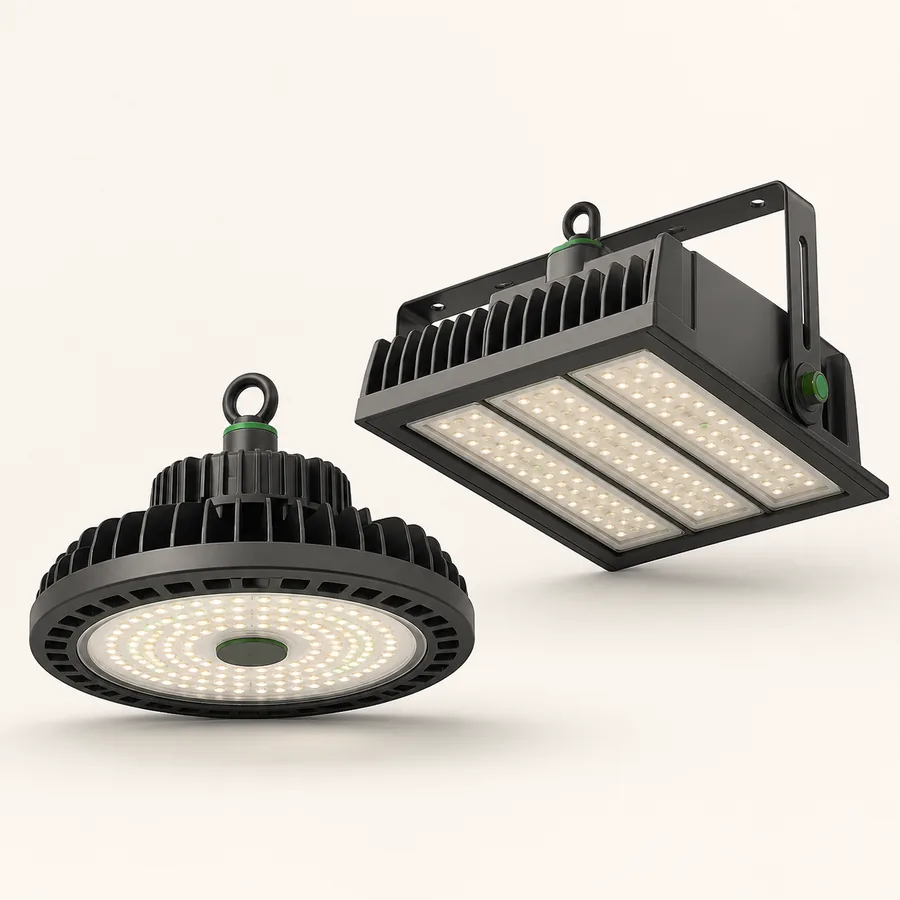
Grow Flood Light & UFO Grow Light
Larger-format directions for open areas and overhead arrangements, subject to layout validation.
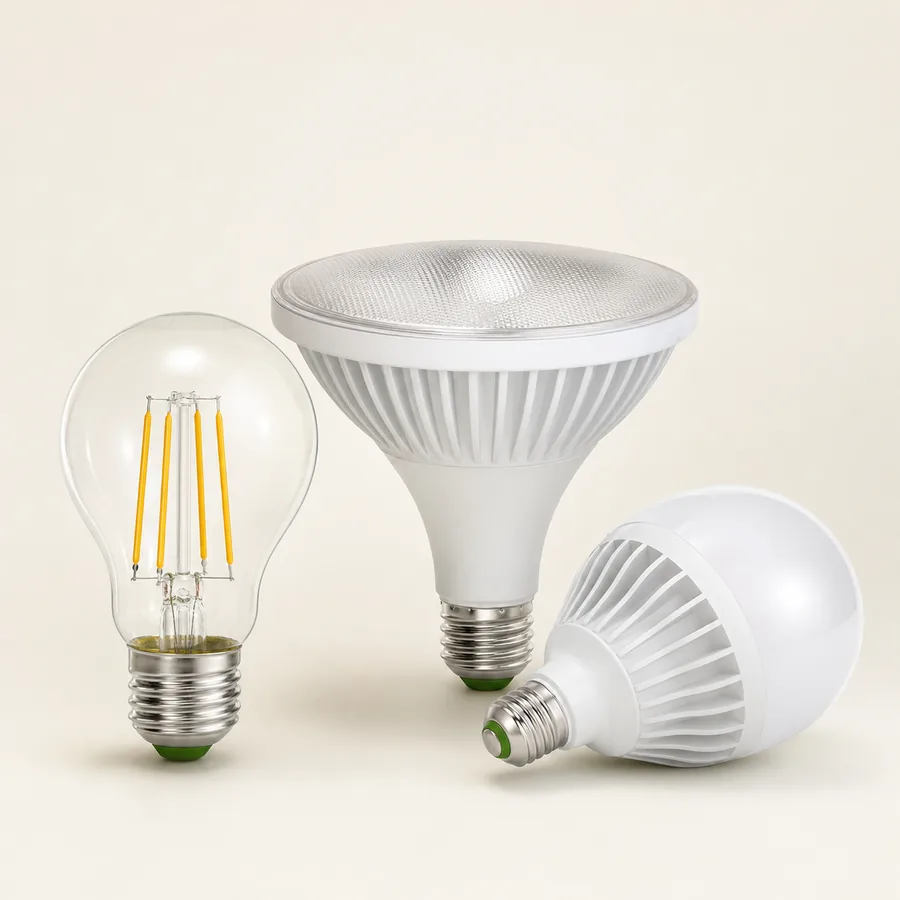
Filament & PAR Grow Bulbs
Replaceable lamp formats for compact equipment, retail and smaller growing systems.
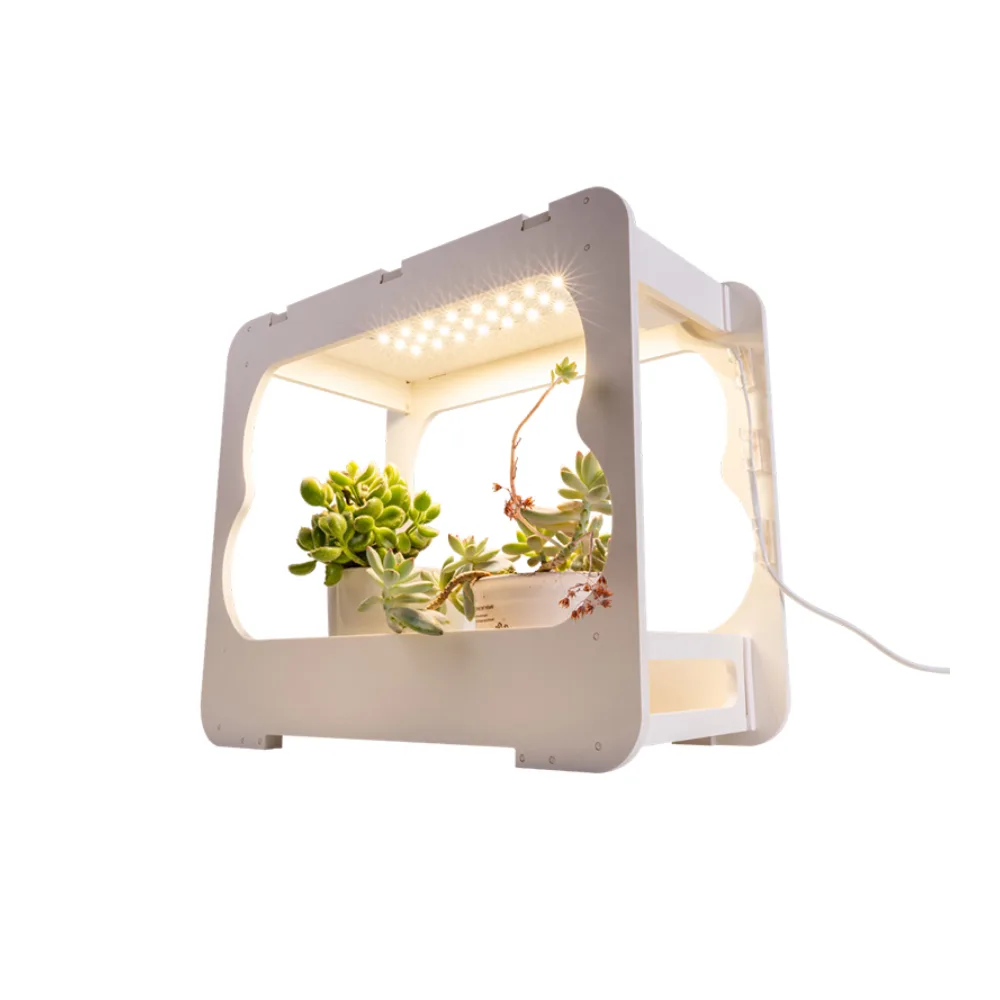
LED Table Growing Fixture
Integrated compact-format direction for tabletop and enclosed small-system concepts.
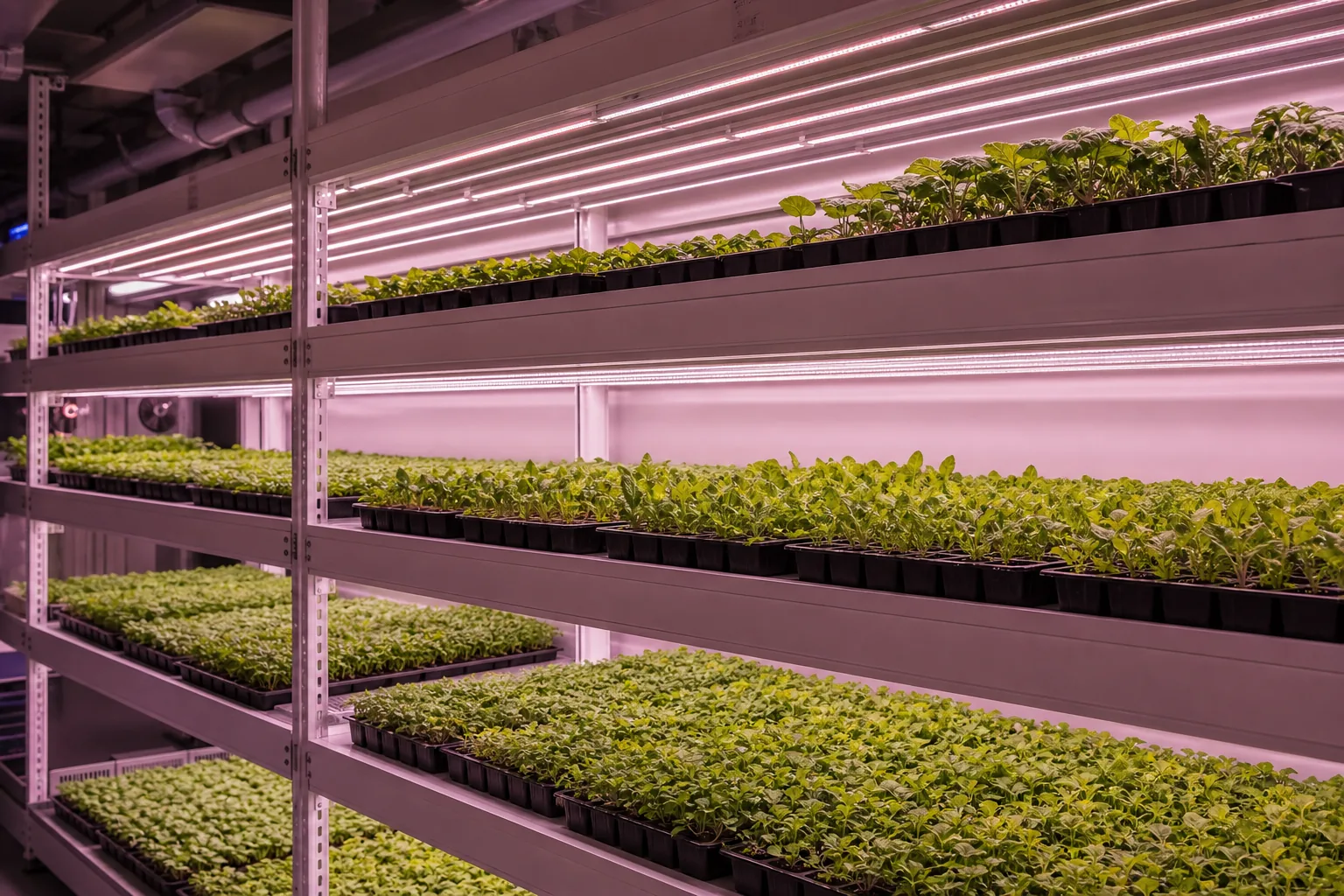
Linear Lighting Is a Geometry Tool
T8 grow tubes and linear fixtures can be useful where the luminaire must follow a rack, shelf or propagation bench. Confirm usable length, connection method, spacing, mounting height, spectrum direction and requested canopy data before specifying a model.
Protected Linear Direction
IP65 is a product-level claim. Confirm the exact model, connection structure, installation method and environmental requirement before using it in a specification.
Larger Overhead Formats
Harvest lamps, grow flood lights and UFO grow lights should be compared using the intended canopy area, mounting geometry and measured distribution—not shape alone.
Compact & Retail Formats
Filament, PAR and table-growing products can support compact systems, but the buyer still needs to define crop, distance, enclosure and operating schedule.
VALIDATE BEFORE SPECIFYING
Validate Before You Specify
Grow-light performance belongs to a complete system. Product data should be linked to the actual installation, and samples should be reviewed before a bulk-supply decision.
Grow Equipment Manufacturers
Fixture integration, dimensions, connection, samples and system-level validation.
Commercial Growers & Projects
Canopy objectives, layout, operating schedule, environmental conditions and project supply.
Importers & Distributors
Product-family selection, market positioning, documentation, assortment and commercial terms.
Private-Label & Retail Buyers
Packaging, brand presentation, product confirmation and repeatable supply preparation.
01. Define the System
Share layout, crop, dimensions and environment.
02. Select a Format
Match linear, larger-area or compact structure.
03. Review Data
Confirm spectrum, PPF, PPFD map and electrical data as applicable.
04. Sample & Measure
Validate the sample in the intended physical system.
05. Approve for Supply
Lock product, packaging and production requirements.
Product Identity
Model reference
Dimensions and structure
Electrical configuration
Installation method
Environmental rating, if confirmed
Lighting Data
Spectrum or wavelength direction
PPF, if available
PPFD map with conditions
Measurement distance and grid
Photoperiod used for DLI review
Commercial File
Target market
Quantity
Packaging and branding
Required documentation
Sample and delivery expectations
Data for Product Selection
Use model-specific technical data and measurements from the intended installation to confirm the selected configuration.
MOVE TO SUPPLY
Move from Selection to Supply
Two commercial routes keep project engineering and distribution requirements clear while using the same product-confirmation discipline.
PATH A / PROJECT & EQUIPMENT
From System Definition to Approved Sample
Best for equipment manufacturers, commercial growing rooms, greenhouse supplementation and installation projects. The sequence prioritizes physical layout, technical data, sample integration and repeatable production.
PATH B / DISTRIBUTION & PRIVATE LABEL
From Product Range to Market-Ready Supply
Best for importers, distributors and retail buyers. The sequence adds product-family planning, target-market documentation, packaging, branding and commercial preparation.
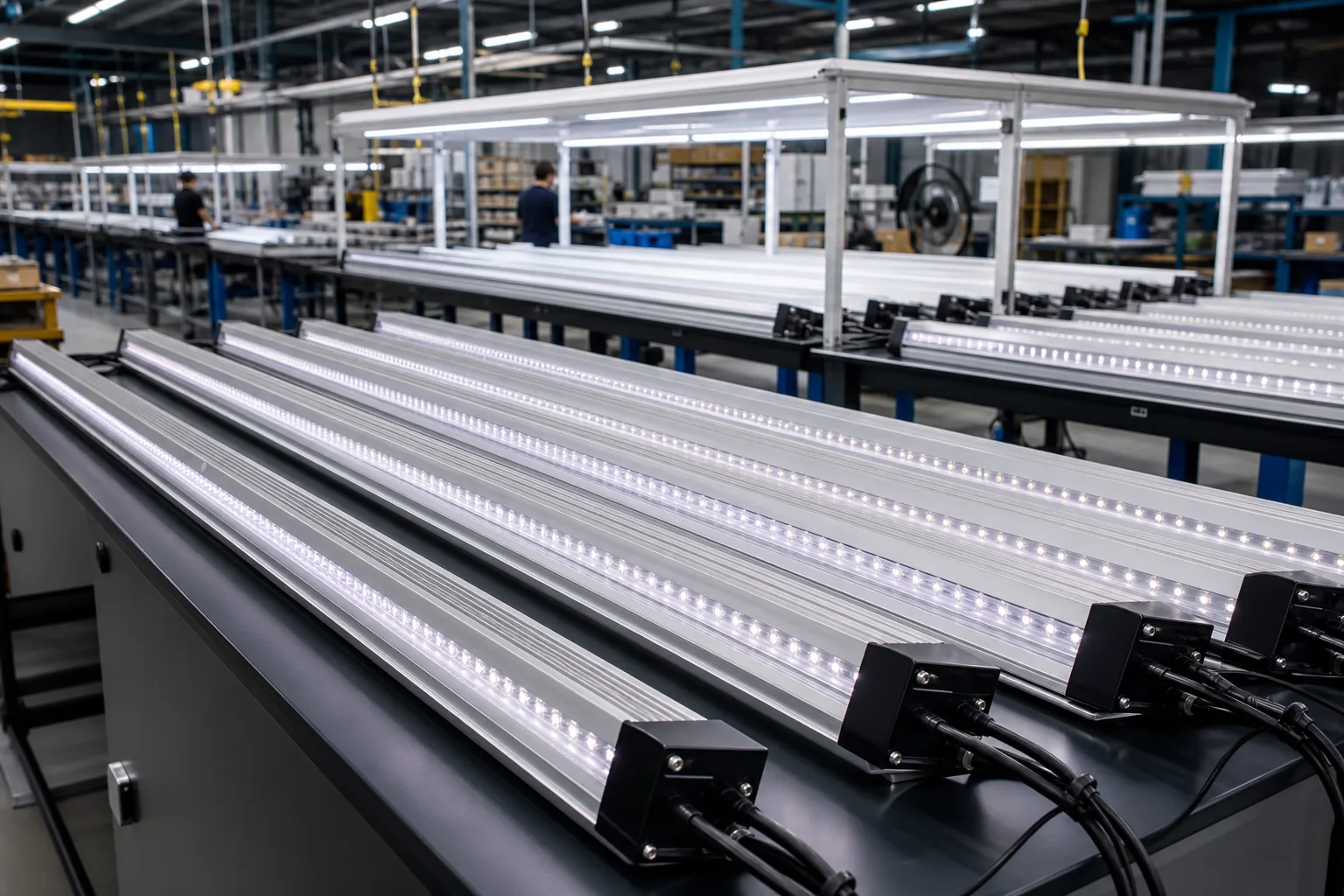
Manufacturing Support After Technical Selection
We support product selection, sample coordination, private-label packaging and production planning for horticultural lighting orders.
Since 1998Established manufacturing experience
21 Production LinesFactory production infrastructure
Product ConfirmationModel-level data before specification
Sample CoordinationValidation before bulk preparation
TECHNICAL & COMMERCIAL FAQ
Horticultural Lighting Questions Buyers Ask Before Specification
Compare fixture format, canopy measurements and order requirements.
Product Structure
Which grow-light format is suitable for multi-layer racks?
Low-profile linear formats are often a useful starting direction, but shelf length, spacing, mounting height, crop, environment and canopy data still need confirmation.
When should I consider a protected T8 grow-light direction?
Consider it when moisture, dust, cleaning or enclosure conditions create a protection requirement. The exact IP rating must be confirmed for the selected product and installation.
Can one fixture format cover every growing system?
No. Rack, room, greenhouse, propagation and compact systems have different physical and operating constraints, so the fixture structure should follow the system.
Lighting Data
What is the difference between PPF and PPFD?
PPF describes the total PAR photon output of a source per second. PPFD describes the photon flux density received at a defined surface and measurement condition.
Why is a PPFD map more useful than one center reading?
A map shows how light is distributed across the intended canopy. It should state the mounting distance, measurement grid and fixture arrangement.
How is DLI related to PPFD?
DLI represents the daily total of PAR received. It depends on PPFD and the duration of lighting, so operating schedule is part of the calculation.
Commercial Supply
What information should I send for a horticultural-lighting inquiry?
Send the growing-system type, crop or stage, canopy dimensions, mounting height, environment, operating schedule, required product format, target market and available light data.
Can New Lights support private-label grow-light products?
Private-label and packaging support can be discussed after the product family, market requirements, documentation and sample are confirmed.
What else affects plant response besides the grow light?
Plant response also depends on the crop, growing environment and cultivation method. Evaluate the selected light in the intended growing system.
Start with the Growing System, Not a Wattage Number
Share the physical layout and what must be measured at the canopy. We can then review the appropriate product direction and the data needed before sample or supply.
✓ Growing-system type
✓ Crop or production stage
✓ Canopy dimensions
✓ Mounting height
✓ Operating environment
✓ Lighting schedule
✓ Preferred product format
✓ Target market and quantity
Educational reference basis: U.S. Department of Energy horticultural lighting overview · Purdue Extension daily light integral guidance · DLC horticultural technical requirements. Product-specific files and project measurements take priority over general educational content.