


INTERIOR LIGHTING SOLUTIONS
Residential & Decorative Lighting Solutions
Lighting solutions for living rooms, bedrooms, kitchens, dining areas, hallways and decorative interior spaces. Explore product families for general illumination, focused lighting and ambient presentation.
LIGHTING PLANNING
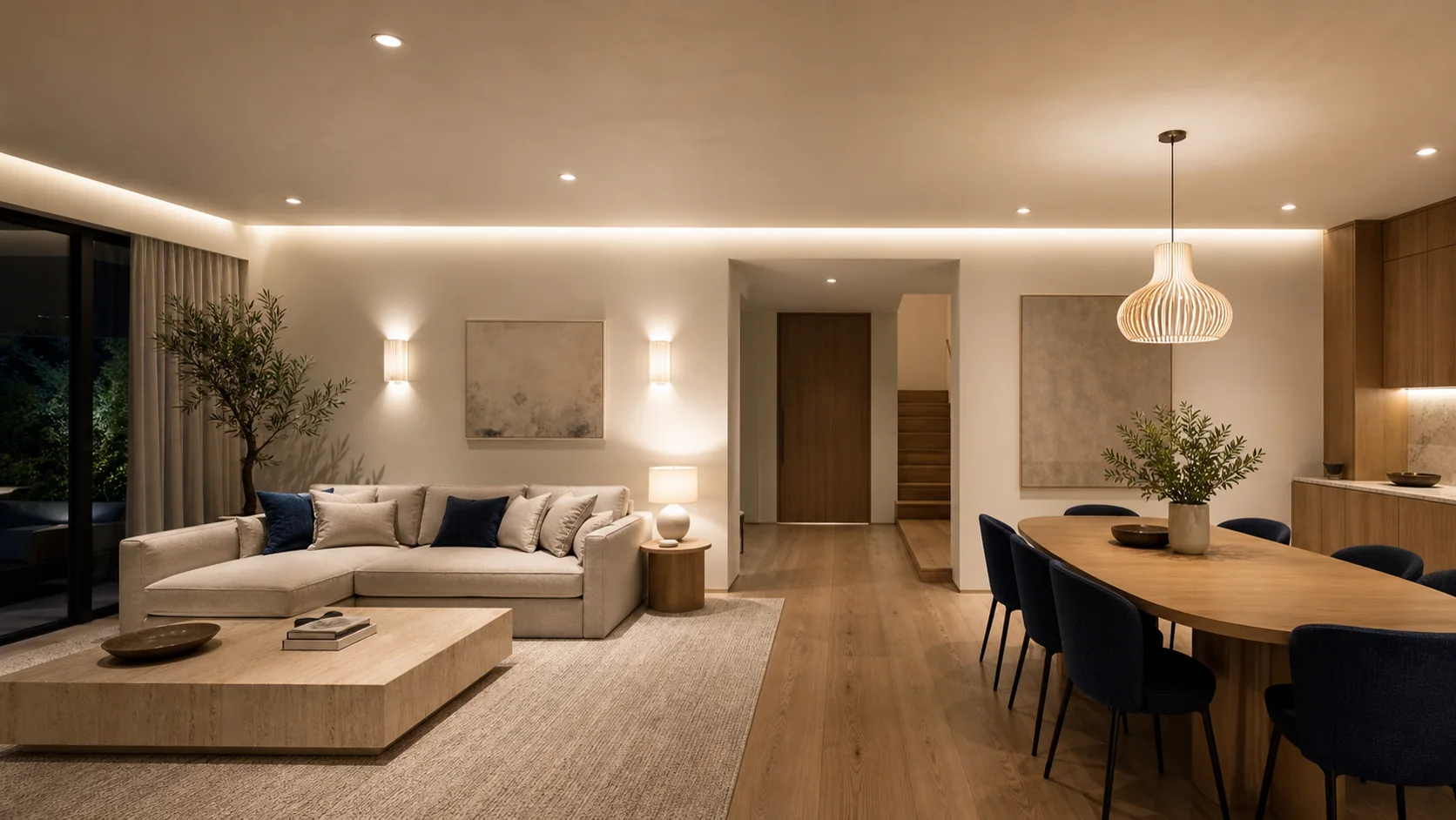
Lighting Shapes Both Function and Atmosphere
Interior lighting is not defined by one fixture alone. General lighting provides the basic illumination of a room, while focused and decorative lighting help define activities, materials and visual character.
Residential and decorative buyers should consider how people use the space, what surfaces need to be highlighted and how different lighting layers work together before selecting individual products.
General Visibility
Provide sufficient overall illumination for everyday movement, room use and basic visual comfort.
Functional Lighting
Add focused light where reading, dining, working, grooming or product presentation takes place.
Visual Hierarchy
Use directional or decorative lighting to guide attention toward furniture, artwork, walls or architectural details.
Space Atmosphere
Coordinate distribution, color appearance and decorative form with the intended character of the interior.
INTERIOR APPLICATIONS
Lighting Solutions for Residential and Decorative Spaces
Different areas require different combinations of general, task, accent and decorative lighting.
Living Rooms
Combine general room illumination with accent and ambient lighting for daily use, entertaining and visual comfort.
Suggested: Ceiling Lights / Downlights / Ambient Lighting
Bedrooms
Use comfortable general lighting together with lower-level or ambient lighting for rest, reading and evening use.
Suggested: Ceiling Lights / Decorative Bulbs / Ambient Lighting
Kitchens & Worktops
Combine room-wide lighting with focused illumination around preparation, cooking and storage areas.
Suggested: Downlights / Spotlights / Ceiling Lighting
Dining Areas
Coordinate table-focused lighting with softer surrounding illumination to create a clear dining zone.
Suggested: Decorative Bulbs / Spotlights / Ceiling Lighting
Hallways & Staircases
Provide continuous, low-glare illumination along circulation routes, landings and changes in level.
Suggested: Downlights / Ceiling Lights / Wall Lights
Home Offices & Reading Corners
Balance general lighting with focused light for screens, documents, reading and shelf details.
Suggested: Ceiling Lights / Spotlights / Smart & Ambient Lighting
Decorative Feature Areas
Use focused or ambient lighting for feature walls, display corners and interior visual highlights.
Suggested: Ambient Lighting / Decorative Bulbs / Spotlights
Entryways & Transitional Spaces
Create a clear welcome point while supporting orientation, switching and safe movement between spaces.
Suggested: Ceiling Lights / Wall Lights / Sensor Lighting
LIGHTING BASICS
Understanding the Three Main Lighting Layers
Most residential and decorative spaces work better when several lighting layers are combined instead of relying on one fixture for every purpose.
01 · ROOM-WIDE BASE
Ambient Lighting
Ambient lighting provides the main background illumination of a room and supports movement and everyday use.
Typical use: room-wide visibility, circulation and general illumination.
Families: ceiling lights, downlights and general interior fixtures.
02 · ACTIVITY FOCUS
Task Lighting
Task lighting provides more focused illumination for reading, working, dining, grooming or food preparation.
Typical use: bedsides, tables, desks, counters and mirrors.
Families: spotlights, directional downlights and local decorative lighting.
03 · VISUAL EMPHASIS
Accent Lighting
Accent lighting directs attention toward selected architecture, surfaces, artwork, displays or decorative features.
Typical use: feature walls, artwork, shelving and lobby details.
Families: spotlights, decorative bulbs and ambient lighting.
A balanced interior normally uses ambient lighting as the base, task lighting where activities take place and accent lighting where visual emphasis is required. The exact combination depends on the room layout and project design.
INTERIOR LIGHTING GUIDE
Color Temperature, Color Rendering and Glare
Use these concepts as general selection guidance—not as a statement that every product has the same specification.
Color Temperature
Color temperature describes the visual appearance of white light in kelvin (K). General reference ranges include 2700K–3000K for a warmer appearance, around 4000K for a neutral appearance and 5000K–6500K when a cooler appearance is specifically required.
Confirm the available CCT by product and project.
CRI / Ra
CRI describes how naturally illuminated colors appear compared with a reference source. It matters where food, fabrics, furniture finishes, skin tones or decorative materials are visually important.
The available Ra value depends on the individual model.
Glare & Light Distribution
Brightness alone does not guarantee visual comfort. Direct view of a bright source, fixture position, beam direction and reflective room surfaces all influence the final result.
Review the product together with furniture and circulation layouts.
PRODUCT FAMILIES
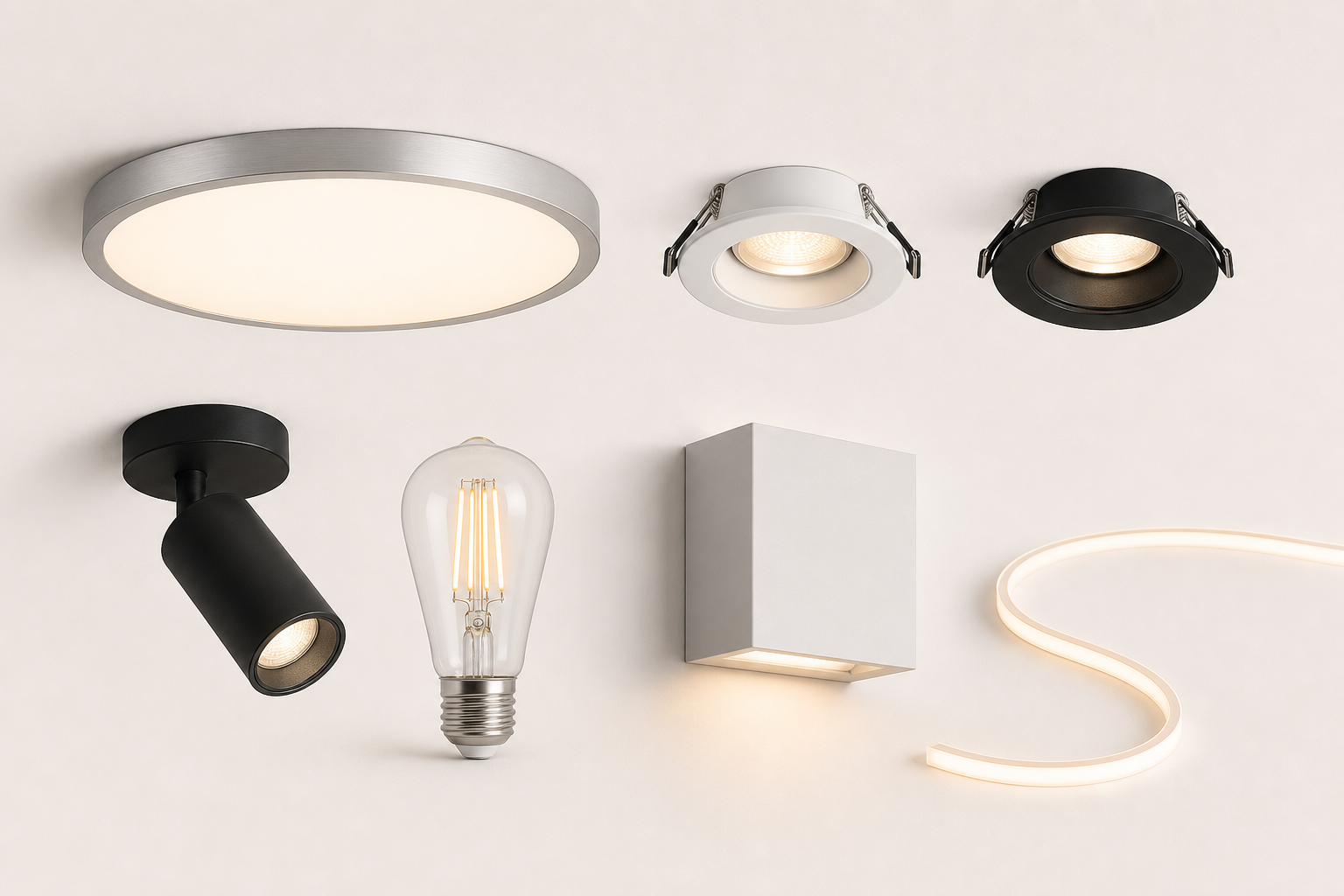
Explore Interior and Decorative Lighting Products
Compare product families according to the required lighting layer, room type and decorative purpose before selecting individual models. Final dimensions, electrical requirements, CCT, CRI and other specifications must be confirmed for the selected product.
ROOM-BY-ROOM GUIDE
Match the Lighting Product to the Space and Activity
Use the room function to narrow the product family before comparing individual models.
| Space | Main Lighting Goal | Suggested Product Families | Key Selection Focus |
|---|---|---|---|
| Living room | Flexible everyday use | Ceiling lights / Downlights / Ambient lighting | Layering, seating and focal points |
| Bedroom | Rest, movement and reading | Ceiling lights / Decorative bulbs / Ambient lighting | Bedside use and low-glare comfort |
| Kitchen | Safe preparation and task visibility | Downlights / Spotlights / Ceiling lights | Worktop coverage and shadow control |
| Dining area | Table visibility and atmosphere | Decorative bulbs / Spotlights / Ceiling lights | Table position and surrounding light |
| Hallway & stairs | Safe movement and continuity | Downlights / Ceiling lights / Wall lights | Spacing, landings and switching |
| Home office | Focused work and visual comfort | Ceiling lights / Spotlights / Smart ambient lighting | Screen glare and desk orientation |
| Entryway | Orientation and a clear welcome point | Ceiling lights / Wall lights / Sensor lighting | Coverage, switching and transitions |
| Feature wall | Visual emphasis | Spotlights / Ambient lighting / Decorative bulbs | Direction and beam placement |
Check room and ceiling dimensions, electrical requirements, CCT, CRI and beam direction before ordering.
RESIDENTIAL LIGHTING PLANNING
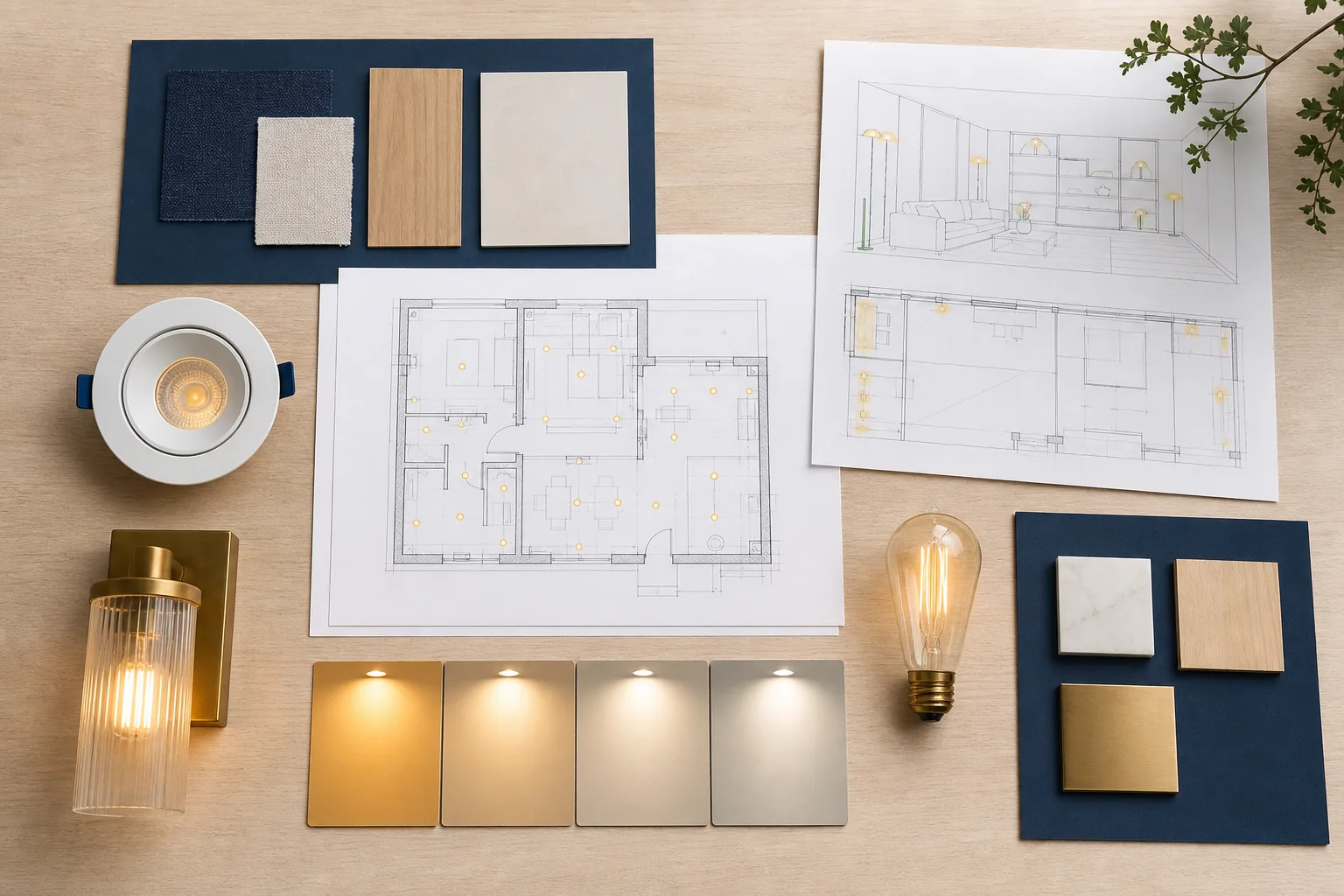
Plan Lighting Around Rooms, Activities and Visual Priorities
Plan general lighting, task locations, decorative focal points and switching across connected rooms.
Room Functions
Map movement, reading, cooking, dining, work and rest zones before assigning fixtures or circuits.
Layered Lighting
Combine ambient, task and accent lighting so one fixture is not expected to support every activity.
Fixture Scale & Finish
Coordinate dimensions, mounting position and decorative finish with ceiling height, furniture and room proportions.
Controls & Consistency
Plan switching, dimming and repeated product families to keep connected rooms practical and visually consistent.
COMMON SELECTION MISTAKES
Five Lighting Decisions That Often Create Problems Later
Use this checklist before sample approval or final model confirmation.
One Fixture for Every Task
A central ceiling light may not adequately support reading, dining, feature lighting or visual atmosphere.
Form Before Compatibility
Review decorative appearance together with dimensions, lamp base, electrical requirements and installation space.
Unrelated Color Temperatures
Visibly different CCTs can make a connected room appear inconsistent unless the contrast is intentional.
Ignoring Eye-Level Glare
Check how a source appears from beds, sofas, dining seats and reception areas—not only from directly below.
Too Many Project SKUs
Unnecessary variants increase specification complexity, replacement difficulty and inventory pressure.
SUPPLY SUPPORT
Support for Residential and Decorative Lighting Buyers
Group the required products by room, lighting function and order quantity before requesting a quotation.
Application Review
Identify the target room, lighting purpose, decorative direction and required product category.
Product & Specification Selection
Compare suitable ceiling lights, downlights, spotlights, bulbs and ambient lighting products.
Sample & OEM Preparation
Confirm approved models before organizing branding, packaging and customization requirements.
Production & Supply Coordination
Coordinate approved products, packaging requirements and production communication.
For Distributors & Wholesalers
Build the assortment around clear product groups to reduce unnecessary SKU overlap.
For Private-Label Buyers
Confirm the target family and approved model before preparing branding, packaging and customization requirements.
For Residential & Decorative Project Buyers
Coordinate room schedules, lighting layers, sample review and approved product families across residential and decorative lighting projects.

MANUFACTURING & SUPPLY
Interior Lighting Supply Backed by Manufacturing Experience
We manufacture residential and decorative lighting for OEM and private-label supply, with sample coordination and packaging preparation for the selected products.
Since 1998
Lighting manufacturing experience
21 Production Lines
Multiple LED lighting categories
OEM / ODM Support
Private-label and packaging preparation
Product Confirmation
Model and specification coordination
International Supply
Support for importers and project buyers
INTERIOR LIGHTING FAQ
Residential & Decorative Lighting FAQ
Practical lighting-selection and sourcing answers for residential and decorative lighting buyers.
Plan the Right Lighting Range for Residential and Decorative Spaces
Send us your target application, preferred product families, required specifications and estimated quantity. Our team will help organize suitable interior and decorative lighting options for further confirmation.