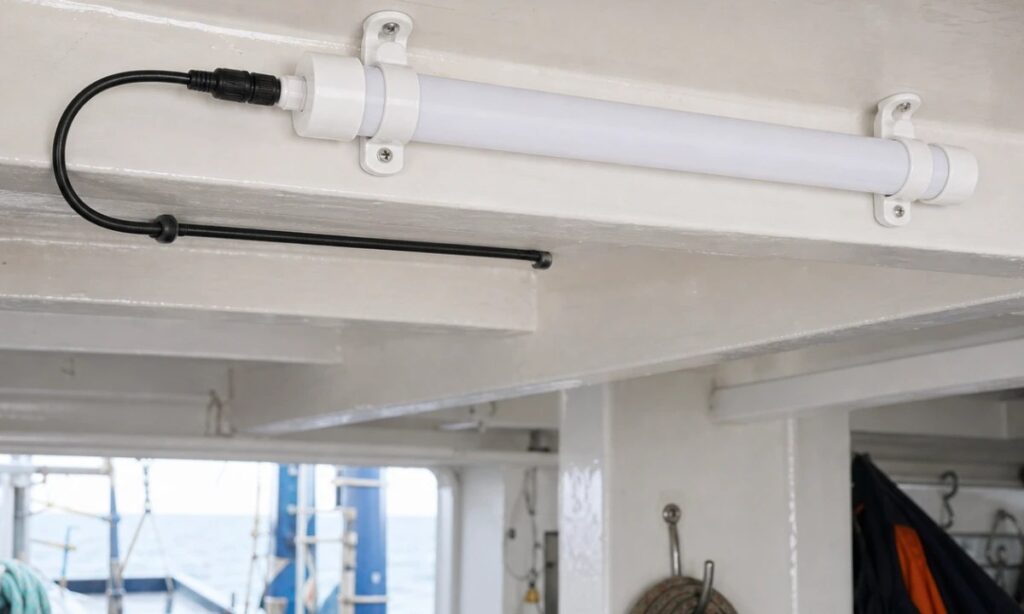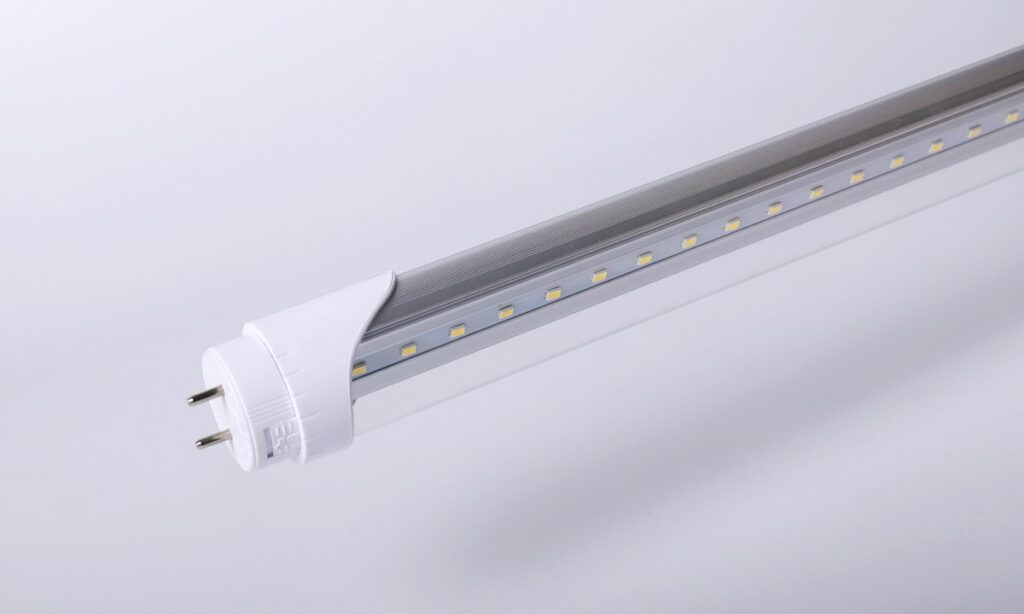


A T5 integrated LED grow light can fit closely spaced propagation shelves and indoor racks, but the fixture format alone does not establish crop suitability. Start with the crop and stage, translate the target into canopy PPFD and daily light integral, then test fixture length, spectrum, height, row spacing and controls as one installed system.
For professional approval, the key output is a measured canopy map and a traceable crop trial—not a wattage comparison or a “full spectrum” label.
Define the Crop and Production Boundary
Record the crop, cultivar, growth stage and production objective. Propagation, vegetative growth and finishing can require different intensity, spectrum and photoperiod. State whether electric light is the sole source or supplements daylight, and identify the usable growing area rather than the outside dimensions of the rack.
The brief should include target PPFD at canopy level, target DLI, photoperiod, acceptable uniformity and any spectral objective. Add shelf width, shelf depth, available vertical clearance, expected canopy growth, ambient temperature, humidity, airflow and irrigation constraints.
| Input | Define before fixture selection | Decision it controls |
|---|---|---|
| Crop | Species, cultivar and stage | Target light and environment |
| Production area | Usable width, depth and plant density | Number, length and spacing of bars |
| Photon target | PPFD range, DLI and photoperiod | Output and daily schedule |
| Uniformity | Minimum-to-average or another stated method | Height, spacing and overlap |
| Environment | Temperature, humidity, airflow and water | Thermal and crop-trial boundary |
| Facility | Voltage, controls, tier count and cleaning | Electrical and mechanical integration |
The broader horticultural lighting system design guide covers facility zoning and commissioning. This article owns the T5 integrated bar decision inside a shelf or close-canopy layout.
Confirm the Exact T5 Integrated Fixture
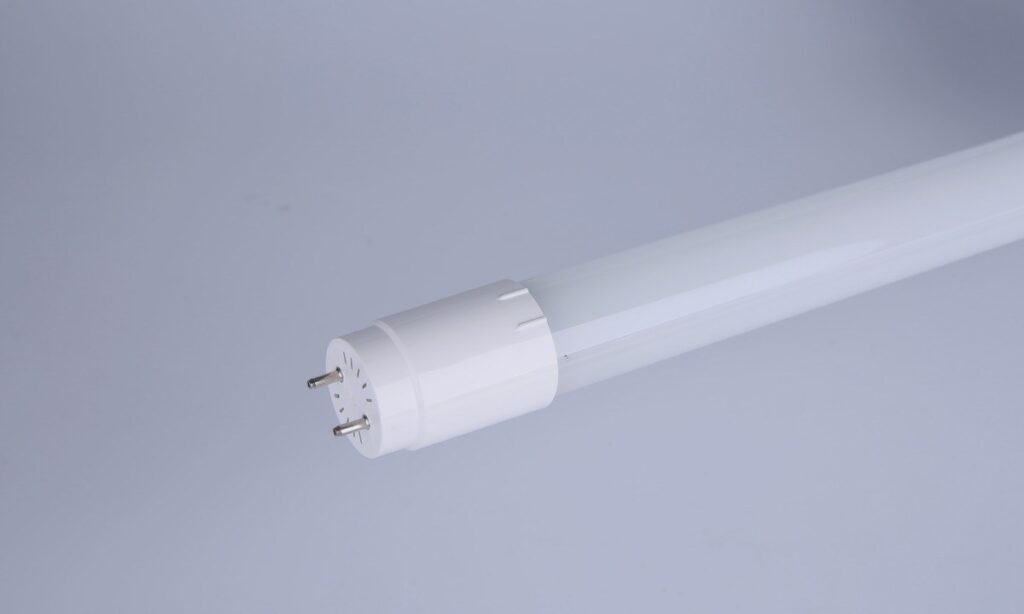
The current New Lights T5 Integrated LED Grow Light Fixture is a complete 23 × 34 mm linear fixture rather than a replacement lamp for a fluorescent T5 lampholder. The product table lists five lengths: 300, 572, 880, 1178 and 1478 mm, with corresponding 5, 9, 12, 18 and 22 W configurations.
Published PPF values range from 7.5 to 44 μmol/s and PPE from 1.5 to 2.0 μmol/J across those lengths. The page also lists red-blue-plus-daylight and full-spectrum recipes. Paired T5F20 and T5F70 ordering codes remain separate references even where published dimensions and performance values match, so the quotation, sample and final order should preserve the exact code.
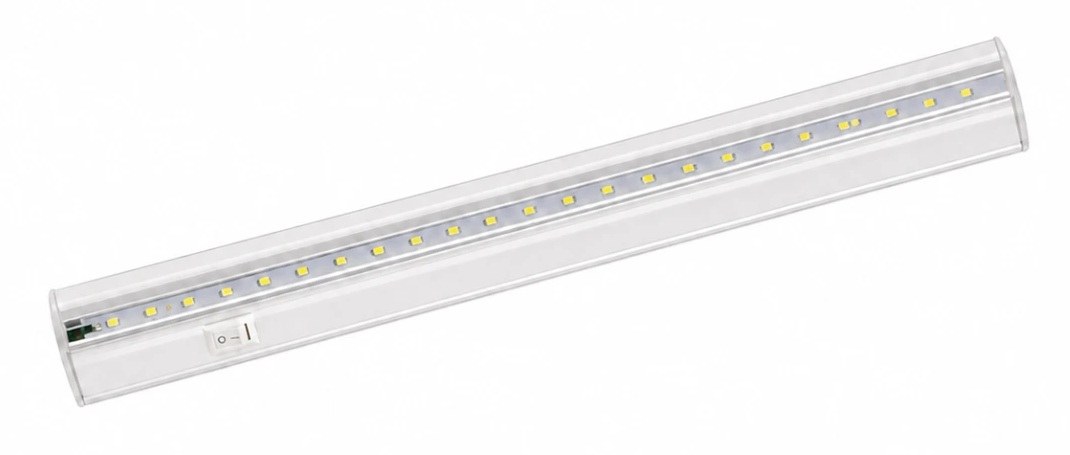
Treat catalog values as source-level data. They do not define canopy PPFD, edge losses, row overlap, thermal conditions or crop response. Customized chips or spectrum options need their own model-level data set.
Separate PPF, PPE, PPFD and DLI
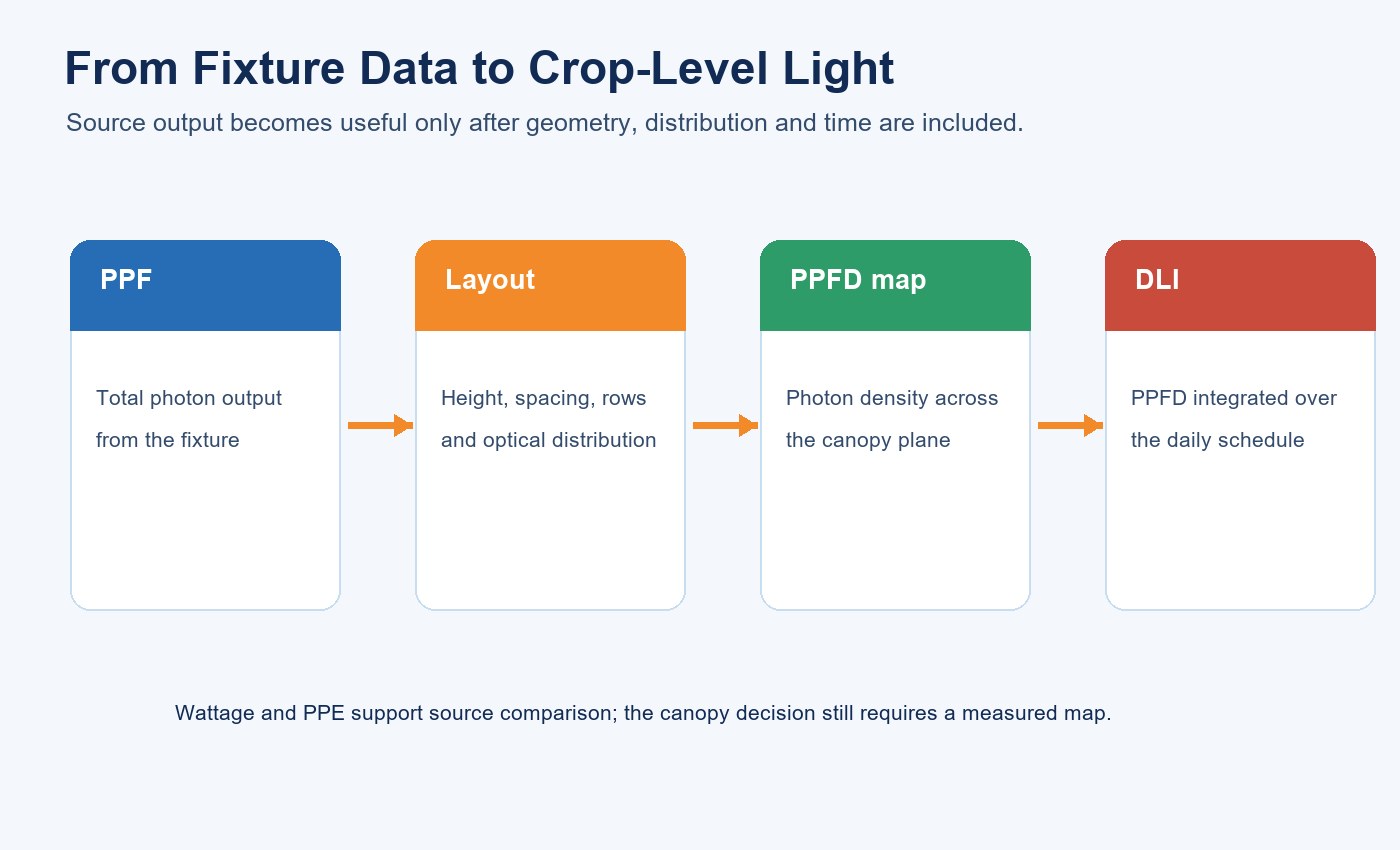
PPF is the total photosynthetic photon flux emitted by the fixture each second. PPE relates that output to electrical input and supports a source-efficiency comparison. PPFD is the photon flux density reaching a square meter at a specific point and height. DLI integrates canopy PPFD over the daily operating period.
The sequence matters. A 44 μmol/s fixture does not create one universal PPFD because the photons are distributed across an area. Height, optical distribution, shelf geometry, fixture orientation and overlap with adjacent bars determine the measured map. Only after PPFD is known can operating hours be converted into an electric-light DLI.
| Quantity | What it describes | What it cannot decide alone |
|---|---|---|
| Power (W) | Electrical input | Plant-usable photon delivery |
| PPF (μmol/s) | Total fixture photon output | Distribution across the crop |
| PPE (μmol/J) | Photon output per electrical joule | Uniformity, height or crop target |
| PPFD (μmol/m²/s) | Photon density at a measured point | Daily dose without operating time |
| DLI (mol/m²/day) | Photon dose accumulated through the day | Spectrum, uniformity or environment |
For wider systems and multi-fixture coverage, use the horticultural grow-light layout and PPFD method.
Request the Exact Spectrum
“Full spectrum” is a family description, not a complete specification. Request the spectral power distribution for the ordered recipe and the measurement condition. If red, blue, daylight-white or other channels can be customized, identify the exact LED mix and whether channels are fixed or independently controlled.
A spectrum change can also change PPF, PPE, electrical power and thermal behavior. Keep the approved spectrum reference with the sample label and test report. The full-spectrum versus red-blue grow-light guide explains how to compare spectral options without treating either label as a universal crop prescription.
Map PPFD Across the Usable Canopy
Measure at the intended crop plane with a grid that includes the center, corners, edges and overlap zones between bars. Record minimum, average and maximum PPFD and state the uniformity formula. A center reading can look strong while plants at the outer rows remain below the target.
Repeat the map at candidate heights and row spacings. Use the same meter orientation, grid coordinates, warm-up time and control setting. If the canopy height changes materially during the crop cycle, evaluate the starting and mature positions or define an adjustment rule.
| PPFD map record | Minimum information | Acceptance use |
|---|---|---|
| Geometry | Bar length, row count, spacing and canopy distance | Reproduce the layout |
| Grid | Coordinates and usable-area boundary | Prevent selective center readings |
| Values | Minimum, average and maximum PPFD | Compare intensity and variation |
| Uniformity | Stated equation and result | Match crop tolerance |
| Operating condition | Voltage, spectrum, control level and warm-up | Tie data to the exact configuration |
| Instrument | Meter, calibration status and orientation | Support repeatability |
Balance Mounting Height and Row Spacing
Moving a bar closer commonly raises center PPFD, but the illuminated footprint becomes smaller and center-to-edge variation may increase. Raising the bar can smooth distribution but reduce intensity. Tighter row spacing increases overlap and power density; wider spacing reduces fixture count but can leave valleys between bars.
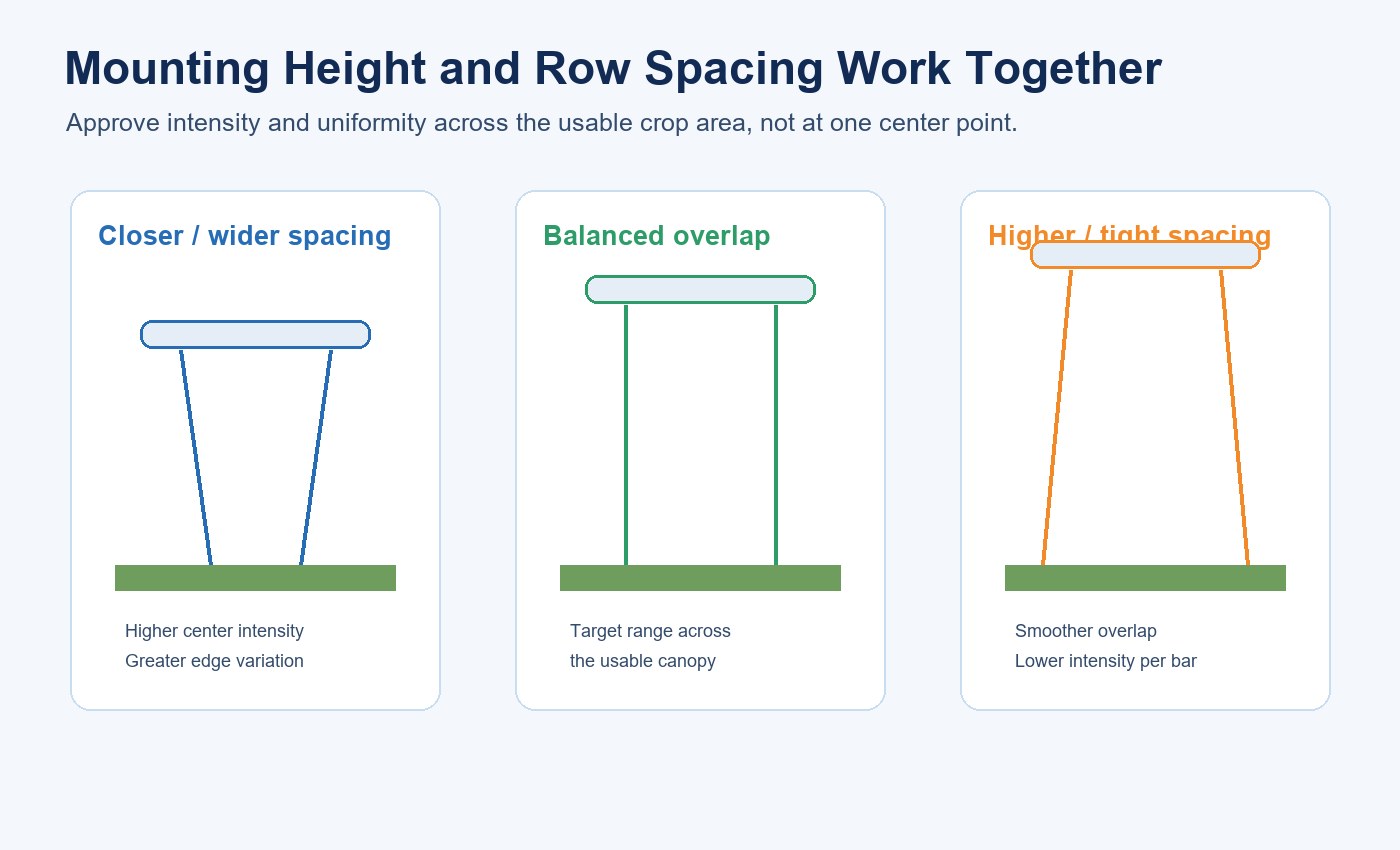
The first limiting condition depends on the crop and rack. A shallow shelf may run out of vertical clearance before it reaches the best overlap. A wide bench may require another row even when average PPFD appears adequate. A heat-sensitive or dense canopy may require more airflow at the selected fixture density.
Convert PPFD into Daily Light Integral
For a stable electric-light period, calculate:
DLI (mol/m²/day) = average PPFD (μmol/m²/s) × operating hours × 0.0036
If a measured average PPFD is 180 μmol/m²/s and the lights operate for 14 hours, the electric-light DLI is about 9.1 mol/m²/day. This demonstrates the calculation, not a crop recommendation. The actual target belongs to the documented crop and stage.
In a greenhouse or daylight-assisted shelf, electric-light DLI must be combined with light reaching the crop from daylight. The operating schedule may need sensor-based control rather than a fixed timer. Photoperiod also remains a biological signal, so extending hours is not always interchangeable with raising PPFD.
The desktop grow-light temperature and PPFD guide explains how to connect light measurements with fixture, air, leaf and root-zone temperatures in a smaller setup.
Check Electrical, Linking and Mechanical Limits
An integrated fixture contains the light source and electronics in one housing. Confirm input version, current, power factor option, connector system, feed cable, mounting clips, control method and the maximum permitted linked run. The published page does not state a universal linking quantity, so calculate and confirm the limit from the exact electrical and accessory configuration.
The T5 integrated fixture linking and installation guide covers conductor, connector and run-level checks. In growing racks, cable routing must also stay clear of irrigation, cleaning, plant handling and moving shelves.
No outdoor or wet-location rating is published for this family. Compare humidity, condensation and cleaning conditions with documented ratings instead of inferring water resistance from the horticultural use case. Review the indoor grow-light safety and certification guide before fixing the electrical and ingress boundary.
Evaluate the Thermal and Crop Environment
Several slim bars can collectively add heat to a close shelf. Measure fixture, driver, canopy-air, representative leaf and root-zone temperatures under the intended load and airflow. Keep temperature, humidity, water, nutrients, plant density and carbon-dioxide conditions consistent across comparison zones.
If those variables differ, a crop response cannot be attributed confidently to the light treatment. Define stop conditions for abnormal heat, plant stress, unstable controls or electrical behavior before a trial begins.
Run a Controlled Sample Trial
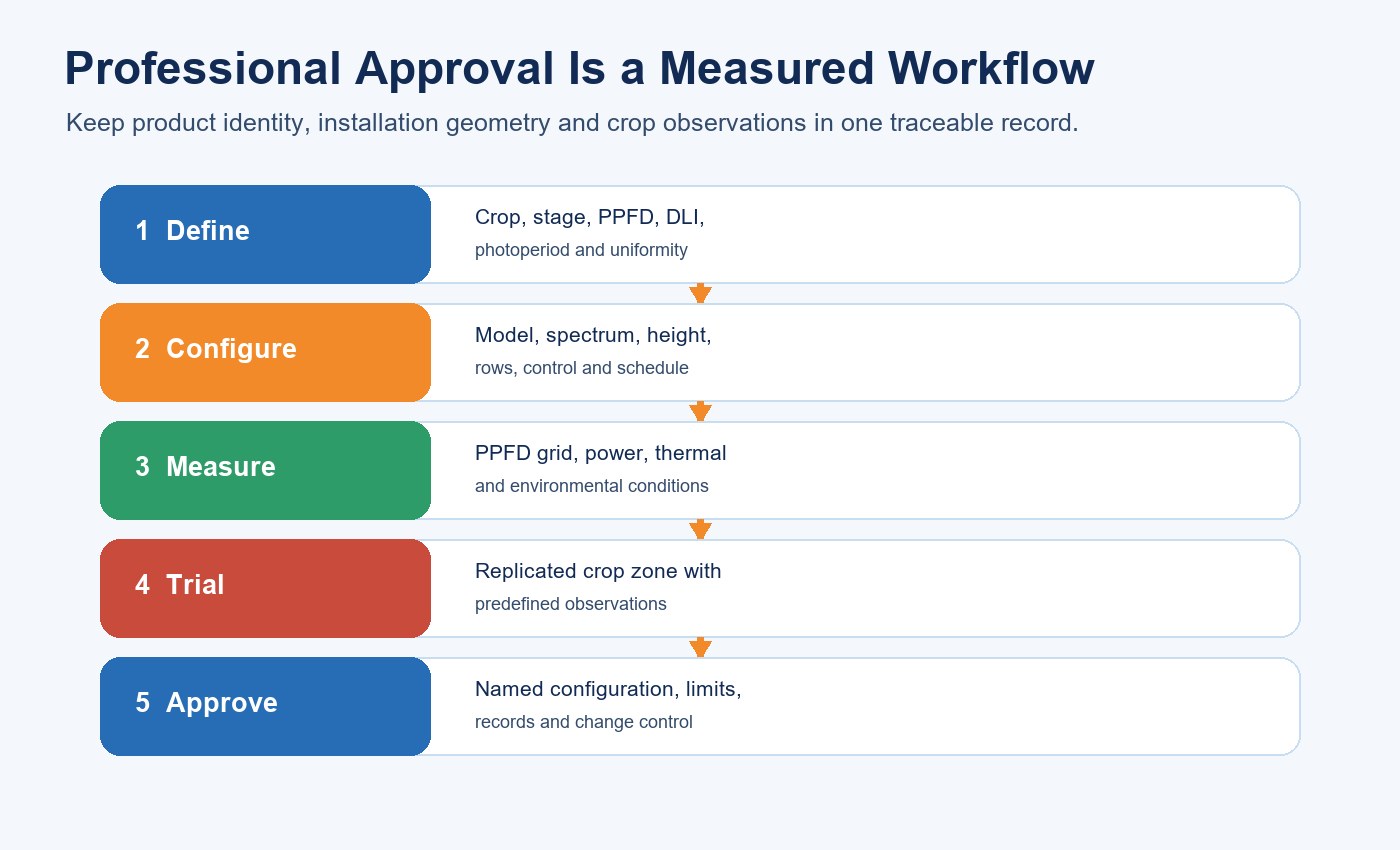
After photometric, electrical and mechanical checks, install a bounded sample zone. Use a defined crop batch and protocol. Log PPFD, operating hours, calculated DLI, environmental measurements, energy use and agreed crop observations. Include replication and a comparison condition when practical.
The light-controlled seed germination trial guide provides a detailed experimental structure for propagation questions. A successful trial supports the named configuration and protocol; it does not establish universal crop suitability.
Build the Approval and RFQ Record
Connect the exact ordering code to its drawing, input specification, SPD, PPF/PPE report, PPFD maps, layout, controls, thermal checks and sample-trial result. Record every customization and identify which changes require retesting.
| Approval block | Required evidence | Change-control trigger |
|---|---|---|
| Product identity | Ordering code, dimensions and input version | Housing, driver or LED revision |
| Spectrum | SPD and recipe reference | LED mix or channel control change |
| Layout | Height, row spacing and PPFD map | Rack or mounting change |
| Daily schedule | PPFD, hours, DLI and daylight method | Crop or schedule change |
| Electrical | Feed, linking, load and protection | Connector, cable or run-length change |
| Trial | Crop protocol, environment and observations | Material production or crop change |
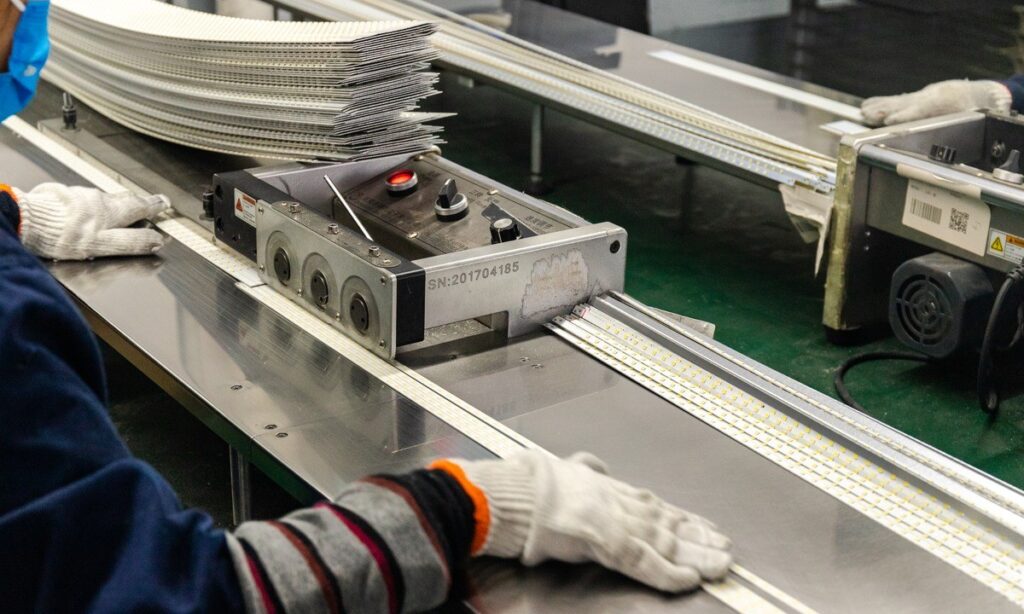
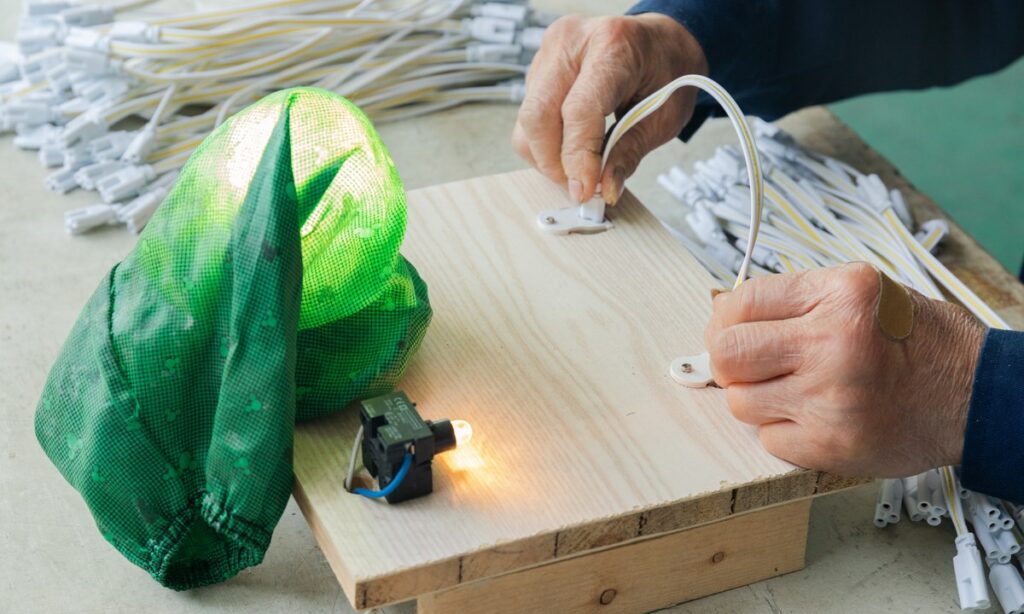
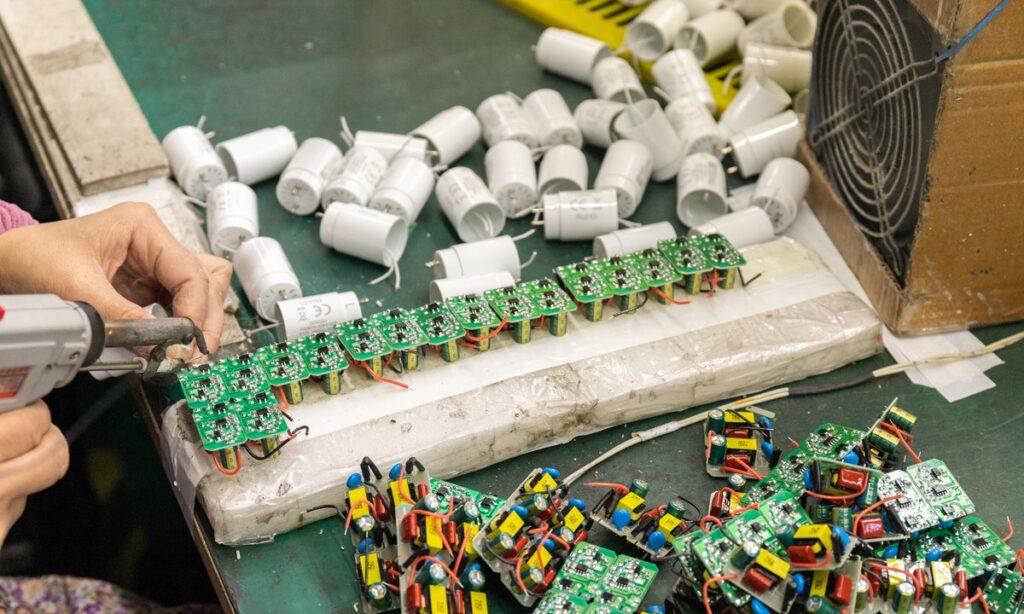
For controlled product configuration and sample follow-through, review the New Lights factory and manufacturing capabilities. To prepare a bounded T5 grow-light offer, contact New Lights with the crop, rack, target PPFD/DLI, spectrum, operating schedule and electrical conditions.
Frequently Asked Questions
Does T5 describe horticultural performance?
No. It identifies the slim fixture format here. Crop suitability depends on spectrum, measured PPFD distribution, DLI, geometry and environmental conditions.
Can PPF be used as canopy PPFD?
No. PPF is total source output. PPFD depends on area, distance, distribution and fixture arrangement, so it requires a map or canopy measurement.
What mounting height should be used?
There is no universal height. Test height and row spacing together until the defined PPFD range and uniformity are achieved across the usable canopy.
Is full spectrum enough for professional cultivation?
No. Request the exact SPD and evaluate it with intensity, dose, uniformity, photoperiod and environment for the stated crop stage.
How many T5 fixtures can be linked?
Use the confirmed connector, cable, current and circuit limits for the exact configuration. This family does not publish one universal linked quantity.
Editorial Sources
- New Lights, “T5 Integrated LED Grow Light Fixture”: https://www.new-lights.com/products/horticultural-lighting/professional-grow-lights/t5-led-integrated-fixture/
- Virginia Cooperative Extension, “Calculating and Using Daily Light Integral (DLI): An Introductory Guide”: https://www.pubs.ext.vt.edu/content/pubs_ext_vt_edu/en/SPES/spes-720/spes-720.html
- University of Missouri Extension, “Controlled Environment Agriculture: Understanding Grow Lights”: https://extension.missouri.edu/publications/g6987