

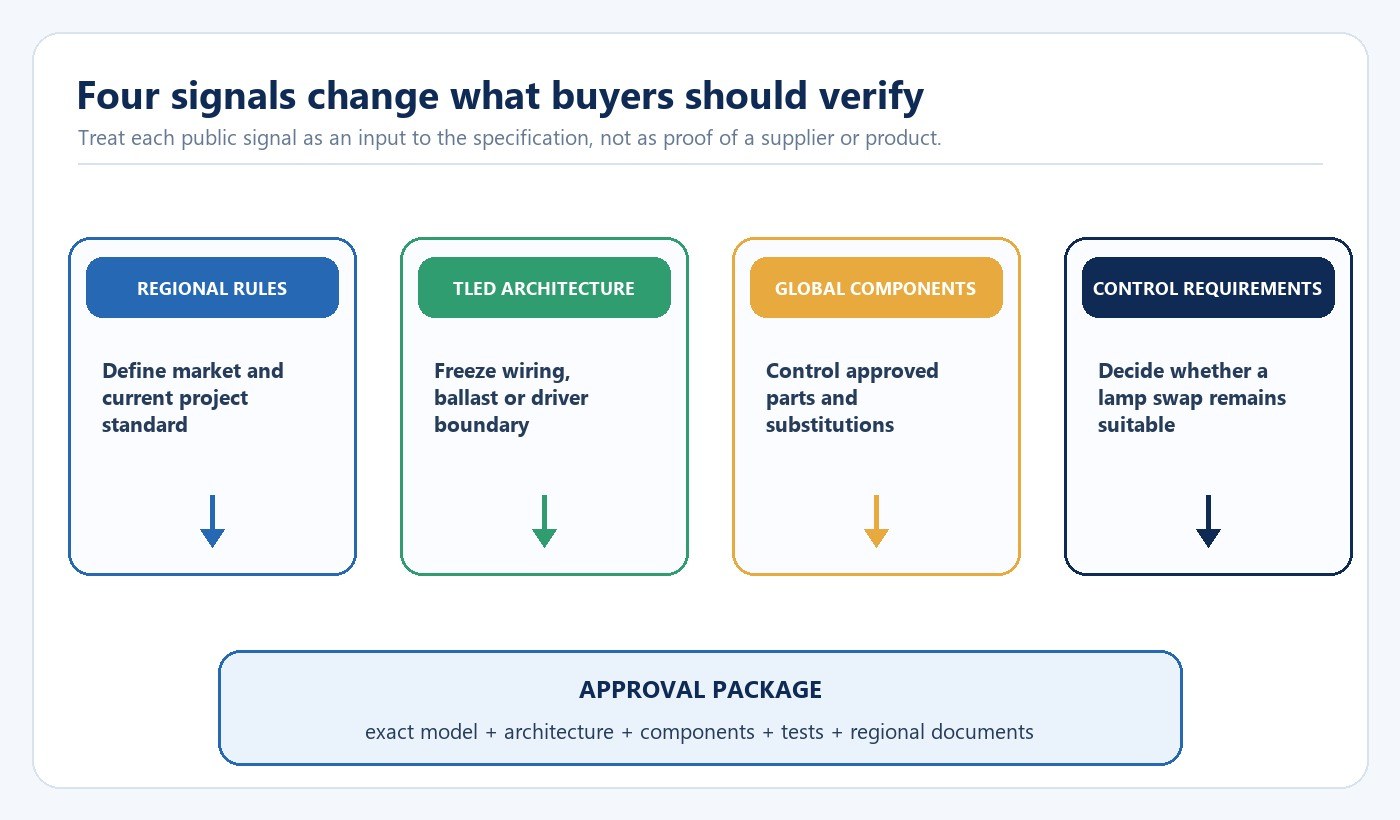
The useful 2026 outlook for LED tube manufacturing is not a single market-growth percentage. Buyers can verify four more practical signals: regional fluorescent rules continue to change, Type A/B/C architectures create different manufacturing files, LED products still depend on global component chains, and control requirements can change whether a lamp retrofit remains the right platform.
Each signal changes the approval package. A current project should identify the target market, exact electrical architecture, controlled components, representative tests and revision status before price or delivery is compared.
Four Signals, Four Evidence Consequences
| Verifiable signal | Scope boundary | Manufacturing consequence | Buyer evidence |
|---|---|---|---|
| Regional mercury and procurement rules are changing | Dates and affected lamp types vary by jurisdiction | Regional variants and document sets must be controlled | Destination market, current rule, model declaration and installation route |
| Type A, B and C TLEDs use different electrical boundaries | A common tube shape does not establish wiring | BOM, tests, labels and instructions differ | Architecture identity, diagrams, compatibility lists and markings |
| SSL manufacturing uses a global component chain | Product quality depends on model and process controls | Approved components and substitutions need control | BOM revision, change record, test impact and lot traceability |
| Controls can exceed a simple lamp-swap boundary | Space behavior determines system needs | Driver and commissioning requirements may change the platform | Control sequence, protocol, dimming range and failure behavior |
These signals do not prove that every market is moving at the same rate or that every supplier has the same capability. They define questions a buyer can answer with current documents and samples.
Architecture Determines the Manufacturing File
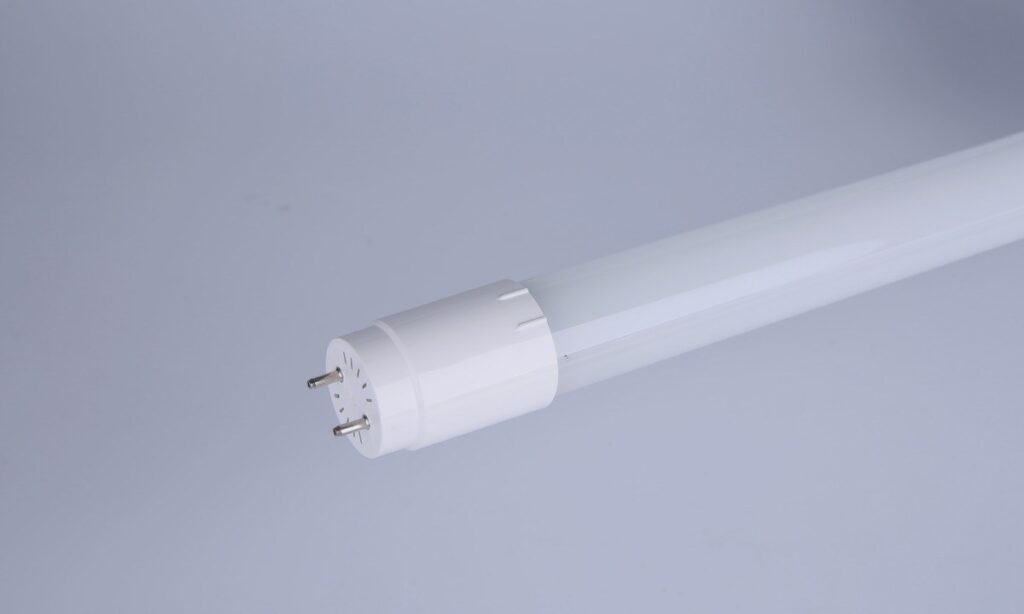
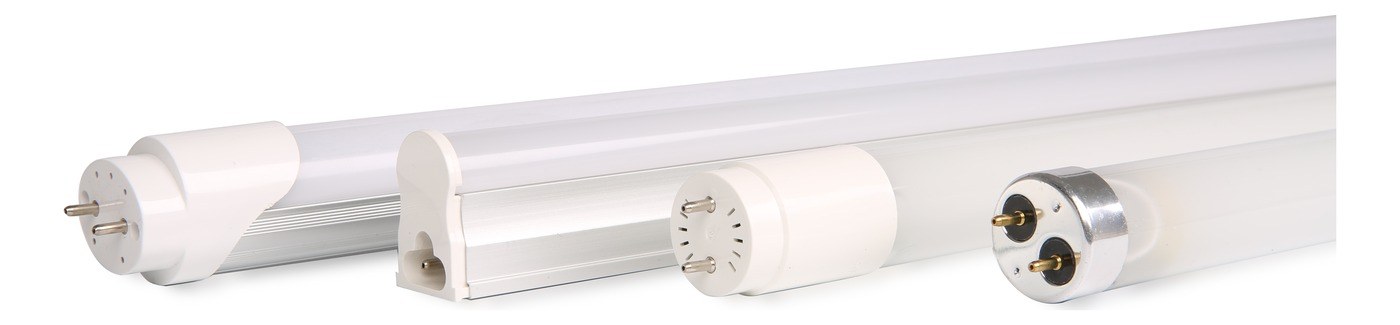
The U.S. Department of Energy and GSA guidance distinguish Type A, Type B and Type C tubular LED systems. Type A operates through a compatible fluorescent ballast. Type B receives line voltage after ballast removal or bypass. Type C uses an external LED driver. Hybrid lamps add operating modes, but each supported mode still needs a defined wiring and test boundary.
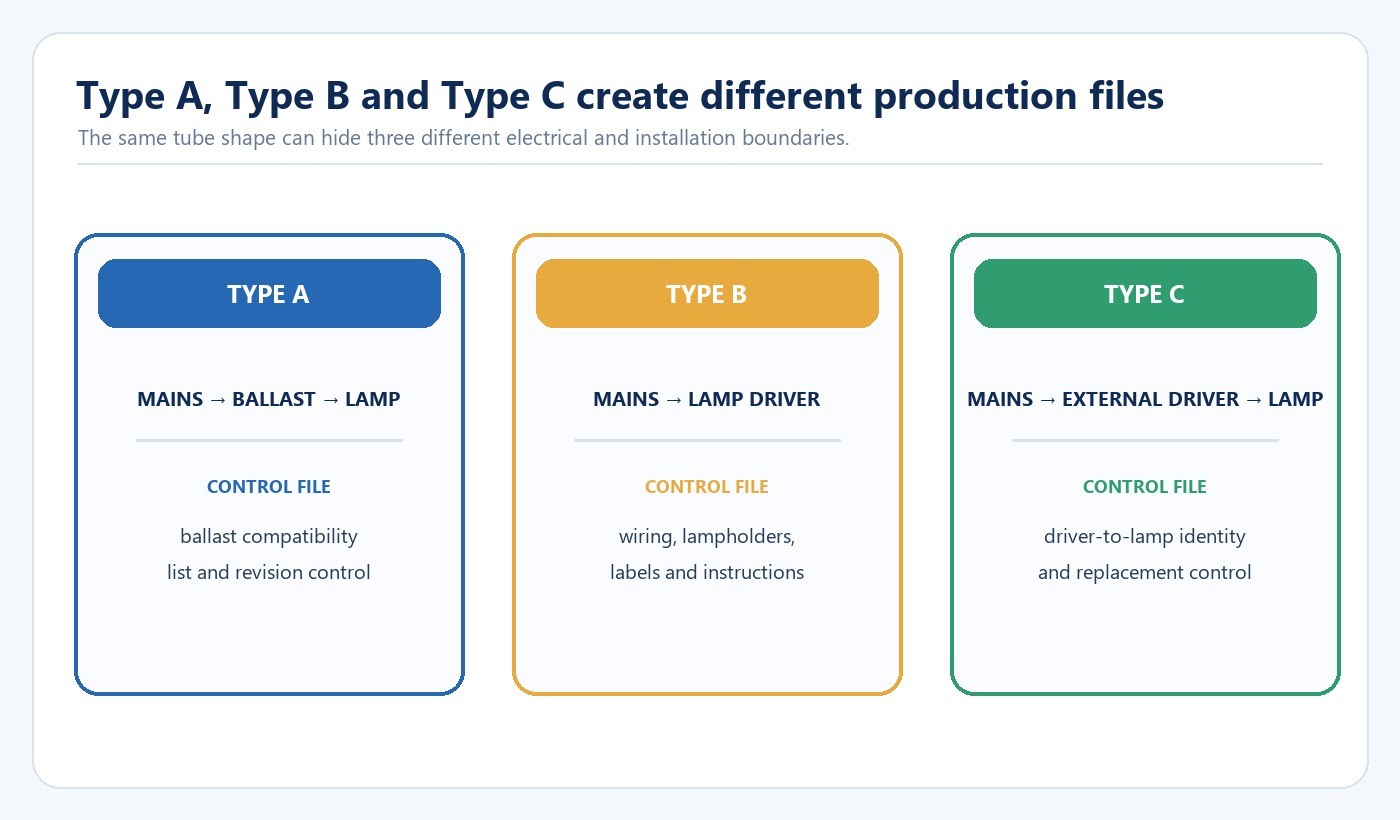
Type A production control includes the lamp driver or interface plus a maintained ballast compatibility list. A ballast list should identify the ballast model and revision, test condition and lamp configuration. Type B needs unambiguous single-ended or double-ended wiring, lampholder requirements, relabeling and market-specific installation instructions. Type C adds an external driver whose electrical output, connector and replacement identity must stay tied to the lamp.
Use the TLED driver selection guide for the external-driver boundary and the LED tube versus fluorescent tube guide when the project has not yet selected a retrofit route.
The U.S. General Services Administration’s 2024 lighting guidance recorded that the 2024 P100 did not allow Type B TLEDs because of compatibility and safety concerns. That is a U.S. federal-building example, not a global rule. Project teams should verify the standard currently named in their contract rather than copying the conclusion into another jurisdiction.
Fluorescent Transition Requires Regional Variants
The European Commission states that the revised Mercury Regulation prohibits manufacture and export of six additional mercury-containing lamp types from 31 December 2025 or 31 December 2026, depending on lamp type. RoHS exemptions and product-specific implementation also have their own scope. This is not one worldwide fluorescent-ban date.
For an LED tube program, the practical response is a region matrix. Record destination country, existing lamp and ballast, relevant rule or procurement requirement, electrical architecture, required safety documentation, waste route and transition date. A common mechanical platform may still need different labels, declarations, instructions or accessories.
| Region/project field | What to record | Why manufacturing needs it |
|---|---|---|
| Destination and project owner | Country, buyer and contract standard | Selects the applicable document set |
| Existing system | Lamp, ballast, lampholder, wiring and emergency equipment | Determines retrofit compatibility and installation work |
| Transition requirement | Exact lamp type and effective date | Prevents a broad ban statement from driving the wrong SKU |
| Product route | Type A, B, C, retrofit kit or new luminaire | Freezes the BOM, labels, tests and instructions |
Critical Components Need Controlled Substitutions
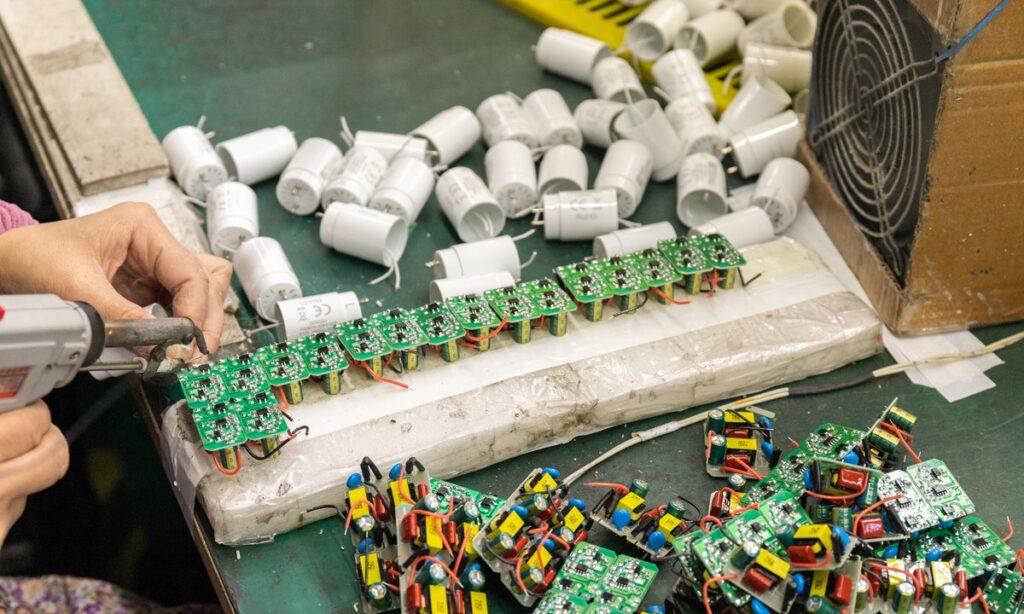
An LED tube is a system of LED packages, PCB, driver components, conductors, pins or lampholders, housing, diffuser and thermal interfaces. A package-level LED rating does not establish assembled-lamp life. Driver temperature, capacitor class, solder quality, insulation, surge conditions, switching, ballast behavior and enclosure temperature can change the result.
The DOE manufacturing report describes LED lamp and luminaire manufacturing as a global enterprise with a global supply chain. For buyers, the important conclusion is traceability: the approved critical component should be identifiable, and a substitution should trigger an impact decision instead of an informal purchasing change.
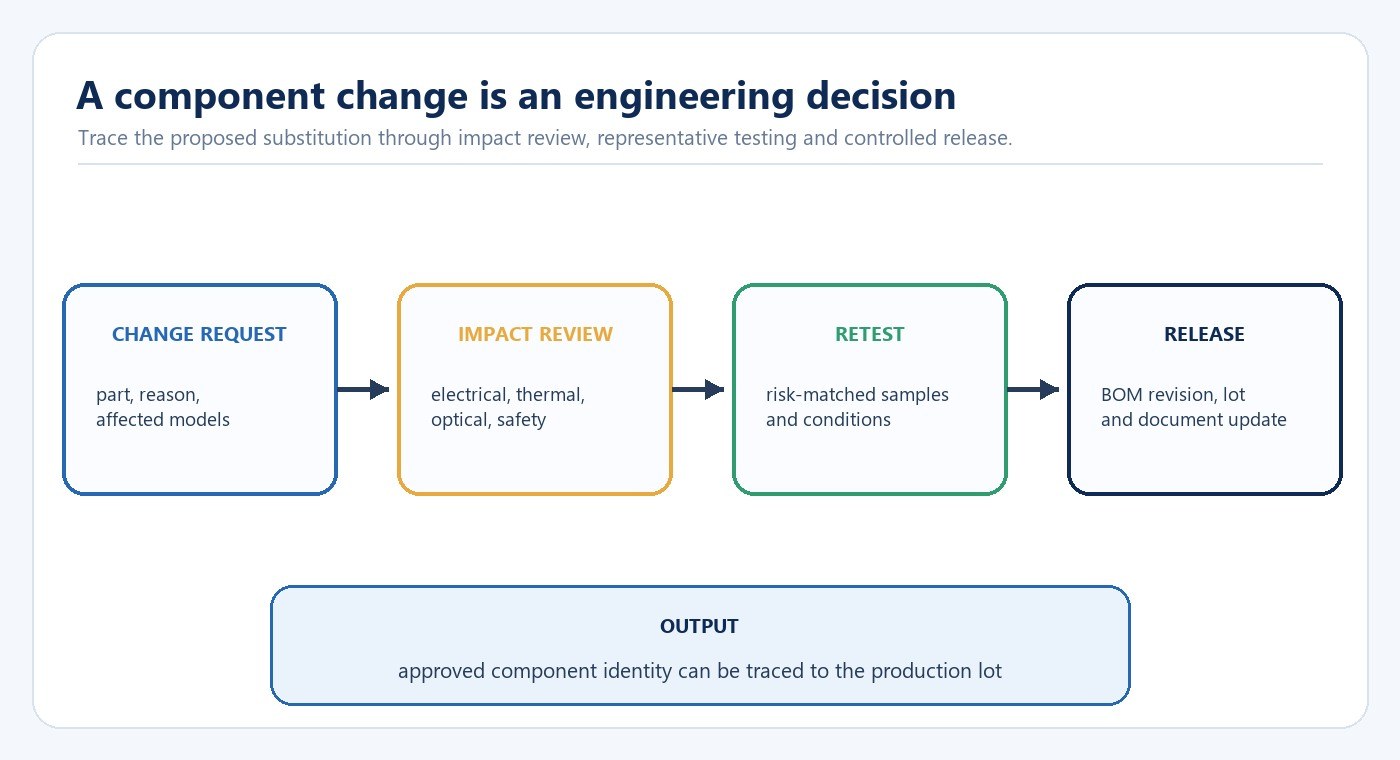
The LED tube supplier evaluation guide explains how to compare model evidence, while the factory audit checklist covers process and record verification at supplier level.
Testing Must Match the Architecture and Claim
“Tested” is incomplete without a method, sample identity, condition, limit and result. Production checks can confirm input power, function, workmanship and applicable safety items. Engineering validation may cover temperature, photometry, color, switching, flicker, ballast compatibility, abnormal conditions and life-related stress. The mix must follow the architecture and claims.
| Product claim or boundary | Representative evidence | Common mismatch to reject |
|---|---|---|
| Ballast compatible | Exact ballast matrix with revisions and operating conditions | A generic ballast-family statement |
| Direct wire | Wiring diagram, lampholder configuration, labels and instructions | A diagram that conflicts with the carton or lamp marking |
| External driver | Driver output range, connector and lamp pairing | Testing with a driver different from the quoted system |
| Low flicker | Metric, operating mode, input condition, dimming level and limit | A waveform image without product identity or conditions |
| Emergency use | Exact emergency equipment, changeover and duration test boundary | A normal-operation test used to imply emergency compatibility |
The sample evaluation checklist can tie test evidence to the sample revision and approved deviations.
Controls Can Change the Retrofit Platform
Occupancy response, daylight harvesting, scheduled operation, dimming and networked control add requirements beyond wattage and cap type. A compatible protocol does not by itself define minimum dimming level, fade behavior, zoning, commissioning or failure state.
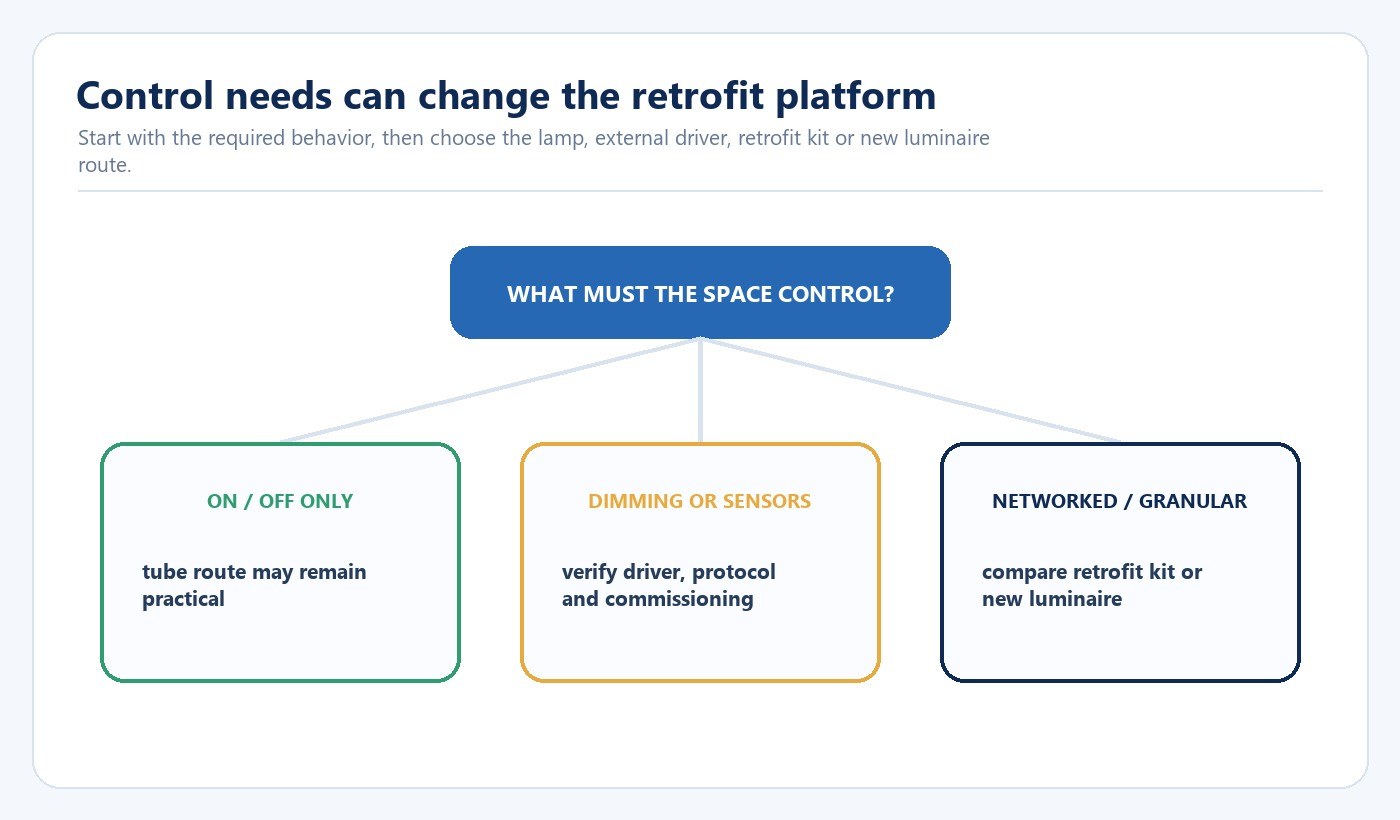
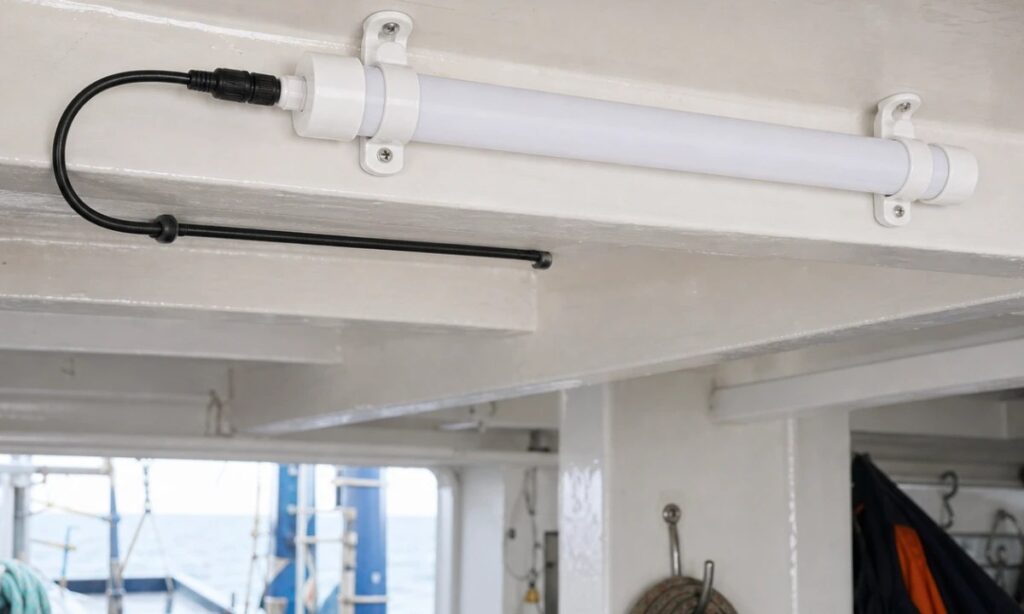
A simple on/off project may remain a practical tube application. A project needing granular dimming, sensor integration or network diagnostics should compare a lamp route with a retrofit kit or new luminaire. Record the control sequence, protocol, driver behavior, wiring, commissioning method and maintenance responsibility in the RFQ rather than reducing the requirement to “dimmable: yes.”
Automation Supports a Controlled Process
Automation can improve repeatability, throughput, data capture and error prevention. It can also repeat an incorrect setup. The DOE manufacturing report identifies automation as an opportunity, but an automated machine does not establish the capability of a factory or the conformity of a model.
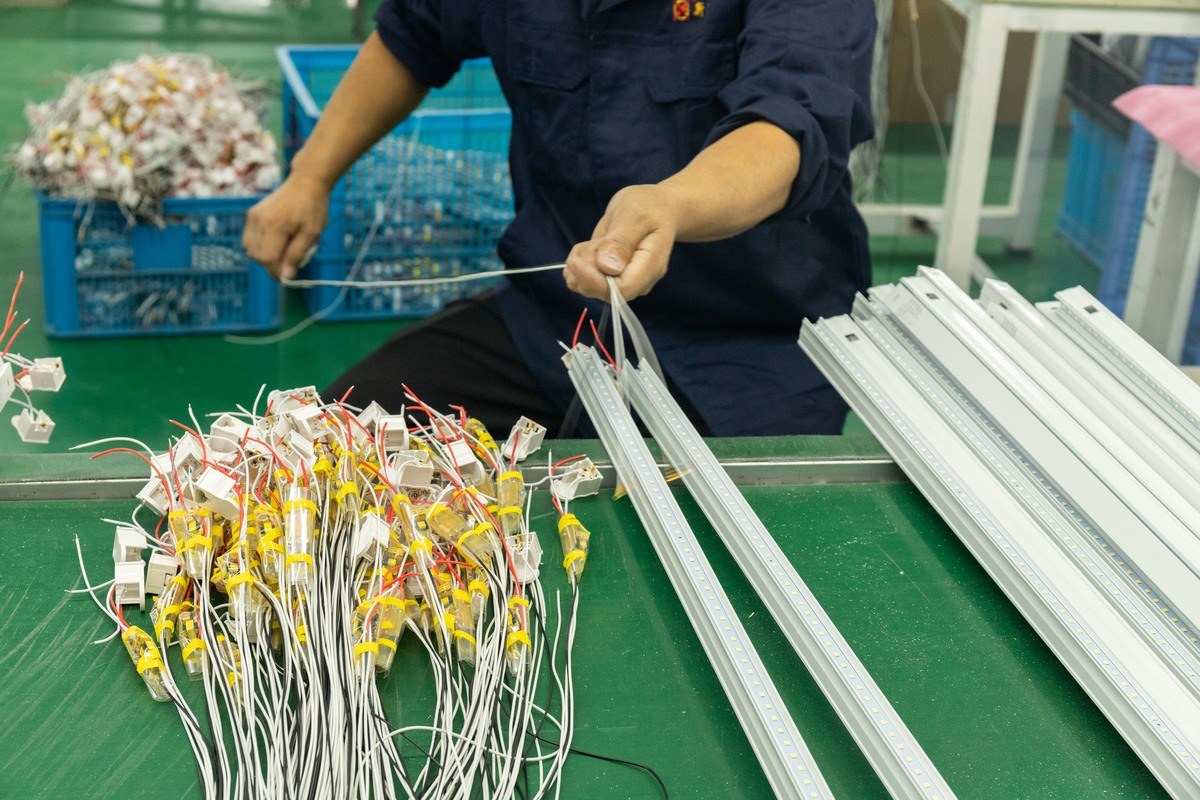
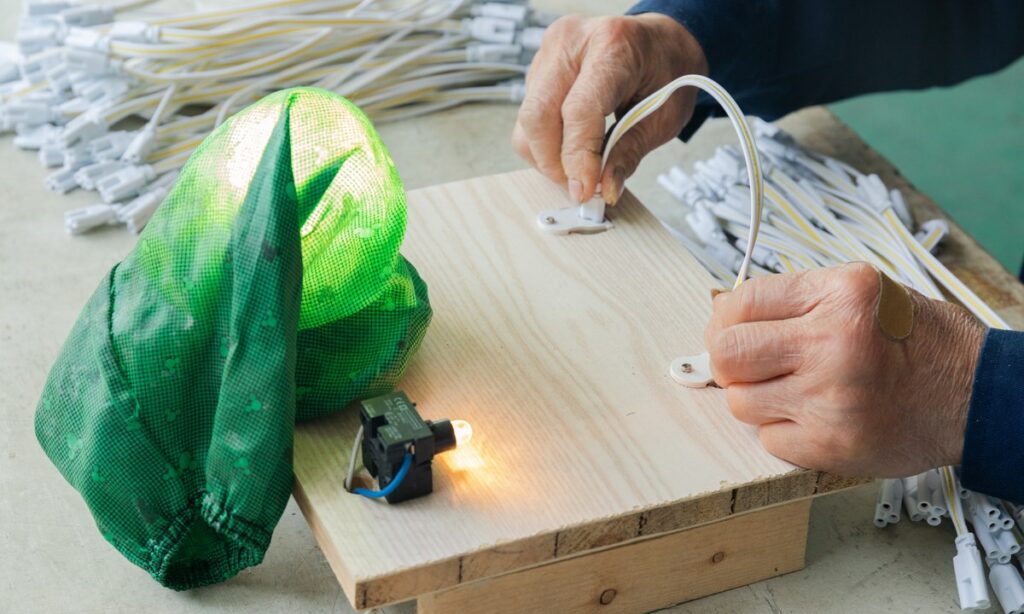
For each important operation, identify the work instruction, fixture or machine ID, parameter limits, calibration status, first-article check, in-process inspection and failure disposition. A lower-volume customized tube may use skilled manual assembly with strong verification; a mature high-volume platform may justify more automation. The acceptance decision is whether the implemented process repeatedly produces the approved design.
Compare Price Only After Normalizing the Specification
There is no responsible universal statement that LED tube prices will rise or fall in 2026. A quotation combines architecture, LED and driver platform, housing materials, tests, certification, packaging, quantity, currency, freight, duty, warranty reserve and delivery terms. Cost can also move between the lamp, installation labor, future ballast maintenance and control system.
Normalize the following fields before comparing unit price:
| Cost boundary | Questions to normalize |
|---|---|
| Product | Exact model, architecture, dimensions, output, color and driver |
| Evidence | Test scope, certification model coverage and document delivery |
| Production | Critical-component commitment, change control and lot records |
| Logistics | MOQ, carton, labeling, freight, duty, currency and lead time |
| Field work | Ballast removal, lampholder changes, relabeling and commissioning |
The OEM and ODM RFQ guide helps freeze these fields before quotations are compared.
A Buyer’s 2026 Evidence Checklist
Before model approval, confirm:
- Exact model, dimensions, cap, input, architecture, wiring and destination market.
- Datasheet, markings, carton artwork and installation instructions under revision control.
- Ballast or external-driver compatibility evidence where applicable.
- Approved critical components and a documented engineering-change route.
- Photometric, electrical, thermal, color, flicker, switching and safety evidence matched to claims.
- Sample approval tied to the production BOM and allowable tolerances.
- In-process and final inspection plan, calibration status and failure disposition.
- Lot traceability that can identify affected production after a change or complaint.
- Control sequence, commissioning needs, emergency boundaries and maintenance route.
- Commercial assumptions for quantity, packaging, lead time, freight, currency and warranty handling.
Remove any item that is genuinely not applicable and record why. Do not replace model-level evidence with a factory profile, certificate photo or general claim.
What This Outlook Means for Buyers
Distributors should reduce ambiguous SKU overlap and preserve model revisions. Retrofit contractors should survey fixtures, ballasts, lampholders, controls and emergency equipment before fixing the architecture. Facility owners should compare installation and maintenance risk alongside first cost. OEM buyers should make evidence delivery and change control part of the purchase specification.
The 2026 manufacturing direction is therefore greater specification discipline: translate regional policy into a market matrix, architecture into controlled production files, component changes into risk-matched retesting, and control behavior into a system decision.
To prepare a project-specific review, contact New Lights with the destination market, existing fixture and ballast, proposed architecture, control requirement, quantity and required approval documents.
Frequently Asked Questions
Is there one global fluorescent phase-out date?
No. Lamp types, legal instruments, exemptions, procurement rules and effective dates vary by jurisdiction. Record the exact destination and affected lamp category.
Which TLED architecture is best?
There is no universal winner. Type A depends on ballast compatibility, Type B changes field wiring and safety responsibilities, and Type C adds an external driver. Select from the surveyed fixture and project requirements.
Does automation prove consistent production?
No. Consistency depends on the approved design, controlled parameters, calibrated equipment, component identity, inspections and failure handling. Automation is one process method.
What should trigger LED tube requalification?
A change affecting electrical, thermal, optical, mechanical, safety or compatibility performance should receive documented impact review and risk-matched retesting before release.
How should buyers compare 2026 quotations?
Normalize model architecture, components, tests, certification scope, packaging, quantity, freight, currency, field labor and control requirements before comparing price.
Editorial Sources
- U.S. General Services Administration, “LED Lighting and Controls Guidance”: https://www.gsa.gov/governmentwide-initiatives/federal-highperformance-buildings/highperformance-building-clearinghouse/emerging-technology-evaluations/lighting/led-and-controls-guidance
- U.S. General Services Administration, “LED Lighting and Controls Guidance for Federal Buildings”: https://www.gsa.gov/system/files/LED%20and%20Controls%20Guidance%20for%20GSA_15Jan25.pdf
- European Commission, “Mercury”: https://environment.ec.europa.eu/topics/chemicals/mercury_en
- European Commission, “RoHS Directive Implementation”: https://environment.ec.europa.eu/topics/waste-and-recycling/rohs-directive/rohs-directive-implementation_en
- U.S. Department of Energy, “2022 DOE SSL Manufacturing Status & Opportunities”: https://www.energy.gov/sites/default/files/2022-02/2022-ssl-manufacturing-status-opportunities_0.pdf