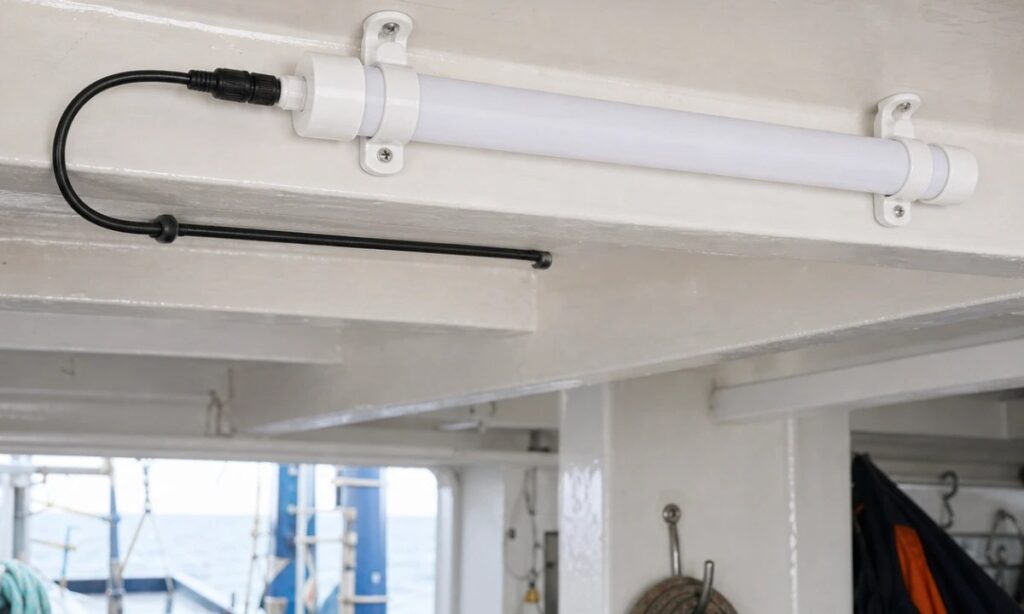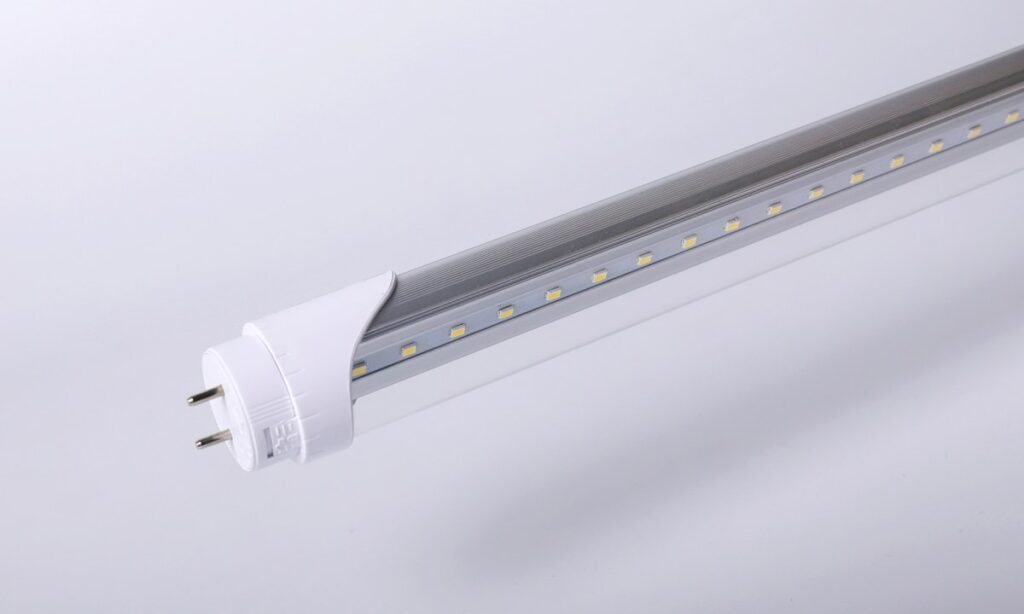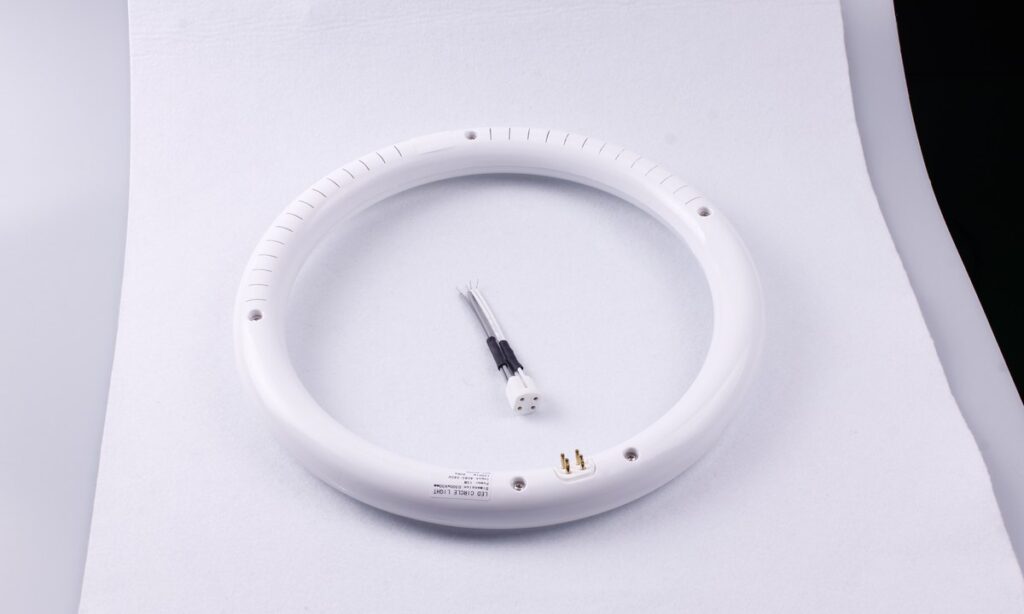


An LED tube is not automatically the better choice for every fluorescent fixture. The decision depends on the existing ballast, lampholders, wiring, controls, emergency equipment, photometric needs and the retrofit method supported by the selected lamp.
For a commercial project, compare the complete lighting system rather than two bare tubes. A lamp-only swap may reduce installation work but retain an aging ballast. A ballast-bypass conversion removes that component but changes the fixture wiring and safety responsibilities. Replacing the complete luminaire can require more initial work while giving the project a fully designed LED system.
LED and Fluorescent Tubes Use Different Operating Systems
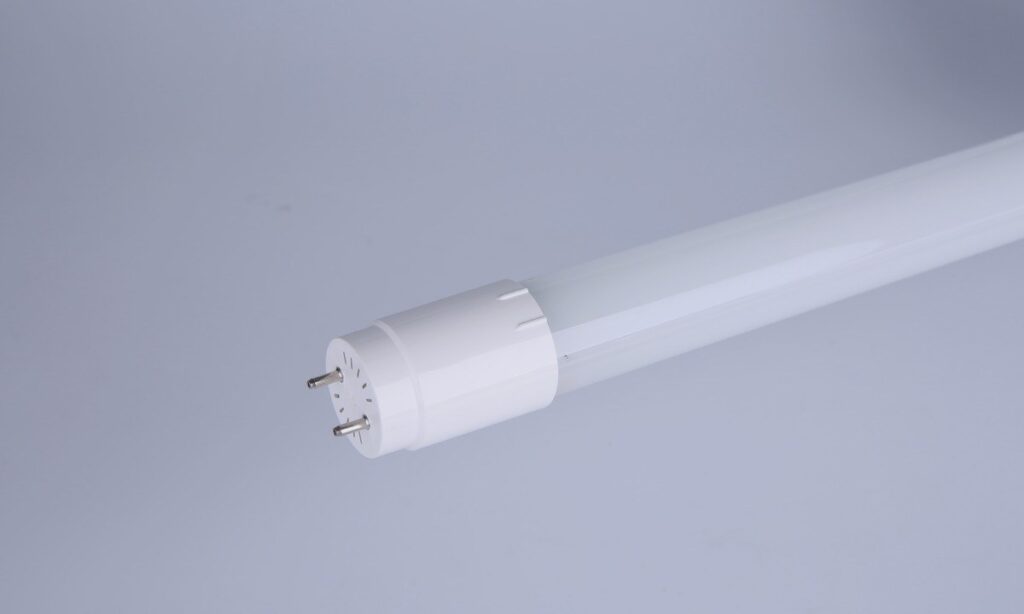
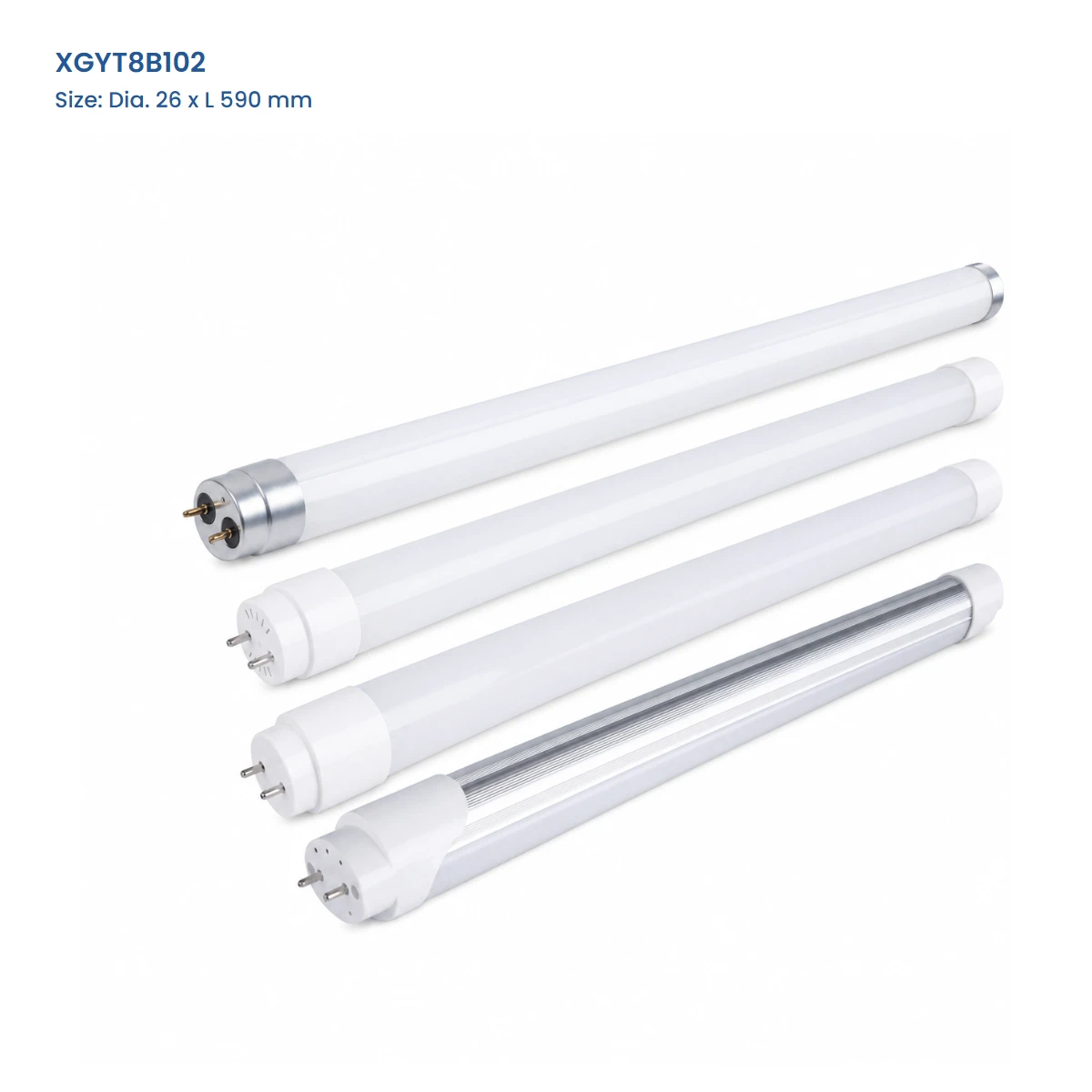
A linear fluorescent lamp relies on a ballast to provide the electrical conditions needed to start and regulate the lamp. A tubular LED lamp uses LED emitters and a driver. Depending on the retrofit type, that LED driver may be inside the tube or installed externally.
That distinction affects more than energy use. It determines what remains in the existing fixture, which components can fail, whether rewiring is required and what replacement lamp can be installed later.
| Decision point | Fluorescent system | LED-tube retrofit |
|---|---|---|
| Power regulation | Fluorescent ballast | Existing ballast, internal LED driver or external LED driver, depending on type |
| Lamp compatibility | Lamp and ballast must match | Lamp, ballast or line-voltage configuration, lampholders and fixture must match |
| Retrofit work | Continue maintenance or replace like-for-like components | Lamp-only change, fixture conversion or external-driver conversion |
| Light output | Depends on lamp, ballast, fixture optics and condition | Depends on LED tube, wiring mode, fixture optics and distribution |
| Controls/emergency | Existing system may already be designed around fluorescent equipment | Compatibility must be verified for the selected LED route |
| End-of-life handling | Fluorescent lamps contain mercury and require appropriate handling | Follow local electronic and lamp-disposal requirements |
Understand Type A, Type B and Type C LED Tubes
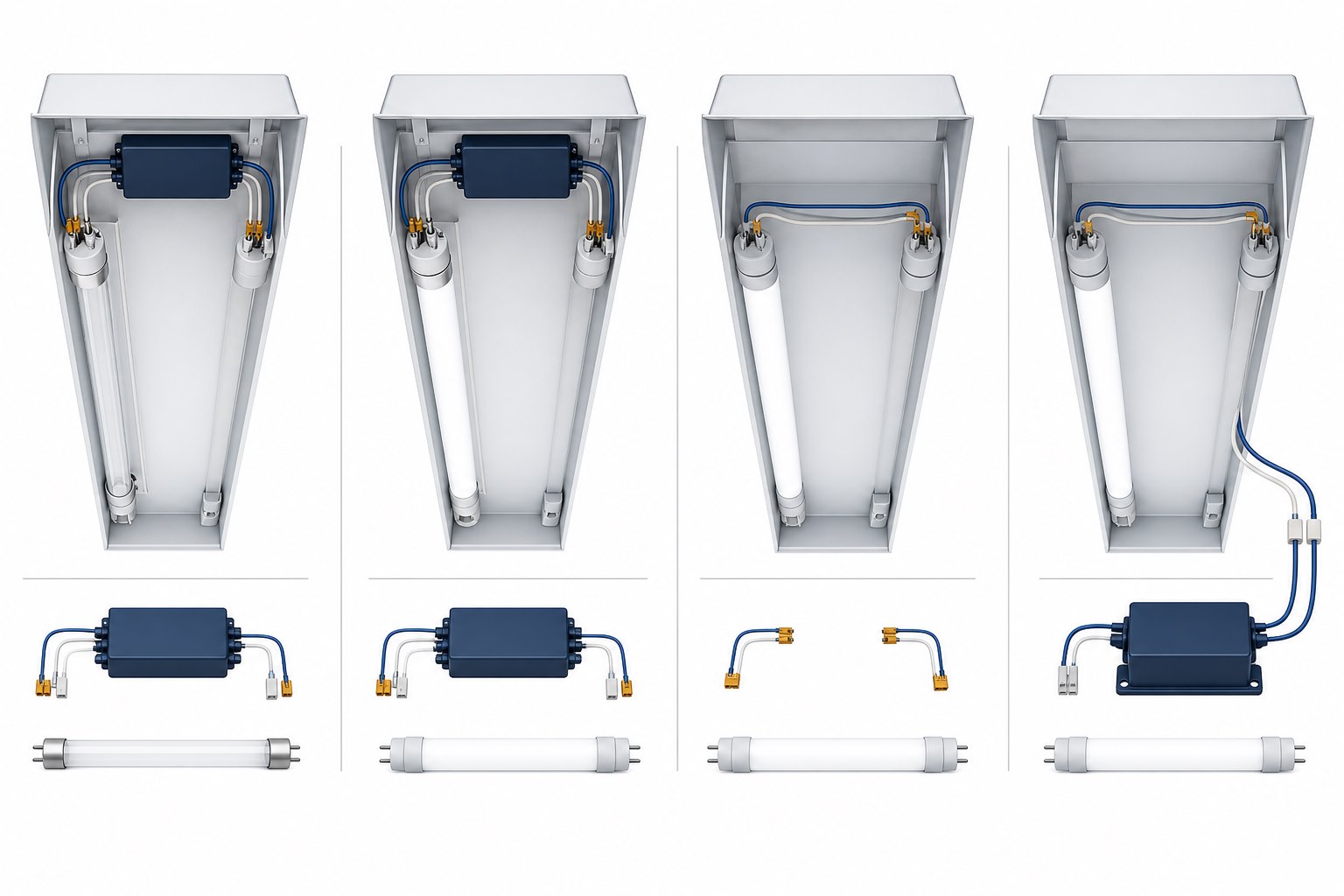
US DOE/FEMP retrofit guidance commonly separates tubular LED lamps into three system types.
Type A: Ballast-Compatible LED Tube
A Type A lamp operates through a compatible existing fluorescent ballast and also contains its own LED driver. The fixture wiring is generally not converted for line-voltage LED operation.
This route can reduce installation work, but compatibility cannot be assumed. Ballast model, age, voltage, lamp quantity and emergency configuration can all affect operation. The ballast also remains a system component that consumes power and may require future maintenance.
Use the lamp manufacturer’s current ballast-compatibility list for the exact tube and verify representative fixtures before a full rollout.
Type B: Ballast-Bypass or Direct-Wire LED Tube
A Type B conversion disconnects the fluorescent ballast and supplies the LED tube from line voltage through the fixture’s lampholders or another kit-defined arrangement. The tube contains the LED driver.
Because the fixture is rewired, this is not a generic lamp swap. Single-ended and double-ended supply arrangements are not interchangeable, and the selected lamp, lampholders, labeling and retrofit instructions determine the correct conversion. Use the LED tube installation planning guide to structure the site evidence and installer handoff.
UL Solutions guidance highlights the safety significance of certified retrofit kits and required conversion markings. The work should be completed by qualified personnel following the exact product instructions and local requirements.
Type C: External-Driver LED Tube
A Type C system removes or disconnects the fluorescent ballast and uses a separate LED driver to supply the tubes. The external driver can centralize system electronics and thermal management, but it adds a specific driver-lamp relationship and installation layout.
The driver, lamps, wiring and host fixture must be evaluated as one retrofit system. Do not combine components only because their connectors or nominal ratings appear similar.
Type A+B: Dual-Mode Lamps
Some lamps are designed for both ballast-compatible and ballast-bypass operation. Dual-mode labeling does not remove the conversion requirements. UL explains that an A/B lamp used to convert a luminaire needs the appropriate retrofit-kit evaluation and marking for that use.
Confirm which operating mode applies now, what will happen when the ballast fails and which instructions and labels govern a future conversion.
Compare Light Output at the System Level
Bare-lamp lumens and watts are useful, but they do not fully describe the installed result. Fluorescent and LED tubes can distribute light differently inside an existing reflector, louver or diffuser. Dirt, yellowed lenses and fixture geometry also affect delivered light.
For a retrofit, compare:
- Maintained illuminance on the work plane.
- Distribution and uniformity.
- Glare and visible LED image through the lens.
- Lumens and input power for the complete operating system.
- Color temperature and color-rendering data.
- Flicker and control behavior.
- Emergency-mode output where applicable.
A lower-wattage lamp that produces unsuitable distribution is not a successful retrofit. Likewise, replacing lamps one-for-one can overlight or underlight the space if the new system is not evaluated against the original lighting task.
Energy and Maintenance Need a Project Baseline
LED technology can offer attractive system options, but a credible savings estimate starts with measured or documented baseline data. Record the existing lamp wattage, ballast input, fixture count, annual operating hours and maintenance history. Then compare that baseline with the complete proposed LED system.
Type A retains ballast losses and future ballast maintenance. Type B removes the ballast but requires conversion labor and creates a modified fixture. Type C adds an external LED driver that will need compatible replacement support. A new LED luminaire changes the first cost and installation scope again.
Include labor, access equipment, controls, spares and disruption—not just lamp wattage. Avoid applying a universal energy-saving or payback percentage to every site.
Controls and Emergency Lighting Can Change the Decision
An existing fluorescent dimming ballast, occupancy sensor or emergency ballast may not operate correctly with a proposed LED tube. DOE retrofit guidance specifically notes that ballast compatibility and emergency-lighting compatibility require checking for Type A systems.
For every option, identify:
- Switching, dimming or control protocol.
- Existing ballast or control-gear model.
- Emergency circuit or battery equipment.
- Required light output during emergency operation.
- Applicable test, certification and commissioning requirements.
Do not assume that a lamp which operates in normal mode is approved for emergency use.
Fluorescent Lamp Removal and Disposal
Fluorescent lamps contain mercury. In the United States, the US EPA recommends using available local recycling options rather than placing fluorescent lamps in ordinary household trash, and state or local rules may be stricter.
A commercial retrofit plan should include intact removal, protected storage, labeling, transport and an approved recycling route. Establish a procedure for broken lamps before work starts. Requirements differ by location, so confirm them with the relevant authority and waste provider.
Choose the Retrofit Route
Continue With Fluorescent Maintenance When
- The existing system is functioning and a conversion has not been technically or financially justified.
- Required LED compatibility, photometrics or approvals are not yet available.
- A broader controls or luminaire project is scheduled and an interim lamp conversion would create duplicate work.
Consider Type A When
- A verified lamp-ballast combination exists.
- Minimizing fixture rewiring is important.
- The remaining ballast condition and future maintenance plan are acceptable.
Consider Type B or Type C When
- Removing the fluorescent ballast is part of the project objective.
- A certified retrofit solution and qualified installation process are available.
- The modified fixture, replacement labeling and future lamp control can be managed.
Consider a New LED Luminaire When
- Existing optics, housings, controls or wiring make a lamp retrofit unsuitable.
- The project needs a different distribution, form factor or integrated control system.
- A complete designed system provides a clearer maintenance and compliance route.
These are evaluation paths, not universal recommendations. The selected option must be checked against the actual building and products.
Retrofit Audit Checklist
Before requesting a quotation, record:
- Existing lamp designation, length, base and quantity per fixture.
- Ballast manufacturer, model, voltage and condition.
- Fixture type, lampholders, lens and physical condition.
- Circuit voltage and control method.
- Emergency-lighting components and required operation.
- Existing input power and annual operating hours.
- Target illuminance, distribution, CCT and color-rendering needs.
- Preferred Type A, B, A+B, C or new-luminaire route.
- Destination-market certification and retrofit requirements.
- Fluorescent-lamp removal and recycling plan.
A site sample should be installed and evaluated before a large conversion, especially when ballast compatibility, dimming, emergency operation or visual appearance is important.
Run a Representative Pilot Before the Rollout
A pilot should represent the difficult parts of the site, not only the easiest fixture. Include at least one typical fixture and, where they exist, examples with older ballasts, different lampholders, emergency equipment, dimming or unusual access. Record the exact lamp, ballast, fixture and wiring mode used in each sample.
During the pilot, compare the existing and proposed systems under the same conditions. Measure system input power and illuminance at defined points, then review distribution, glare, color appearance, flicker, start-up and control behavior. For emergency systems, complete the required functional and duration checks under the applicable project rules. Inspect the fixture after operation for abnormal heat, noise or unstable behavior.
The pilot should also test the work process. Confirm how long isolation, relamping or conversion takes; whether labels remain visible; how removed fluorescent lamps are protected; and how the as-built record will identify the future replacement lamp. A technically acceptable tube can still create an expensive rollout if the site lacks access, compatible spares or a clear maintenance procedure.
Approve the rollout only after the pilot results are recorded and any exceptions are separated from the standard scope. Fixtures that fail the sample criteria may need a different LED route or complete replacement rather than an improvised variation in the field.
Frequently Asked Questions
Can I replace a fluorescent tube with an LED tube directly?
Only when the exact LED lamp is approved for the existing ballast and fixture configuration, such as a verified Type A application. Other types require a certified conversion process.
Is ballast bypass always more efficient?
Removing a fluorescent ballast removes its losses, but the complete result depends on the selected LED lamp, driver, wiring, light output and operating conditions. Compare measured system input and delivered light.
Are all T8 LED tubes wired the same way?
No. Supply method, powered end, lampholder requirements and retrofit instructions vary. Use the exact model documentation.
Can I reuse the existing emergency ballast?
Do not assume compatibility. Emergency equipment and required performance must be verified for the selected LED system.
Do LED tubes contain mercury?
LED tubes do not use the mercury-discharge process of fluorescent lamps. Disposal and recycling requirements for the LED product still depend on local rules and its electronic components.
Should I replace lamps or the complete fixture?
Compare compatibility, fixture condition, photometrics, controls, labor, maintenance and certification. A new luminaire may be preferable when the existing fixture limits the retrofit result.
Build the Comparison From Site Evidence
Use the LED tube product families as a starting point, then review the LED tube installation planning guide and send the existing lamp, ballast, fixture, voltage, control and emergency-lighting details through the New Lights contact page. The quoted route should identify which equipment remains, which wiring changes and which approvals apply.