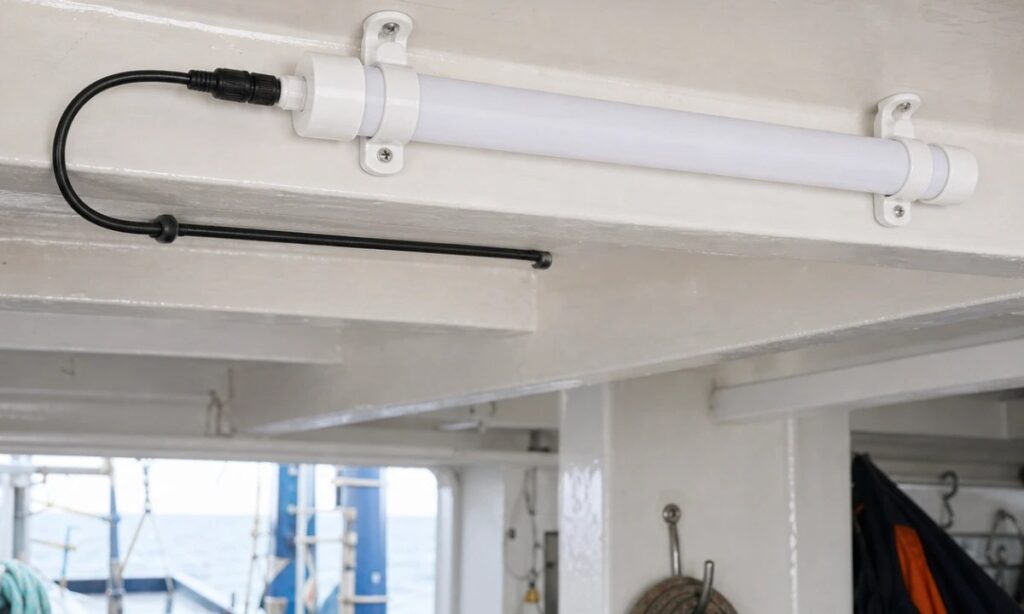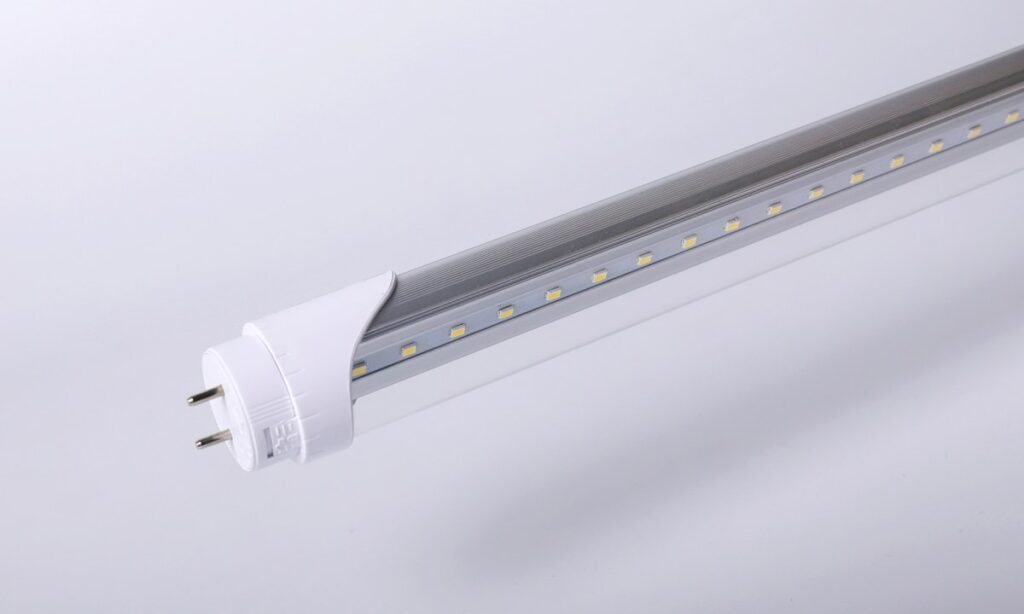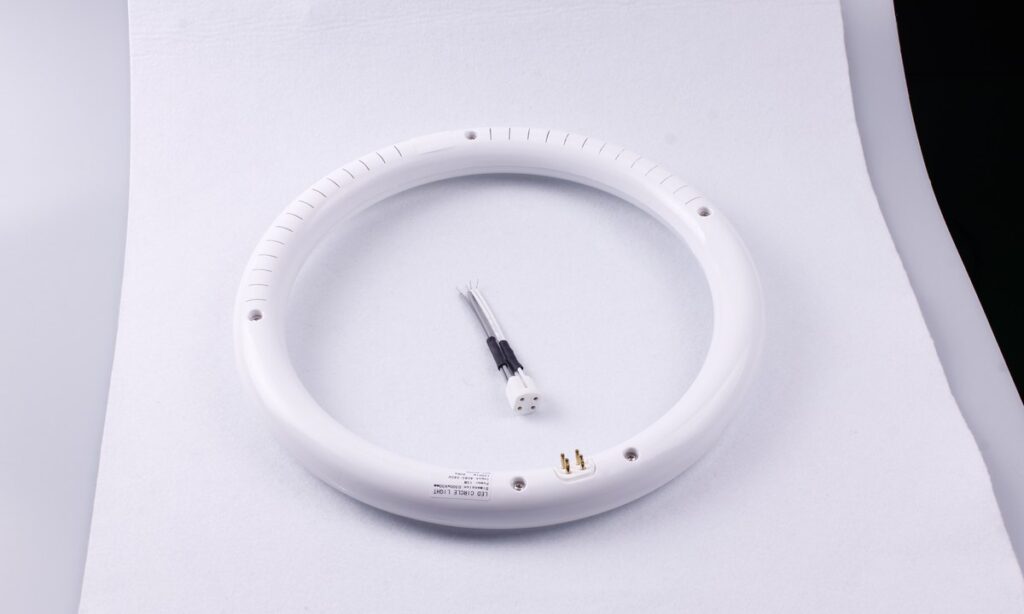


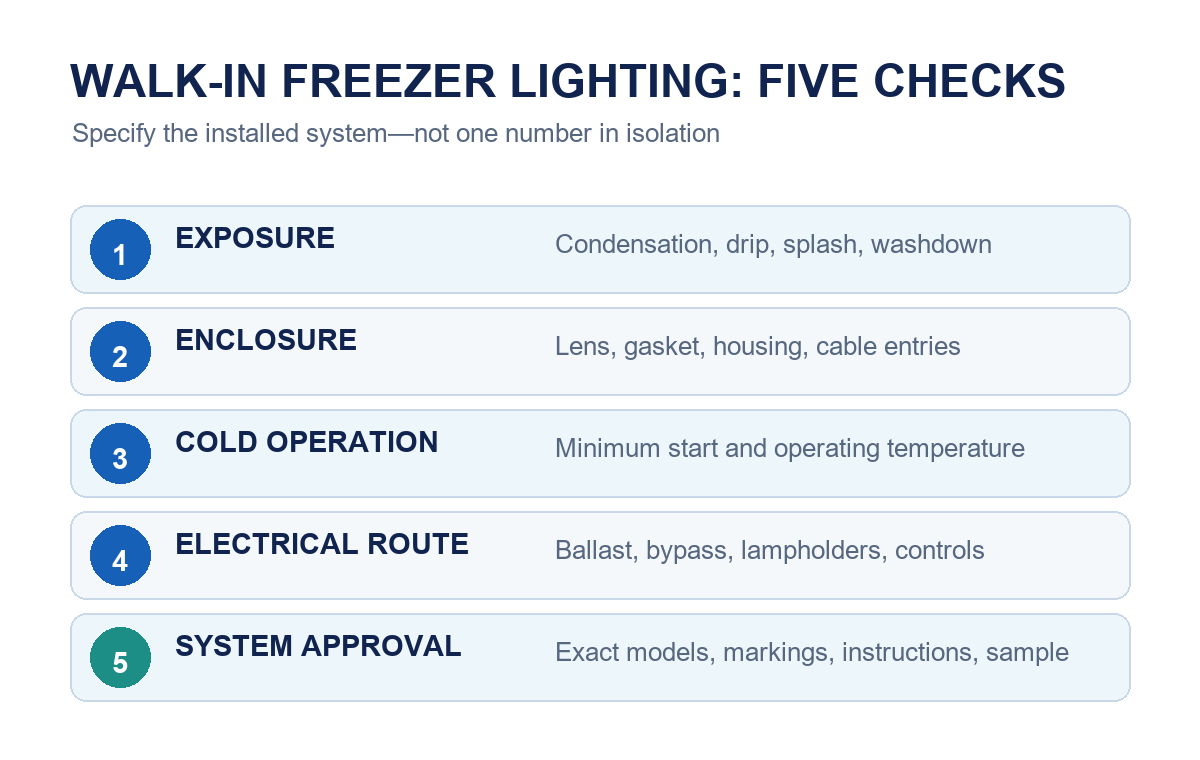
There is no single IP rating that automatically makes every T8 LED tube installation suitable for a commercial walk-in freezer. Start with the actual exposure—condensation, dripping, splash, washdown, dust and cleaning agents—then verify the complete installed lighting system for that exposure.
An IP code addresses ingress protection for the enclosure to which the rating applies. It does not state the minimum starting temperature, ballast compatibility, wiring method, impact protection or food-area suitability. Those are separate selection questions.
The practical answer is therefore: specify the enclosure from the documented exposure, then check cold operation, condensation, electrical architecture and application markings for the exact lamp-and-fixture arrangement.
Start With the Complete System
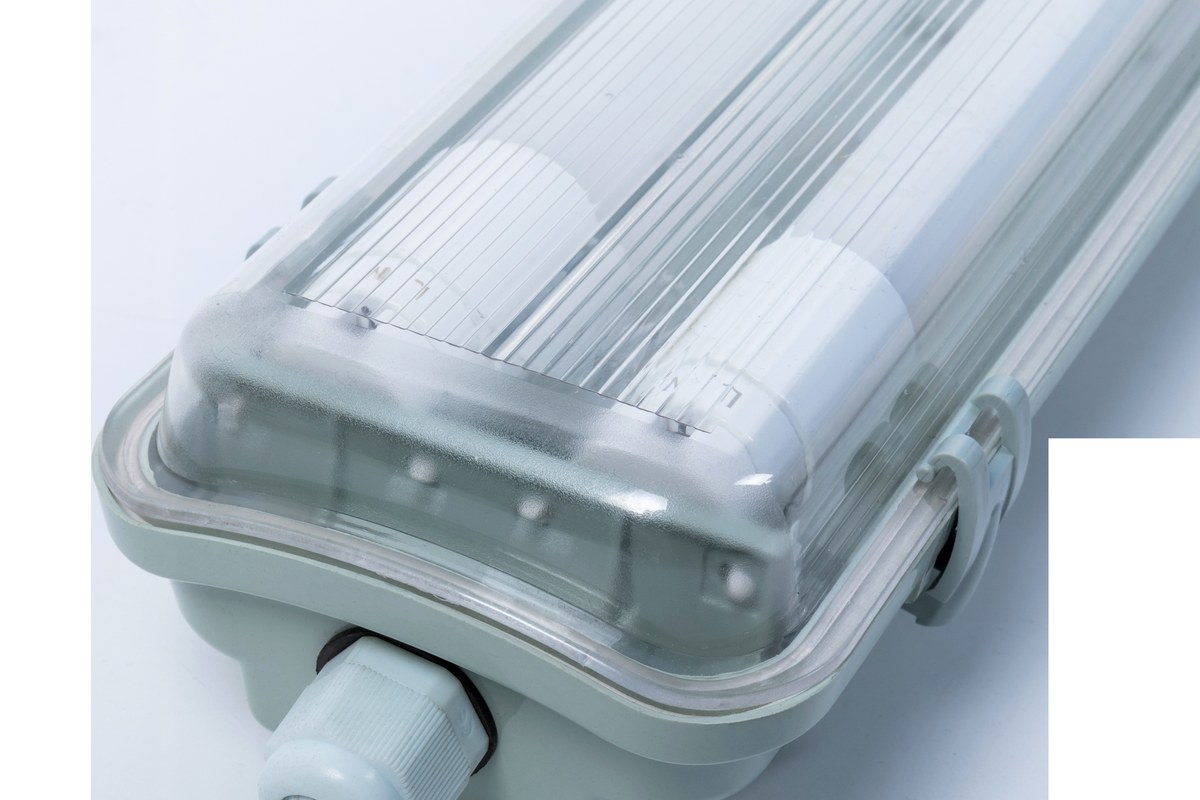
A walk-in freezer light is more than a tube. The installed system can include a lens, housing, gasket, end caps, cable entries, lampholders, ballast or driver, mounting hardware and field wiring. Each interface can affect moisture protection and cold-weather reliability.
IEC 60529 classifies protection provided by electrical enclosures. Its first numeral concerns access and solid foreign objects; its second concerns harmful water ingress. NEMA’s ANSI/IEC scope also makes an important point: the relevant product committee determines how the classification is used and what counts as the enclosure. The separate IP ratings guide explains how the two numerals are commonly read in lighting specifications.
That means an IP label must be tied to a defined object. A rating for one component cannot simply be transferred to the assembled installation. In many T8 retrofits, the host luminaire remains the environmental enclosure.
Why “Use IP65” Is an Incomplete Rule
IP65 is often mentioned for industrial lighting because its defined tests address dust ingress and water jets. It is not a universal threshold for every walk-in freezer. A closed storage room with no direct spray presents a different exposure from a door zone with frequent condensation or a processing area cleaned with pressurized water.
A higher IP numeral may be appropriate for harsher water exposure, but it does not answer every freezer question. The exact model still needs a cold-start range, an allowed installation orientation, compatible materials and the correct electrical configuration.
The first task is to classify the fixture position rather than the room name.
| Site observation | Specification consequence | Evidence to request |
|---|---|---|
| Condensation on or beside the fixture | Treat moisture as a recurring operating condition | Location marking, enclosure instructions and cold-cycle data |
| Defrost water may drip onto the fixture | Evaluate a wet-location exposure at that position | Complete-luminaire marking and installation instructions |
| Cleaning water can splash or flow against it | Match water exposure to the stated enclosure test scope | IP report scope, orientation and cable-entry details |
| Pressurized washdown is used | Record pressure, direction, duration and chemicals | Washdown-specific test or application evidence |
| Warm humid air enters at the door | Account for repeated condensation cycles | Minimum start temperature and cycling evidence |
| Carts, racks or packages can strike the light | Add mechanical protection to the review | Lens, guard and impact information |
This location-by-location approach is also useful when comparing a T8 LED retrofit with fluorescent tubes, because the electrical conversion and the environmental enclosure must both remain clear.
Distinguish Damp, Wet and Washdown Exposure
UL Solutions’ luminaire guidance distinguishes damp locations, where moisture condensation may occur, from wet locations, where water or other liquids may drip, splash or flow on or against electrical equipment. A freezer can contain both conditions at different positions.
Condensation near a frequently opened door can create a damp-location concern even without hose cleaning. Defrost water or cleaning spray can create a wet-location concern. Washdown can be more demanding because pressure, direction, duration and chemical exposure matter.
Record six observations during the site survey:
- Normal and lowest temperature at the fixture, not only the room set point.
- Condensation during door openings, pull-down and defrost cycles.
- Drip paths from evaporators, pipes and ceiling surfaces.
- Splash or washdown direction, pressure and frequency.
- Detergents, sanitizers, salt or corrosive vapors.
- Physical impact and maintenance access.
The label “vapor-tight” is useful only when it is connected to the exact model’s markings and instructions. It should not replace this exposure record.
Verify Minimum Operating and Starting Temperature
LED sources can perform well in cold environments, but the complete product contains more than LED packages. Drivers, capacitors, seals, wiring, sensors and other components have temperature limits.
Request the exact model’s minimum operating temperature and minimum starting temperature. These values may differ. A lamp that continues operating while the room cools may not start reliably after a power interruption at the lowest freezer temperature.
Use the worst credible condition at the fixture. Consider local cold spots, evaporator discharge, pull-down periods, door openings and defrost cycles. Ask whether light output, driver behavior or control response changes near the lower limit.
If a project uses occupancy sensing or centralized controls, test those devices under the same conditions. A sensor that delays, locks out or misreads motion at low temperature can undermine an otherwise suitable lighting assembly.
Condensation Is a Construction and Maintenance Issue
Freezers receive warm humid air whenever doors open. Moisture can form on cold surfaces, migrate through imperfect seals or collect during defrost and maintenance.
Review the gasket path, lens closure, end seals, cable glands, mounting orientation and any drain or vent strategy. Confirm that field wiring does not create an unsealed penetration. Repeated opening for relamping can also affect protection: a damaged gasket, loose latch or incorrectly seated lens changes the enclosure.
Maintenance instructions and replacement seals therefore belong in the procurement package. A strong initial installation is not enough if routine service cannot preserve the intended closure.
Bare T8 Tube or Complete Luminaire?
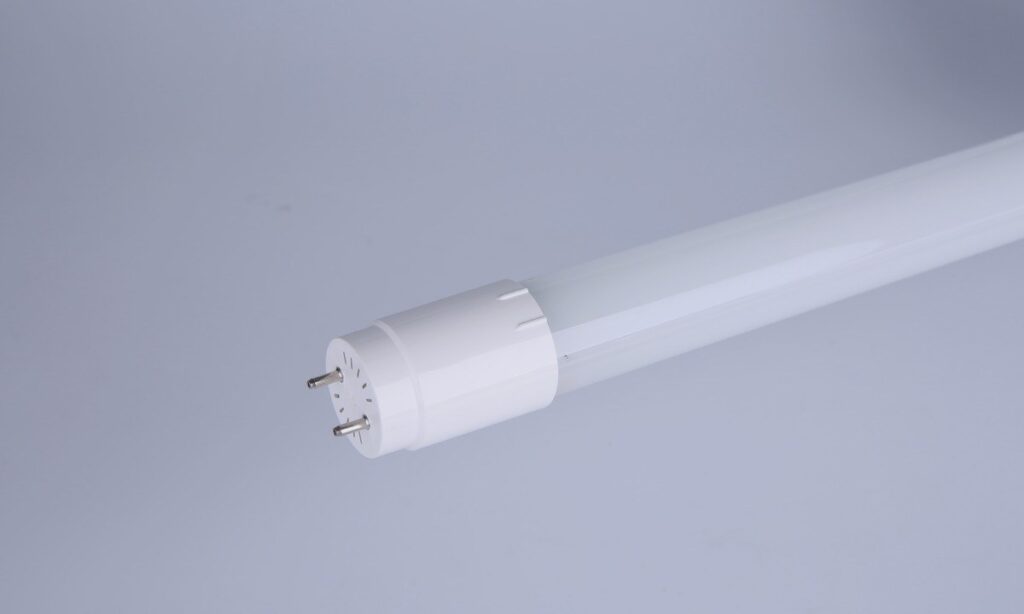
A bare T8 LED tube can be part of a freezer-lighting solution when the host luminaire provides the required environmental enclosure and the exact retrofit combination is permitted. Check whether the tube is allowed in enclosed luminaires, whether its thermal limits remain suitable and whether its dimensions fit without stressing the lampholders.
Inspect the existing housing before choosing a lamp-only route. Corroded metalwork, cracked lenses, brittle lampholders, damaged gaskets or undocumented cable entries can make complete luminaire replacement the clearer option.
Ballast Compatibility and Wiring Method
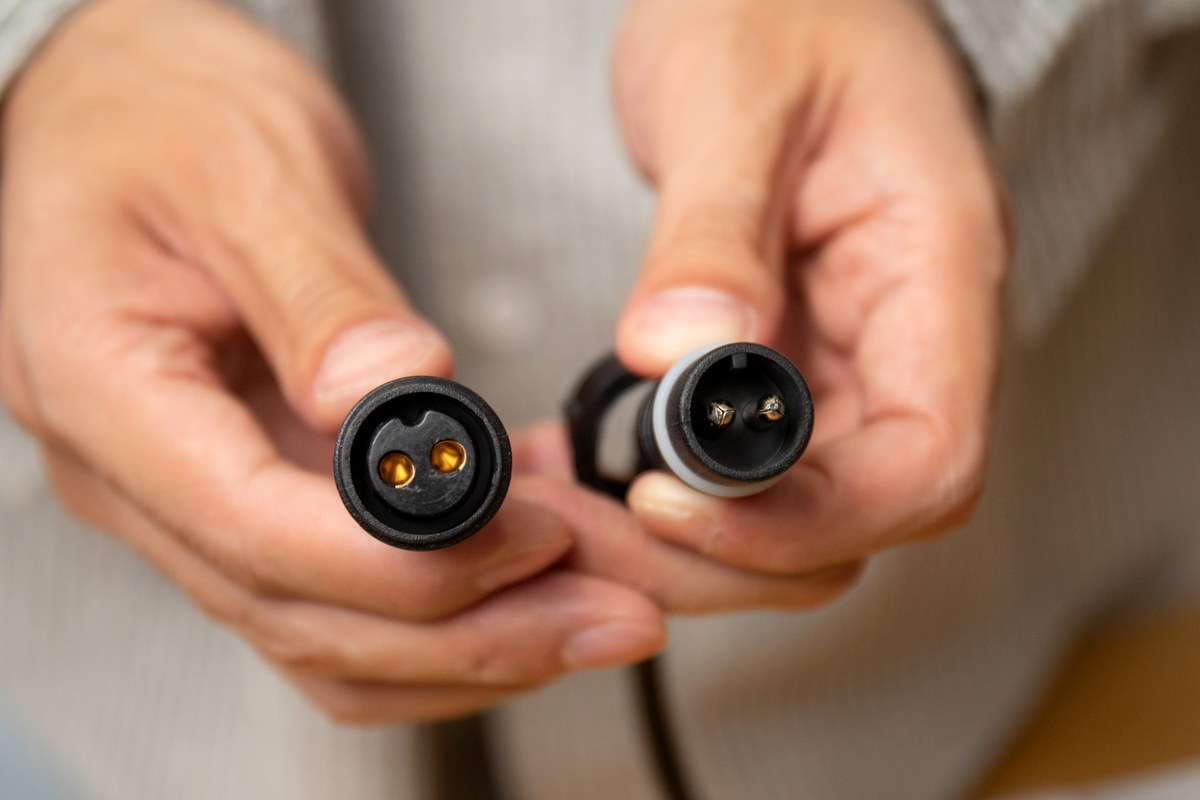
T8 LED tubes use different electrical architectures. Type A lamps operate through selected fluorescent ballasts. Type B lamps use direct branch-circuit wiring after ballast bypass. Type A+B lamps support defined configurations, while other systems use an external driver.
UL Solutions treats commercial refrigerator and freezer retrofit kits as an application-specific category. Its current retrofit guidance also emphasizes identified host luminaires, major components, installation instructions and field labels. This is why a tube shape alone cannot establish a suitable conversion.
Before approval, record the existing lamp, ballast, supply voltage, lampholders and wiring. Then compare the installation consequences.
| System item | What to record | Approval question |
|---|---|---|
| Host luminaire | Manufacturer, model, labels, lens and gasket condition | Is this enclosure suitable for the recorded exposure? |
| LED tube | Exact model, input method and enclosed-use instructions | Is the lamp permitted in this host and temperature range? |
| Ballast or driver | Exact model and rated temperature | Is it compatible and accessible for maintenance? |
| Lampholders | Shunted or non-shunted, condition and spacing | Does the wiring method match the product instructions? |
| Cable entries | Glands, conduit and field penetrations | Are all entries included in the enclosure strategy? |
| Controls | Sensor, switch, emergency or dimming interface | Do they operate at the lowest expected temperature? |
| Labels and instructions | Conversion label, diagram and service information | Can future maintenance reproduce the accepted configuration? |
A ballast-compatible lamp can reduce rewiring, but the ballast remains a cold-temperature component and maintenance point. A ballast-bypass lamp removes that component but changes the wiring and may require different lampholders, labels and installation controls. The T5 versus T8 comparison helps separate tube format from the electrical and environmental decisions.
Lens, Breakage and Food-Area Requirements
An IP code does not state impact resistance or fragment containment. Walk-in freezers may expose luminaires to carts, racks, packages and maintenance tools. Food-related facilities may also require cleanable surfaces and defined breakage controls.
Review the protective lens, guard, lamp coating or sleeve, mounting security and cleaning access. Match food-area and sanitation requirements to the actual zone—packaged storage, open food and processing areas can have different project requirements.
Avoid treating “waterproof,” “food-safe” or “freezer-ready” as complete technical specifications. Request the exact marking and certification scope for the target market.
A Seven-Step Selection Workflow
- Define the environment. Record temperature, condensation, drip, splash, washdown, chemicals, corrosion and impact risks at each fixture.
- Inspect the existing fixture. Photograph labels and identify the tube, ballast, lampholders, lens, gasket, cable entries and damage.
- Choose the system route. Compare a documented retrofit with complete luminaire replacement, including downtime and maintenance.
- Request exact-model evidence. Obtain IP scope, location marking, temperature limits, wiring diagrams, certifications and instructions.
- Match evidence to installation. Verify enclosure, orientation, fittings, sealing steps and component combinations.
- Run a representative sample. Test startup, illumination, controls, condensation and service access at operating temperature. The sample review guide provides a repeatable record.
- Freeze the accepted configuration. Record models, wiring, labels, installation details and replacement parts for future maintenance.
For a larger rollout, use the commercial LED tube retrofit guide to carry the accepted sample into site-wide purchasing and installation.
Questions to Send Every Supplier
- Which complete component or enclosure carries the stated IP rating?
- What test report and installation orientation support that rating?
- Is the luminaire marked for the required damp or wet location?
- What are the minimum operating and starting temperatures?
- Is the tube permitted in the proposed enclosed fixture?
- Which ballasts are compatible, or what bypass wiring is required?
- Are lampholders, driver, sensor and cable entries included in the evaluated system?
- What lens or containment provision addresses impact and breakage?
- Which certifications apply to the exact model and destination market?
- What maintenance steps preserve the enclosure?
Comparable answers are more useful than a catalogue phrase such as “freezer-ready.”
Frequently Asked Questions
Does every walk-in freezer need IP65 lighting?
No. The required ingress protection depends on the exposure at each fixture and the applicable project requirements. Condensation, dripping, splash and washdown should be recorded separately, then matched to the complete luminaire or enclosure.
Is IP66 always better than IP65 in a freezer?
Not automatically. A higher water-ingress test level may suit harsher exposure, but it does not establish cold starting, chemical resistance, impact protection, sanitation or retrofit compatibility.
Can I put an IP-rated T8 tube in an ordinary fluorescent fixture?
Approve the combination only after checking the host fixture’s environmental marking and condition, the lamp’s enclosed-use instructions, lampholders, ballast or bypass wiring, temperature limits and retrofit documentation.
Does a vapor-tight fixture solve the whole problem?
It provides an enclosure strategy. The exact model still needs suitable exposure markings, temperature limits, wiring, installation orientation and target-market documentation.
What temperature rating should a freezer lamp have?
Its minimum operating and starting temperatures should cover the worst credible temperature at the fixture. Use exact model data and include power-interruption testing at the low-temperature condition.
Does an IP rating cover condensation?
IP testing covers defined solid- and water-ingress conditions. Repeated condensation, freeze-defrost cycling and material compatibility require additional construction and application evidence.
Should I bypass the fluorescent ballast?
Choose the wiring route from the selected lamp, existing ballast, lampholders, certification path and maintenance strategy. Follow the exact conversion instructions and applicable electrical requirements.
Build the Specification From Site Evidence
The right freezer-lighting specification begins with exposure, not a preferred IP numeral. Evaluate the enclosure, cold start, condensation, wiring, controls, mechanical protection and application markings as one installed system.
To review a specific project, contact New Lights with the freezer temperature range, cleaning method, existing fixture labels, wiring arrangement and destination market. The team can then organize the product and sample questions around the actual installation.
Editorial Sources
- IEC, IEC 60529: Degrees of protection provided by enclosures (IP Code): https://webstore.iec.ch/en/publication/2452
- NEMA, ANSI/IEC 60529-2020 Scope and Object: https://www.nema.org/docs/default-source/about-us-document-library/ansi-iec_60529-2020-contents-and-scopef0908377-f8db-4395-8aaa-97331d276fef.pdf
- UL Solutions, Luminaires Marking and Application Guide: https://code-authorities.ul.com/wp-content/uploads/2014/09/Luminaires_MG.pdf
- UL Solutions, UL Certified LED Retrofit Luminaire Conversion Kits FAQ: https://www.ul.com/thecodeauthority/knowledge/faq-ul-certified-led-retrofit-luminaire-conversion-kits