

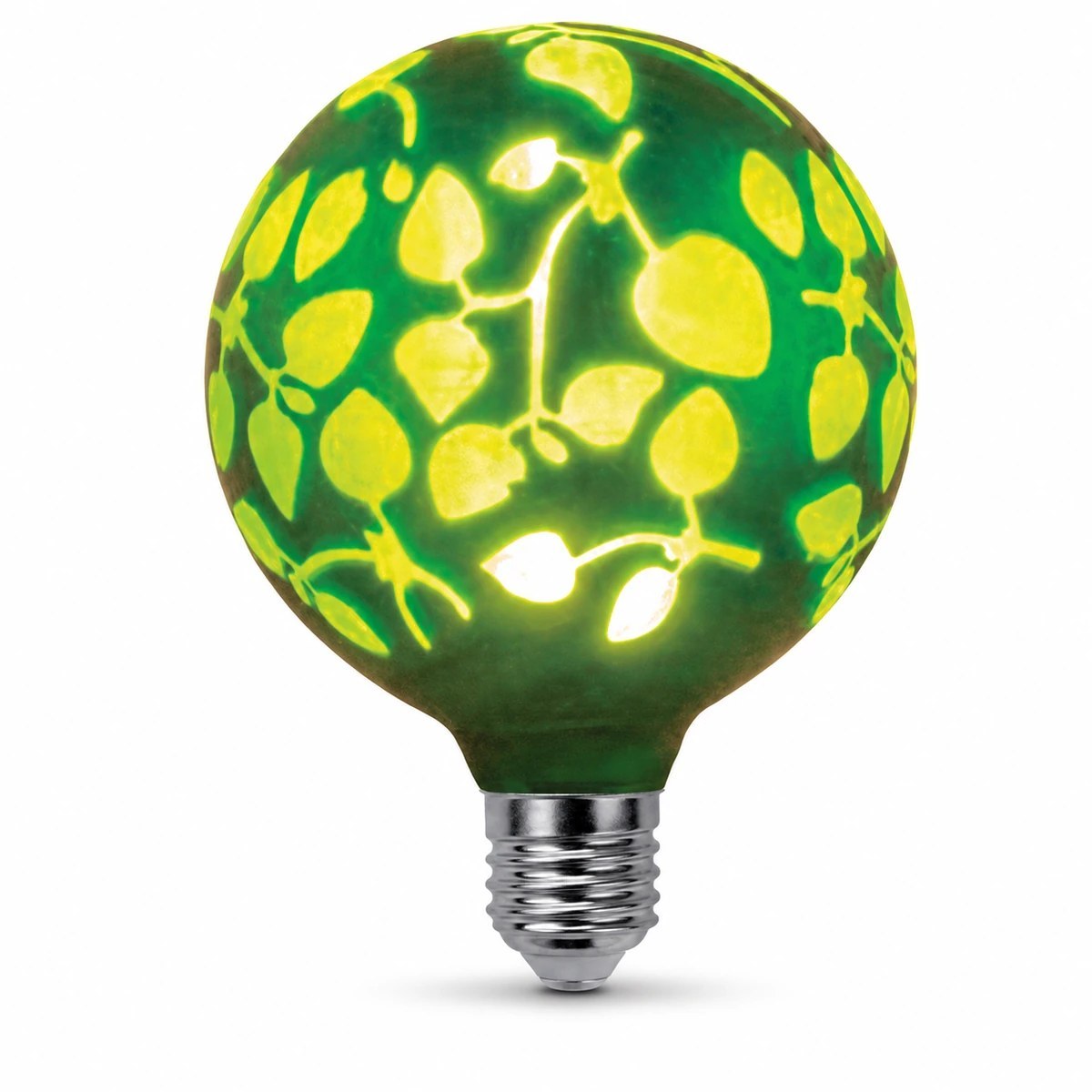
A laser painting LED bulb is a decorative lamp with a colored graphic applied to its outer envelope. In this product context, “laser painting” describes the pattern-making or finishing process; it does not mean that the bulb contains a laser emitter or works as a focused projector.
For a custom order, the reliable method is to approve the complete visual system: artwork, bulb shape, pattern placement, light engine, lit and unlit appearance, fixture context, coating durability, packaging, and production controls. A good artwork file alone cannot guarantee a consistent finished lamp.
Start With the Intended Decorative Effect
Define what the bulb must contribute to the space before choosing a pattern. Is it a colorful object that remains visible when switched off, an illuminated motif for a restaurant, a seasonal retail accent, or part of a repeated pendant arrangement? Each purpose creates a different approval standard.
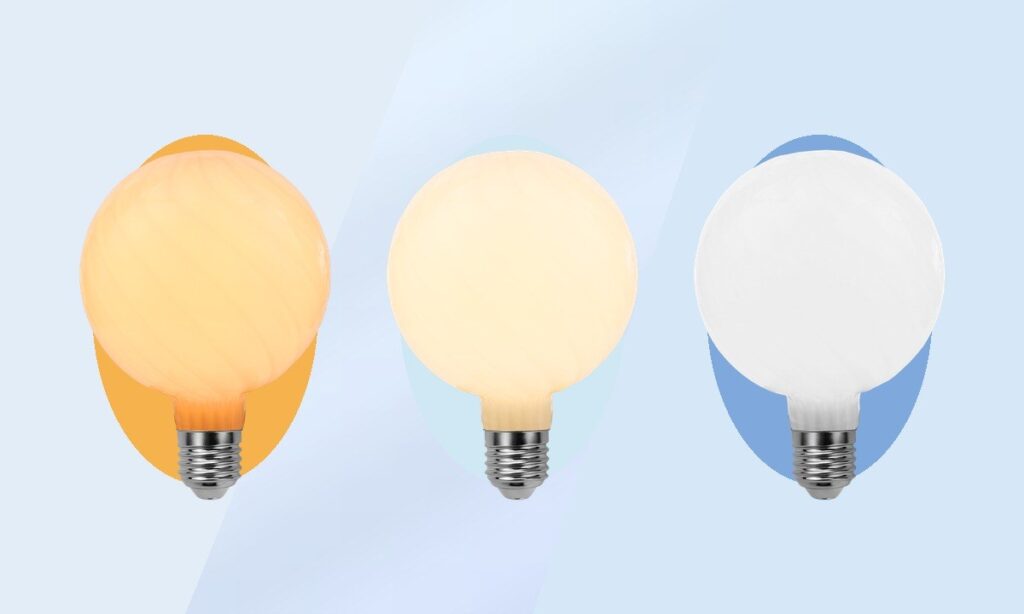
New Lights publishes Laser Painting Decorative LED Bulbs with colored patterned glass in ST64, G80, G95 and G125 envelope options. The same product page separates the envelope graphic from the internal light engine, which is important: the pattern and the light source must be specified together, but they are not the same component.
| Design decision | What to define | Why it changes the result |
|---|---|---|
| Viewing state | Lit, unlit, or equally important in both states | A pattern that reads well unlit may lose contrast when illuminated |
| Viewing distance | Close table display, pendant cluster, shop window, or room accent | Fine details disappear as distance increases |
| Fixture context | Open pendant, shade, table lamp, or enclosed decorative fixture | The fixture can hide the graphic or change heat conditions |
| Repetition | One feature bulb or a coordinated group | Small color and registration differences become obvious in a group |
| Design life | Short campaign, seasonal reuse, or permanent interior | Durability and replacement matching need different evidence |
The broader decorative lighting selection guide can help decide whether a patterned bulb, flexible filament, special-shape lamp, or another decorative format best serves the concept.
Match the Artwork to the Bulb Shape
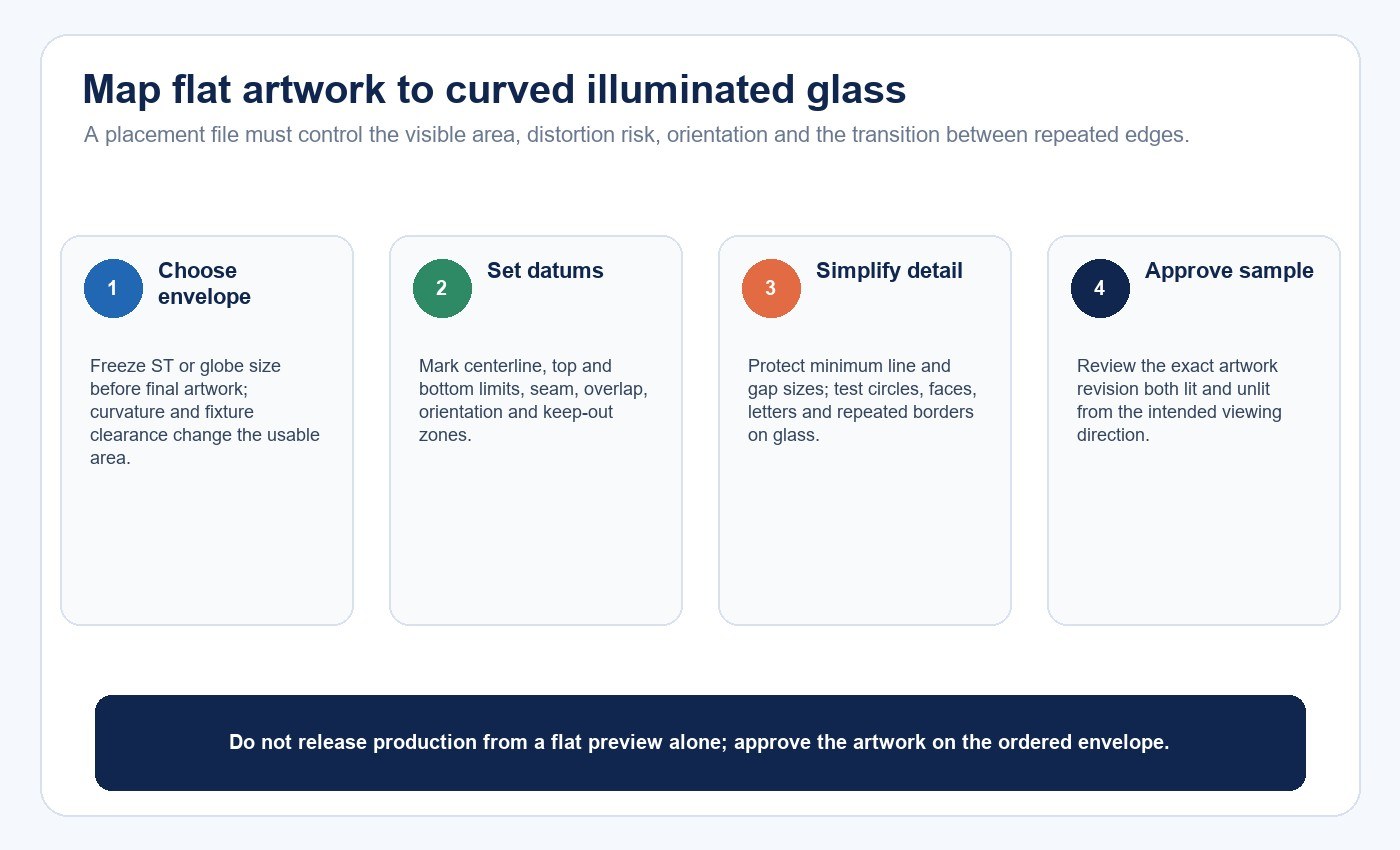
A flat graphic does not transfer unchanged onto curved glass. The shoulder, equator, lower taper, neck, and top of a bulb have different curvature. A line that looks straight in the artwork may bend after wrapping, while circles, faces, letters, and repeated borders may stretch or compress.
Choose the exact envelope before final artwork approval. ST64 supports a tall composition; G80, G95 and G125 provide progressively larger spherical surfaces. The useful printed area also depends on where the fixture grips or hides the bulb and which side faces the viewer.
Create a placement drawing with a centerline, top and bottom limits, seam or overlap area, orientation mark, keep-out zones, and key dimensions. If the motif must face one direction, also define how the bulb will be oriented in the lampholder. A screw base stops at a position determined by the socket and thread engagement, so a front-facing graphic cannot be assumed without a fixture-level orientation solution.
Simplify Artwork for Curved, Illuminated Glass
Artwork for illuminated glass needs stronger hierarchy than artwork for paper or a screen. Very fine lines, tiny negative spaces, close color values, and intricate text can merge when viewed through a curved glowing envelope. Start with the main silhouette and the largest recognizable features, then add detail only where the sample proves it remains legible.
Specify the production file rather than sending only a preview image. The record should include vector or high-resolution source artwork, color references, intended dimensions, transparency or opacity zones, approved orientation, revision number, and any prohibited changes. If several colorways share one design, assign each one a unique code.
| Artwork element | Useful control | Sample question |
|---|---|---|
| Main motif | Size and position from a defined bulb datum | Is the motif centered in the agreed viewing area? |
| Fine detail | Minimum line and gap size | Does the detail remain open and readable when lit? |
| Color | Reference sample or measured target under stated conditions | Is the hue acceptable both lit and unlit? |
| Edge | Sharp, feathered, or intentionally irregular appearance | Does the edge match the approved visual intent? |
| Seam or overlap | Location and maximum visible width | Is the transition hidden or visually acceptable? |
For a wider OEM workflow—from reference image to drawings, bill of materials, samples, packaging, and change control—use the decorative lighting concept-to-specification guide.
Approve Lit and Unlit Appearance Separately
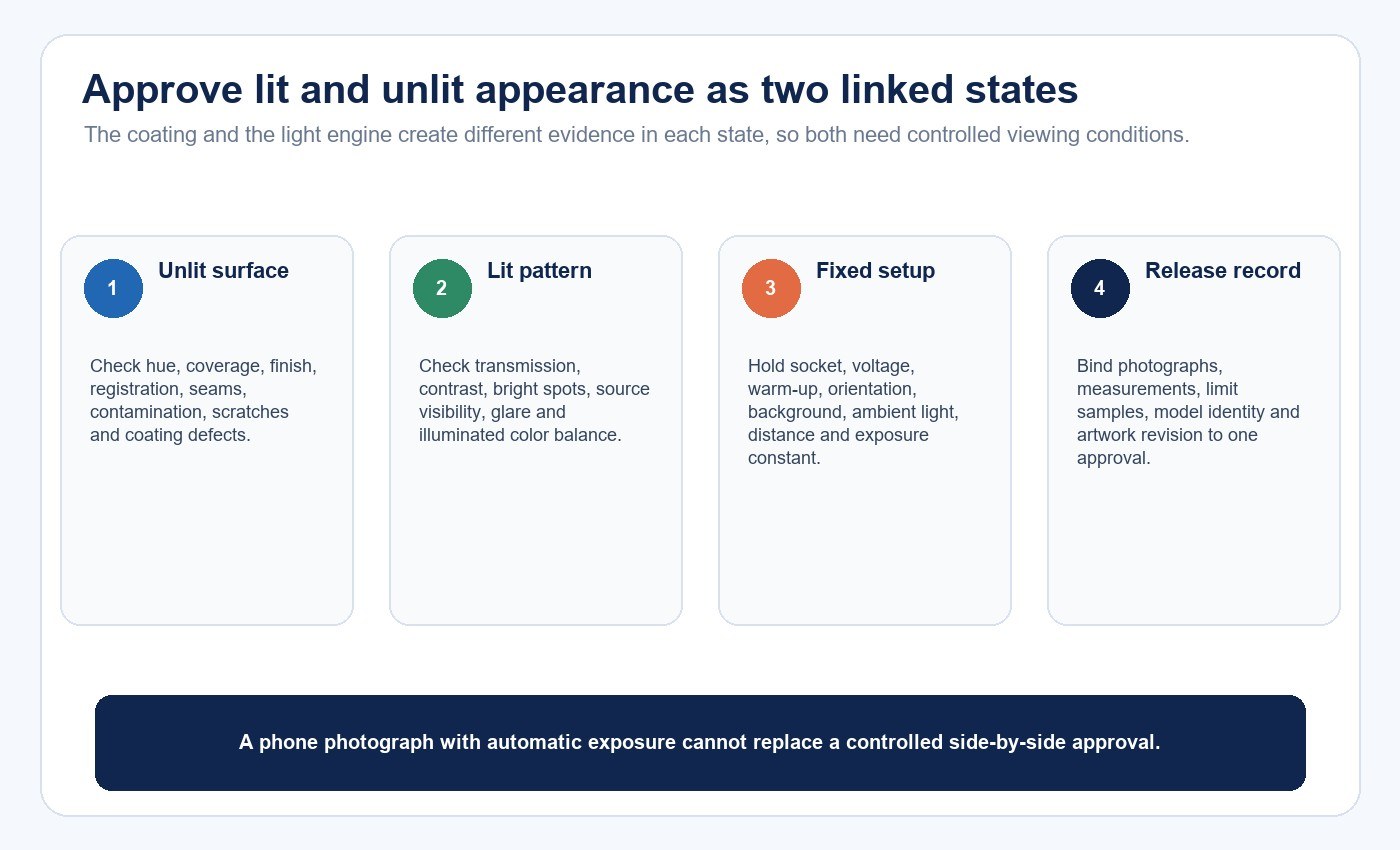
The unlit sample shows the coating color, coverage, surface finish, registration, contamination, scratches, and visual defects. The lit sample adds source position, light distribution, transmission, contrast, bright spots, color shift, and glare. Approval must cover both states if both matter in the application.
Fix the viewing conditions before comparing samples. Use the same socket, voltage, warm-up time, background, ambient light, viewing distance, camera exposure, and bulb orientation. Automatic camera settings can hide color and brightness differences, so product approval should rely on controlled observation and measurements where they are meaningful, not on unrelated phone photographs.
ISO/CIE 11664-4 defines the CIELAB color space and methods for calculating color differences for reflecting or transmitting objects. A buyer may use an agreed color-measurement method for the unlit coating, but that does not replace visual assessment of the complete illuminated bulb. Emitting and transmitting conditions need to be defined for the actual task.
Build a Sample Approval Matrix
Do not approve a custom family from one attractive sample. The first sample may establish the direction, but production approval needs a matrix that represents the combinations customers will actually buy.
| Variable | Minimum comparison | Decision recorded |
|---|---|---|
| Envelope | Every ordered shape and size | Graphic fit, visible area, distortion and fixture clearance |
| Pattern | Every artwork revision and colorway | Registration, line continuity, color and lit appearance |
| Light engine | Every approved SMD or filament configuration | Brightness distribution, hot spots, glare and thermal behavior |
| Electrical version | Every voltage, cap and dimming option offered | Correct operation, label, documentation and applicable evidence |
| Packaging | Final insert, protection and carton orientation | Surface protection and correct model identification |
Record the accepted sample code, artwork revision, bulb model, electrical configuration, date, photographs, measurement conditions, approver, and controlled limit sample. A gold sample without traceable configuration is only a visual memory; it cannot reliably control production.
Treat the Coating as a Functional Surface
The decorative layer must remain attached and visually stable through manufacturing, packing, installation, normal heat exposure, cleaning, and handling. Failure can appear as poor adhesion, chips, scratches, pinholes, color variation, cracking, fading, yellowing, or an uneven edge.
The correct test plan depends on the coating chemistry, glass preparation, curing process, thickness, and intended environment. Include initial adhesion and appearance, thermal operation on the finished lamp, switching where relevant, storage, humidity, cleaning compatibility, abrasion from packaging, and post-test visual comparison. The published ASTM D3359 tape-test method is designed to assess coating adhesion within its defined substrate and method limits; it should only be selected when applicable to the actual coating-substrate system.
The painted bulb coating qualification guide explains how to separate material screening, process control, final-lamp temperature, and aging evidence. Do not use a short burn-in observation as the only basis for a long-term appearance claim.
Keep Electrical and Safety Evidence Model-Specific
Decorative graphics do not remove the normal obligations of a self-ballasted lamp. The exact offered configuration still needs a defined cap, voltage, frequency, power, light engine, driver, thermal design, markings, instructions, and destination-market evidence.
IEC 62560 covers safety and interchangeability requirements for self-ballasted LED lamps within its stated scope, while IEC 62612 addresses performance requirements. These references identify the type of evidence a project may need; they do not prove compliance for a New Lights model by themselves. Match certificates and reports to the exact model, construction, factory, electrical version, and market.
Check fixture fit at the same time. Bulb diameter, height, cap, center of gravity, shade clearance, ventilation, orientation, dimmer compatibility, and accessible glass temperature can all change whether a decorative concept works in the intended fixture. The decorative table lamp compatibility checklist covers these interface checks.
Control Production Variation and Change
Once a sample is approved, convert it into a production record. Link the purchase-order code to the artwork revision, envelope drawing, coating formula or controlled material reference, process route, cure settings, light engine, cap, electrical configuration, labeling, inspection criteria, and packaging.
Incoming glass variation, surface preparation, coating viscosity, fixture alignment, cure conditions, source position, and handling can all alter the result. Define first-piece approval and an inspection frequency that matches the visual risk. For highly visible pendant clusters, compare adjacent units as a group as well as individually.
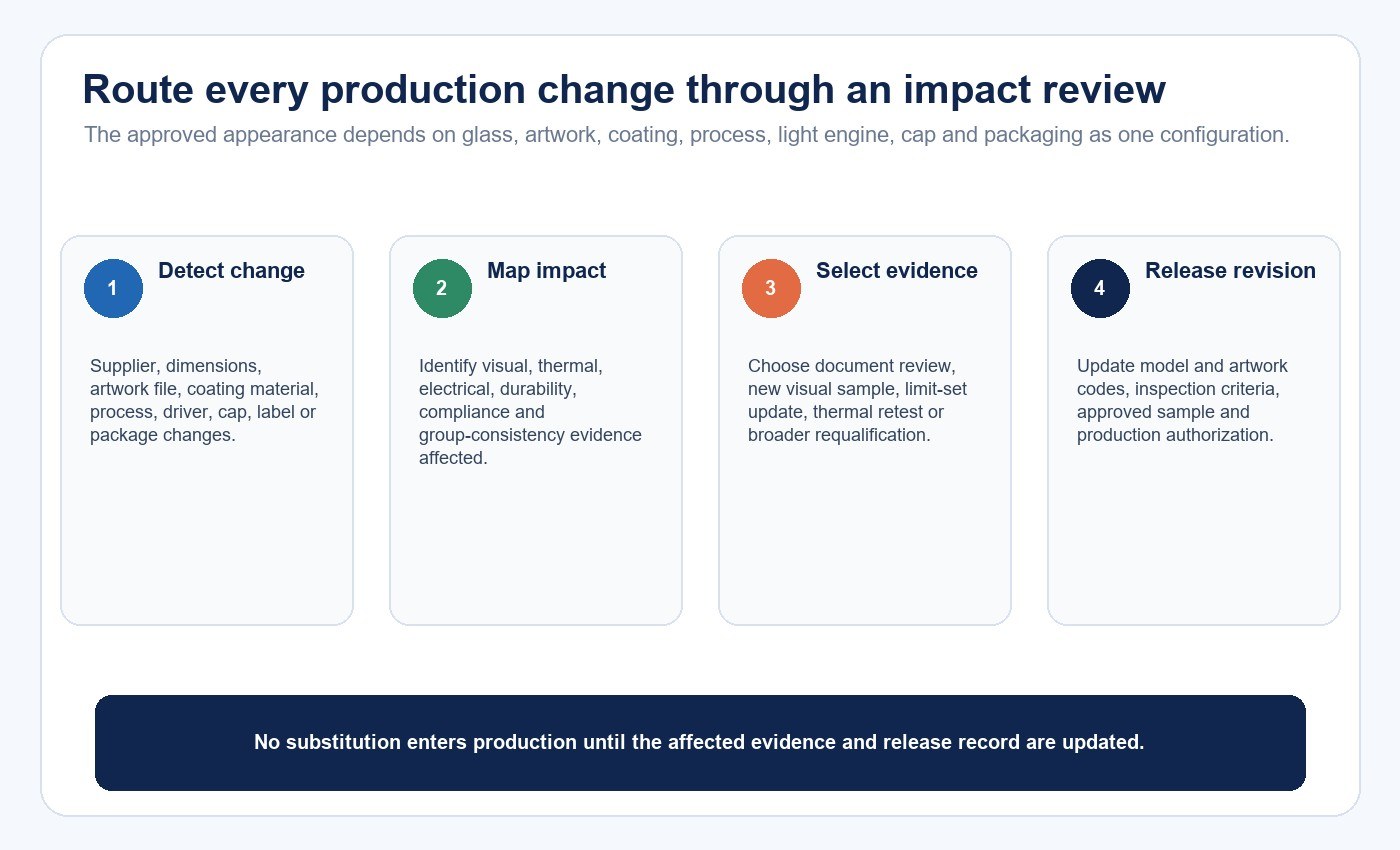
Any change to the glass supplier, bulb dimensions, pattern file, coating material, process, light engine, driver, cap, or packaging should trigger an impact review. The review decides whether document-only approval, a new visual sample, electrical retest, thermal retest, or a broader requalification is required. New Lights’ factory and manufacturing capabilities page provides the appropriate route for discussing sampling, documentation, production and quality-control support.
Worked Example: A Five-Bulb Restaurant Display
Suppose a restaurant wants five globe bulbs above a reception counter, each using a different botanical pattern but sharing one visual family. The concept image looks acceptable, yet the purchase decision is not ready.
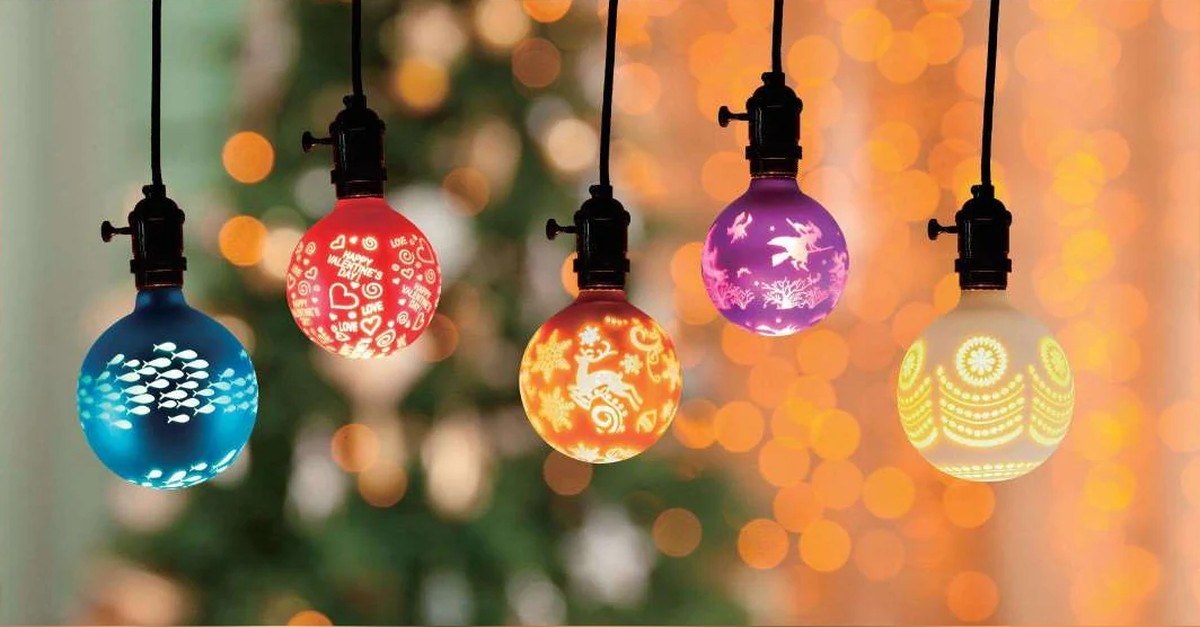
First, choose one envelope size that fits the pendant clearance and gives enough graphic area. Next, place every artwork on the same reference grid so the visual weight and illuminated opening ratio remain balanced. Select the exact light engine and color appearance for all five variants. Then produce one complete set, not five unrelated individual samples.
Evaluate the set at the actual suspension height against the counter and background. Check lit and unlit appearance, rotation in the sockets, direct glare from open pattern areas, color balance, spacing, and whether one design appears much brighter than the others. Approve the set only after fixture fit, electrical configuration, coating controls, packaging protection, and repeatability criteria are recorded.
The key decision is not “Is each bulb attractive?” It is “Can the five approved configurations be reproduced as one coordinated display?”
Put These Fields in the RFQ
| RFQ section | Required input |
|---|---|
| Application | Fixture type, quantity, viewing distance, ambient light, lit/unlit priority and operating schedule |
| Bulb identity | Envelope shape and size, cap, voltage, light-engine option and orientation requirement |
| Artwork | Source file, dimensions, color reference, opacity intent, seam location, keep-out zones and revision |
| Acceptance | Visual conditions, limit sample, registration, color, edge, defect and group-consistency criteria |
| Durability | Coating material control, cure record, thermal operation, adhesion, cleaning, handling and packaging checks |
| Compliance | Exact model list, destination market, reports, certificates, labels and instructions |
| Change control | Components and processes requiring notification, sample renewal or retesting |
To review a custom patterned-bulb brief, contact New Lights with the fixture, envelope choice, artwork, quantity, target market, lit and unlit references, and acceptance conditions.
Frequently Asked Questions
Does a laser painting LED bulb contain a laser?
Not in this product context. “Laser painting” refers to the decorative pattern-making or finishing process on the bulb envelope. The published New Lights product is an illuminated patterned-glass bulb, not a focused laser projector.
Can the bulb project a sharp image onto a wall?
It should not be specified as a projection device. The pattern is primarily visible on the glowing bulb surface and may create decorative light-and-shadow effects nearby, but image sharpness or throw distance requires a different optical system and separate evidence.
Which bulb shape is best for custom artwork?
Choose by fixture fit, viewing direction and artwork geometry. Tall designs may suit ST64, while larger globe forms provide more continuous surface area. Approve the artwork on the exact ordered envelope.
Should the buyer approve the bulb lit or unlit?
Approve both whenever both states are visible. Unlit review controls coating color and defects; lit review reveals transmission, hot spots, contrast, glare and source interaction.
Is one sample enough for mass production approval?
No. Approve representative combinations of envelope, artwork, colorway, light engine, electrical version and packaging, then retain traceable limit samples and inspection criteria.
What changes require a new sample?
Changes to glass shape or supplier, artwork, coating material, process, cure, source position, light engine, electrical configuration or packaging can alter appearance or evidence. Use an impact review to decide the required resampling and retesting.
Editorial Sources
- New Lights, “Laser Painting Decorative LED Bulbs”: https://new-lights.com/products/decorative-ambient-lighting/decorative-led-bulbs/laser-painting-lamp/
- New Lights, “Decorative Bulbs — Laser Painting Lamp” catalogue: https://new-lights.com/new-lights/2024/12/06/decorativebulbs.pdf
- ISO, “ISO/CIE 11664-4:2019 — Colorimetry — Part 4: CIE 1976 Lab* colour space”: https://www.iso.org/standard/74166.html
- ASTM International, “ASTM D3359-23 — Standard Test Methods for Rating Adhesion by Tape Test”: https://store.astm.org/products-services/standards-and-publications/standards/paint-standards-and-related-coating-standards.html
- IEC, “IEC 62560:2011 — Self-ballasted LED-lamps — Safety specifications”: https://webstore.iec.ch/en/publication/7199
- IEC, “IEC 62612:2013 — Self-ballasted LED lamps — Performance requirements”: https://webstore.iec.ch/en/publication/7259