


 English
 Español
 Deutsch
We sincerely look forward to establishing a long-term development partnership with you with good quality and professional services.
- This article explains why T9 circular LED retrofit remains commercially relevant, how G10q replacement should be evaluated, and how buyers can compare energy savings, installation logic, and project-level ROI for Europe-focused retrofit decisions.
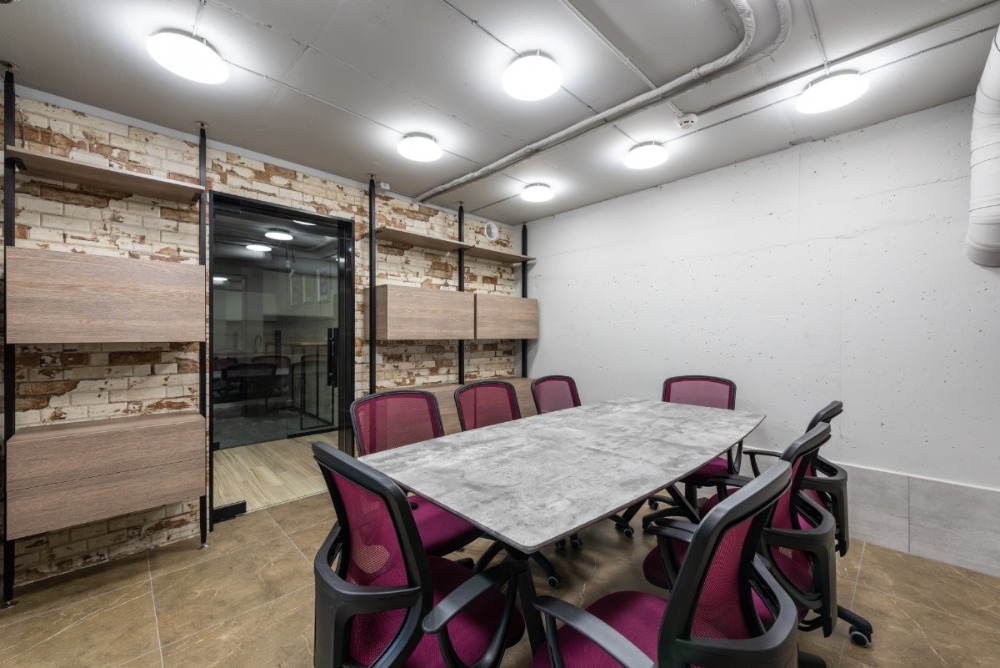
T9 circular fluorescent lamps have been widely used in ceiling lights, decorative luminaires, and enclosed round fixtures for years. Today, more buyers are reviewing whether these existing installations can be upgraded with LED solutions that reduce energy use, lower maintenance frequency, and support current application needs.
For distributors, importers, and project buyers, a T9 circular LED retrofit is not simply a lamp replacement. It is also a decision about installation method, product compatibility, operating cost, and long-term practicality. In many cases, the goal is not to redesign the whole fixture, but to improve the performance of an existing fitting with a more efficient light source.
In Europe, this topic is increasingly relevant in retrofit and replacement projects. In Japan, circular lamp formats are also still familiar in many indoor lighting applications. For global buyers, the same question applies: how can an existing circular fluorescent fixture be upgraded in a practical and commercially reasonable way?
Why T9 Circular Retrofit Still Matters
Although many new fixtures are now LED-integrated, a large installed base of circular fluorescent luminaires is still in use in homes, apartments, corridors, hotels, and light commercial spaces. In many of these projects, the fixture housing remains usable, so replacing only the light source can be a more practical option than replacing the full luminaire.
This is one reason circular fluorescent to LED replacement continues to attract attention in:
- residential ceiling light replacement
- hospitality maintenance and refurbishment
- distributor aftermarket programs
- light commercial renovation
- OEM upgrade projects for existing fixture formats
For these users, the retrofit value is relatively clear: lower power consumption, fewer replacement cycles, and an updated lighting solution without necessarily changing the whole fixture structure.
LED vs Fluorescent: What Buyers Usually Compare
When buyers compare T9 fluorescent lamps with T9 circular LED retrofit products, the discussion usually goes beyond nominal wattage. A practical comparison often includes system efficiency, maintenance, installation method, and application suitability.
A traditional fluorescent system may depend not only on the lamp, but also on ballast condition, internal wiring status, contact quality, and overall fixture age. As a result, field performance can vary over time.
A T9 circular LED retrofit product may help simplify that system and can offer:
- lower power consumption
- more stable start-up behavior
- reduced maintenance dependency
- more consistent replacement planning
- additional options in color temperature and product specification
For many buyers, this makes LED retrofit a relevant option where fixture replacement is not yet necessary.
What Matters More Than Nominal Wattage
Nominal wattage is usually only the starting point in a retrofit discussion. Buyers often want to understand a broader set of questions:
- What is the actual energy use in daily operation?
- Does the retrofit depend on old ballast performance?
- How much maintenance may still be required over time?
- Is the installation method clearly defined?
- Does the supplier provide useful technical and product documentation?
This is why practical retrofit products are often evaluated not just by price, but by how clearly they fit real installation and replacement needs.
G10q Retrofit: Fit Is Only One Part of the Decision
In many T9 circular retrofit projects, buyers are looking for G10q-based replacement solutions. However, matching the base alone does not answer every installation question. A lamp may physically fit into the fixture, but the overall retrofit result still depends on wiring method, ballast condition, and product-specific installation requirements.
In practice, buyers may review three common retrofit approaches:
Ballast-Compatible Retrofit
This approach can reduce installation time in some projects, provided that compatibility has been clearly checked.
Ballast-Bypass / Direct-Wire Retrofit
This approach can reduce reliance on aging fluorescent control gear, but installation instructions should be clear and followed carefully.
Fixture-Level Redesign or OEM Upgrade
In some cases, buyers prefer to keep the fixture format while updating the internal light engine around LED rather than using one-to-one replacement logic.
For this reason, it is usually more useful to talk about clear application scope and installation method than to rely on broad compatibility claims.
A Simple Energy Saving Example
Here is a simplified example often used in retrofit evaluation:
- Existing T9 fluorescent lamp: 32W
- Replacement T9 circular LED lamp: 16W
- Daily operation: 8 hours
- Annual operation: 300 days
Annual consumption of the fluorescent lamp:
32W × 8h × 300 = 76.8 kWh/year
Annual consumption of the LED lamp:
16W × 8h × 300 = 38.4 kWh/year
Annual energy saving per lamp:
38.4 kWh/year
In this simplified example, lamp power is reduced by 50%. Actual project results may vary depending on ballast loss, switching frequency, ambient conditions, and fixture design. This is why many buyers prefer to review retrofit value at the system level rather than rely only on nominal lamp figures.
ROI Comparison at Lamp Level
| Item | T9 Fluorescent | T9 Circular LED Retrofit |
|---|---|---|
| Lamp Power | 32W | 16W |
| Daily Operating Hours | 8h | 8h |
| Annual Operating Days | 300 | 300 |
| Annual Energy Use | 76.8 kWh | 38.4 kWh |
| Annual Energy Saving | — | 38.4 kWh |
| Assumed Electricity Cost | €0.25/kWh | €0.25/kWh |
| Annual Electricity Cost | €19.20 | €9.60 |
| Annual Cost Saving | — | €9.60 |
This example is based on nominal lamp power only. Actual project savings may vary depending on ballast losses, switching frequency, fixture condition, and installation method.
ROI Comparison at Project Scale
For distributors, facility managers, and retrofit buyers, the commercial value of circular LED replacement often becomes easier to understand when reviewed across multiple luminaires.
| Project Size | Annual Energy Saving | Annual Electricity Cost Saving |
|---|---|---|
| 1 lamp | 38.4 kWh | €9.60 |
| 100 lamps | 3,840 kWh | €960 |
| 500 lamps | 19,200 kWh | €4,800 |
| 1,000 lamps | 38,400 kWh | €9,600 |
A Simple Payback Example
A retrofit decision is not based on electricity savings alone, but simple payback can still help illustrate the upgrade value.
| Item | Example Value |
|---|---|
| LED Retrofit Lamp Price | €12.00 |
| Fluorescent Replacement Price | €4.00 |
| Incremental Upgrade Cost | €8.00 |
| Annual Electricity Cost Saving | €9.60 |
| Simple Payback | 0.83 years |
This simple payback example excludes maintenance savings. In actual retrofit projects, reduced service frequency and longer replacement cycles may also influence total return.
ROI Is Not Only About Electricity
A practical retrofit decision usually includes several factors at once:
- initial product cost
- installation cost
- energy saving
- maintenance risk
- product and technical documentation
Lamp price is still important, especially in larger replacement programs. At the same time, buyers may also consider whether installation is straightforward, whether the product is suitable for the existing fixture, and whether long-term use is easier to manage.
For this reason, a retrofit product is often evaluated not only by its lamp data, but also by how well it supports actual project execution.
Compliance Considerations for Europe
When presenting a T9 circular LED retrofit product to the European market, it is often more useful to provide clear technical and documentation support than to rely on broad compliance statements.
A more practical approach is to support the product with:
- technical specifications
- wiring guidance
- installation notes where needed
- product labeling information
- performance data
- documentation support for importers and distributors
This type of structured information is often more useful to buyers than general promotional language, especially in retrofit and replacement projects where application details matter.
Why Japan Matters in T9 Circular LED Retrofit
Japan is also a market worth paying attention to for T9 circular LED retrofit products. Because circular lamp formats have been widely used in indoor lighting applications, replacement demand still exists in parts of the market.
For this reason, buyers are likely to focus on product suitability, installation practicality, and overall application fit. A well-positioned circular LED retrofit solution should therefore combine reliable performance with clear market relevance.
What Makes a Practical T9 Circular LED Retrofit Product
A retrofit product for Europe, Japan, and global markets is usually easier to work with when it combines several practical strengths:
- stable electrical design
- clear installation logic
- controlled thermal performance
- suitable lumen and CCT options
- consistent quality for repeat orders
- useful support for importers and distributors
In other words, the product value is not only about replacing fluorescent with LED. It is also about making replacement projects easier to specify, easier to install, and easier to manage.
Final Thought
The shift from T9 circular fluorescent to LED is more than a simple lamp change. It is also a way to update an existing fixture base with lower energy use, lower maintenance pressure, and a lighting solution that is more suitable for current replacement needs.
For Europe, this is relevant in many retrofit and distributor-replacement projects. For Japan, circular lamp familiarity still gives this category practical relevance in some applications. For global buyers, a useful retrofit solution is one that combines clear technical logic with realistic commercial value.
FAQ
Can any T9 circular fluorescent lamp be replaced directly with LED?
Not always. Base compatibility is only one part of the decision. Buyers should also review wiring method, ballast condition, fixture structure, and the LED product’s installation requirements.
Is ballast-compatible or direct-wire T9 LED better?
It depends on the project. Ballast-compatible solutions may simplify installation in some cases, while direct-wire solutions can reduce long-term dependence on aging fluorescent gear.
Why is T9 circular LED retrofit relevant in Europe?
Because many buyers are reviewing lighting upgrades through energy use, maintenance cost, and replacement practicality.
Why include Japan in a T9 retrofit article?
Because circular lamp formats still have practical relevance in parts of the market, especially where replacement demand remains.
What data should a supplier provide for a T9 LED retrofit project?
At minimum: wattage, dimensions, base type, light output, CCT, wiring method, installation notes, and product documentation support.
Looking for a T9 circular LED retrofit solution?
Contact us for technical data, G10q retrofit options, OEM support, and documentation assistance for circular fluorescent replacement projects.
 GET IN TOUCH


