


 English
 Español
 Deutsch
We sincerely look forward to establishing a long-term development partnership with you with good quality and professional services.
The Direct Answer: LED Bulbs Use LED Chips, Not Traditional Filaments
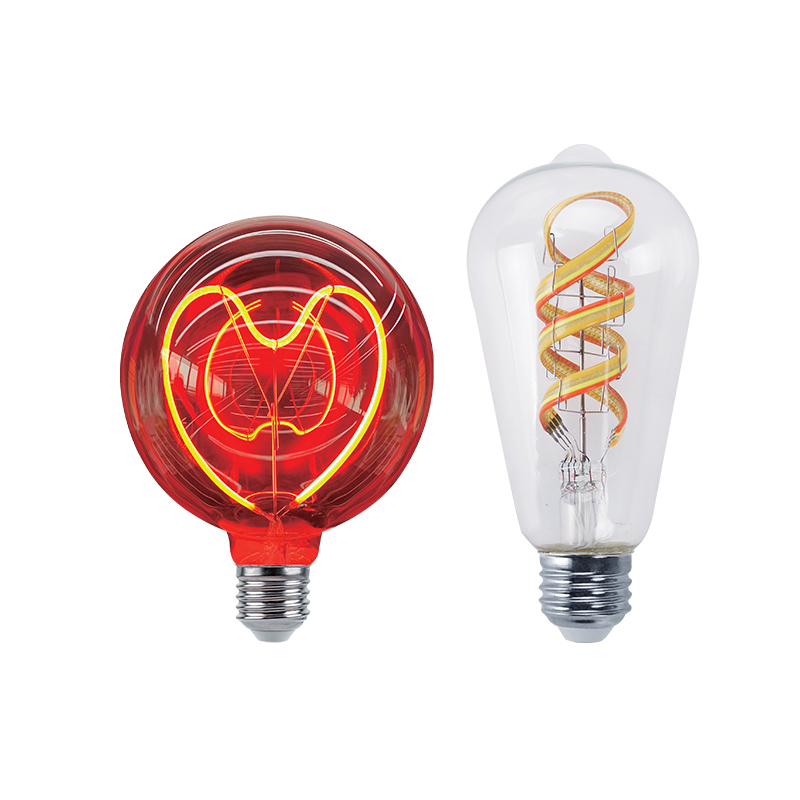
Unlike incandescent bulbs, LED light bulbs do not use a metal filament to produce light. Instead, they use LED chips (Light Emitting Diodes) mounted on a substrate. However, a popular style called the LED Filament Bulb is designed to mimic the look of classic Edison bulbs — using thin strips of LEDs arranged to resemble traditional filaments. These strips are called LED filament strings or COB (Chip-on-Board) filament strips.
So the short answer is: LED bulbs use semiconductor diode chips, and in filament-style LED bulbs, these chips are arranged along a glass or sapphire substrate to imitate the appearance of incandescent filaments.
What Exactly Is an LED Filament?
An LED filament is a long, narrow strip on which multiple LED chips are mounted in series. Each filament strip typically contains 28 or more individual LED chips lined up on a transparent substrate — usually made of glass or sapphire — and coated with a phosphor layer that converts the blue LED light into warm white light.
Key Components of an LED Filament
- LED chips: Tiny semiconductor diodes that emit light when current passes through them.
- Substrate: Usually glass or sapphire; provides a transparent base for the chips.
- Phosphor coating: Converts blue light from the LEDs into a warmer, more natural white light.
- Gold wire bonding: Connects each LED chip electrically in series along the strip.
These filament strips are then sealed inside a glass bulb filled with an inert gas — typically nitrogen or argon — to aid in heat dissipation and protect the filaments.
How LED Filament Bulbs Produce Light
The light production mechanism in LED filament bulbs is entirely different from incandescent technology. Here's how it works step by step:
- Electrical current flows through the LED chips on the filament strip.
- The semiconductor material (typically gallium nitride) emits blue light.
- The phosphor coating absorbs the blue light and re-emits it as white or warm white light.
- The inert gas inside the bulb helps dissipate heat and maintain bulb integrity.
This process — called electroluminescence — produces light without generating the extreme heat associated with incandescent filaments. As a result, LED filament bulbs are far more energy-efficient, converting up to 90% of energy into light compared to about 10% for incandescent bulbs.
LED Filament Bulbs vs. Traditional Incandescent Bulbs: Key Differences
Understanding the structural differences helps clarify why LED filament bulbs outperform their predecessors across almost every metric.
| Feature | LED Filament Bulb | Incandescent Bulb |
| Light Source | LED chips on filament strips | Tungsten wire filament |
| Energy Efficiency | Up to 90% light output | ~10% light output |
| Lifespan | 15,000 – 25,000 hours | 1,000 – 2,000 hours |
| Heat Output | Low | Very High |
| Color Rendering (CRI) | 80–95+ | ~100 |
| Typical Wattage (800 lm) | 6–8W | 60W |
| Dimmable | Yes (compatible models) | Yes |
| Appearance | Mimics vintage Edison style | Classic look |
The data shows that a single LED filament bulb can last 10–15 times longer than a standard incandescent bulb while consuming roughly 85% less electricity to produce the same amount of light.
Types of Filament Arrangements in LED Filament Bulbs
LED filament bulbs come in several internal configurations, each affecting both aesthetics and light distribution:
Single Filament
A single vertical strip of LED chips runs through the center of the bulb. This produces a focused, directional light and is common in tubular or candle-shaped bulbs.
Multi-Filament (Spider Style)
Multiple filament strips radiate outward from a central point, resembling a spider web. This design offers 360-degree omnidirectional light distribution, closely replicating the output of a traditional incandescent bulb.
Cage Filament
Filaments are arranged in a cage-like or spiral structure within the globe, giving the bulb a decorative, vintage appearance. Popular in Edison-style decorative lighting for restaurants, cafes, and homes.
Cross Filament
Two or more strips cross each other at angles inside the bulb, balancing aesthetics and even light output. Suitable for exposed-bulb pendant lights.
The Material Science Behind LED Filament Strips
The substrate material of the filament plays a major role in performance:
- Glass substrate: Most common and cost-effective. Offers good transparency and allows even light emission along the filament length.
- Sapphire substrate: Higher thermal conductivity and durability. Used in premium LED filament bulbs for better heat management and longevity.
- Ceramic substrate: Excellent at dissipating heat, but less transparent. Less common in consumer filament bulbs.
The phosphor coating applied over the LED chips is critical for color quality. High-quality phosphors achieve a Color Rendering Index (CRI) above 90, meaning colors appear more natural and accurate under the light — comparable to natural daylight.
Color Temperature Options in LED Filament Bulbs
LED filament bulbs are available in a range of color temperatures to suit different environments and moods:
| Color Temperature | Appearance | Best For |
| 2200K – 2400K | Extra warm amber | Vintage/decorative settings |
| 2700K | Warm white | Living rooms, bedrooms |
| 3000K | Soft white | Kitchens, bathrooms |
| 4000K | Neutral white | Offices, workspaces |
The most popular choice for LED filament bulbs is 2700K, as it most closely replicates the warm glow of traditional incandescent lighting while offering modern efficiency.
Why LED Filament Bulbs Are Gaining Popularity
Beyond their technical advantages, LED filament bulbs have surged in popularity for several practical and aesthetic reasons:
- Vintage aesthetics: The visible filament design is highly sought after in interior design, especially for exposed-bulb fixtures, pendant lights, and Edison-style chandeliers.
- Omnidirectional output: Unlike standard LED bulbs with a directional chip, multi-filament designs emit light in all directions — ideal for open fixtures.
- No UV or IR radiation: LED filament bulbs emit virtually no ultraviolet or infrared light, making them safer for artwork, fabric, and sensitive materials.
- Instant full brightness: Unlike some older energy-saving bulbs, LED filament bulbs reach full brightness immediately upon switching on.
- Dimmability: Many LED filament bulbs are compatible with standard dimmers, offering flexible ambiance control.
FAQ: LED Filament Bulbs
Q1: Do LED bulbs have a real filament like incandescent bulbs?
No. LED bulbs use semiconductor chips, not a heated metal wire. In LED filament bulbs, the "filament" is a strip of LED chips designed to look like a traditional filament.
Q2: What material is the LED filament substrate made of?
Most commonly glass or sapphire. Sapphire offers better thermal performance; glass is more affordable and widely used.
Q3: How long does an LED filament bulb last?
Typically 15,000 to 25,000 hours, depending on usage conditions and build quality.
Q4: Are LED filament bulbs dimmable?
Many are, but not all. Always check the product specification and ensure your dimmer switch is compatible with LED loads.
Q5: Are LED filament bulbs energy-efficient?
Yes. They use approximately 85% less energy than equivalent incandescent bulbs while producing the same light output (lumens).
Q6: What color temperature is best for home use?
2700K is the most popular for homes, offering a warm, comfortable glow that replicates traditional incandescent light.
Q7: Can LED filament bulbs be used outdoors?
Only if the bulb is rated for outdoor use (IP44 or higher). Standard LED filament bulbs are intended for dry, indoor environments.
 GET IN TOUCH


