


 English
 Español
 Deutsch
We sincerely look forward to establishing a long-term development partnership with you with good quality and professional services.
How Long Do LED Lights Last? A Complete Breakdown for Decorative Bulbs, Colored Bulbs & Replacement Light Bulbs
When you switch to modern lighting, one of the first questions is always about longevity. LED technology promises dramatically longer lifespans than old incandescent or halogen sources, but the real answer depends on several technical and environmental factors. Whether you are looking for decorative bulbs for chandeliers, colored light bulbs for accent lighting, or general replacement light bulbs for your home, understanding LED lifespan helps you make smarter purchasing decisions and avoid premature failures. This guide provides a deep, evidence-based look at how long led light bulb units actually last, what influences their durability, and when you should consider a new led lamps bulb.
By the end of this article, you will know exactly how to interpret lifespan ratings, maximize service life for different bulb categories, and recognize the early signs that a bulb needs replacement — without relying on brand claims or marketing hype.
1. What Do LED Lifespan Numbers Really Mean? (L70 & Beyond)
Unlike traditional bulbs that fail suddenly (filament break or gas leak), most led light bulb products degrade gradually through a process called lumen depreciation. The lighting industry uses the L70 metric — the point at which a bulb emits 70% of its original light output. For example, if a bulb is rated at 25,000 hours L70, it will still work after 25,000 hours but will produce 30% less light than when new. Many consumers think “dead” means complete darkness, but for LEDs, end-of-life is typically defined as unacceptable dimness or color shift.
Here is the practical translation: an L70 rating of 25,000 hours means 8 hours of daily use equals roughly 8.5 years before noticeable dimming. A premium led lamps bulb labeled 50,000 hours → over 17 years at 8h/day. However, not all bulbs reach their rated hours because of real-world conditions like heat, electrical surges, and switching frequency. Understanding this gap is key to choosing durable replacement light bulbs.
For decorative bulbs (candle, flame-tip, G-shapes) and colored light bulbs (RGB, amber, blue), the L70 baseline remains the same, but their smaller form factor or added electronics may alter real-world performance — which we will explore in the next sections.
2. Why Do Some LED Bulbs Fail Early? 6 Technical Factors
Two identical led light bulb units can have dramatically different lifespans depending on installation environment and electrical quality. Based on field data and failure analysis, here are the primary determinants:
- Thermal management (heat): For every 10°C increase in junction temperature, LED lifespan can drop by half. Enclosed fixtures, recessed cans, or poorly ventilated lamp shades trap heat — this is especially critical for decorative bulbs in tight glass covers.
- Driver/PSU quality: Approximately 80% of premature LED failures come from the driver (converter), not the LED chip. Cheap electrolytic capacitors degrade faster under heat.
- On/off switching cycles: LEDs themselves tolerate millions of switches, but the driver electronics can be stressed by frequent toggling. For motion-sensor areas, choose bulbs rated for high cycle endurance.
- Voltage fluctuations & surges: LEDs are sensitive to overvoltage. Unstable grid or faulty wiring can reduce lifespan by 30–50%.
- Dimmer compatibility: Using non-compatible dimmers (leading-edge vs trailing-edge) causes flicker and driver overheating, damaging both led lamps bulb units and colored light bulbs.
- Ambient moisture & vibration: Outdoor-rated bulbs have conformal coating; using indoor replacement light bulbs in damp locations accelerates corrosion.
Real-world example: A decorative bulbs in an unventilated pendant light (operating at 75°C ambient) may last only 12,000 hours instead of 25,000 hours, while the same bulb in an open fixture easily exceeds 30,000 hours. This shows why installation matters as much as manufacturer rating.
3. Special Focus: Decorative Bulbs vs. Colored Light Bulbs vs. Standard A-Shape
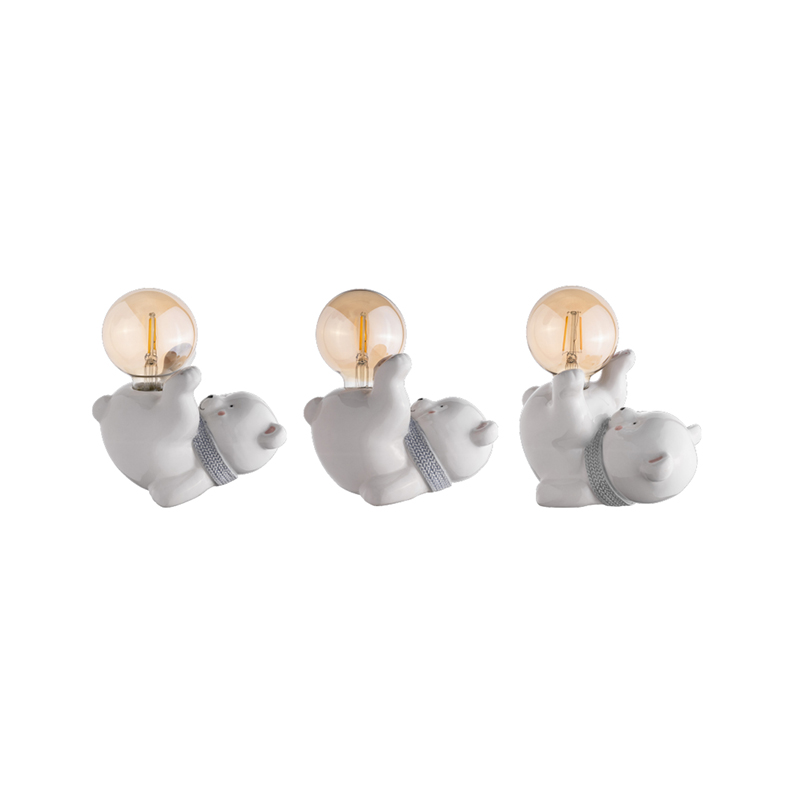
Decorative Bulbs (Candle, Globe, Twisted)
These decorative bulbs prioritize aesthetics over heat dissipation. Their narrow envelopes (often E12/E14 base) and compact size reduce surface area for cooling. A modern led light bulb with decorative shape usually runs 10–15% hotter than an A19 of equivalent lumen output, which can shave off 5,000–10,000 hours from theoretical lifespan. However, premium designs use aluminum heat sinks hidden inside the base to mitigate this. For chandeliers running 3–5 hours daily, even a reduced lifespan of 15,000 hours still provides 8–10 years of service — perfectly acceptable.
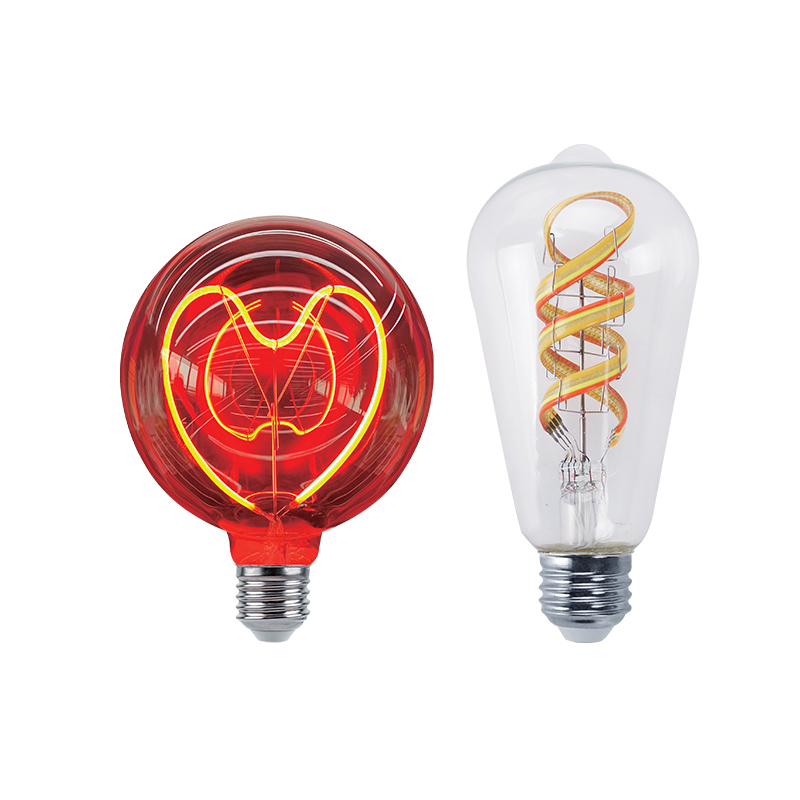
Colored Light Bulbs (RGB, Monochrome Amber/Red/Blue)
Colored light bulbs achieve color either via phosphor conversion (white LED with colored diffuser) or direct-color chips (e.g., red InGaAlP). Direct-color red/amber LEDs inherently last longer (up to 100,000 hours) because they avoid phosphor degradation. But RGB bulbs contain additional control electronics and multiple chips — each with different degradation rates. The blue or white chip inside RGB bulbs tends to age faster than the red one, causing color shift over time. Most RGB led lamps bulb units are rated for about 15,000–25,000 hours of mixed-color use, shorter than single-white due to driver complexity and heat from compact multichip designs. For accent lighting used seasonally, that remains more than adequate.
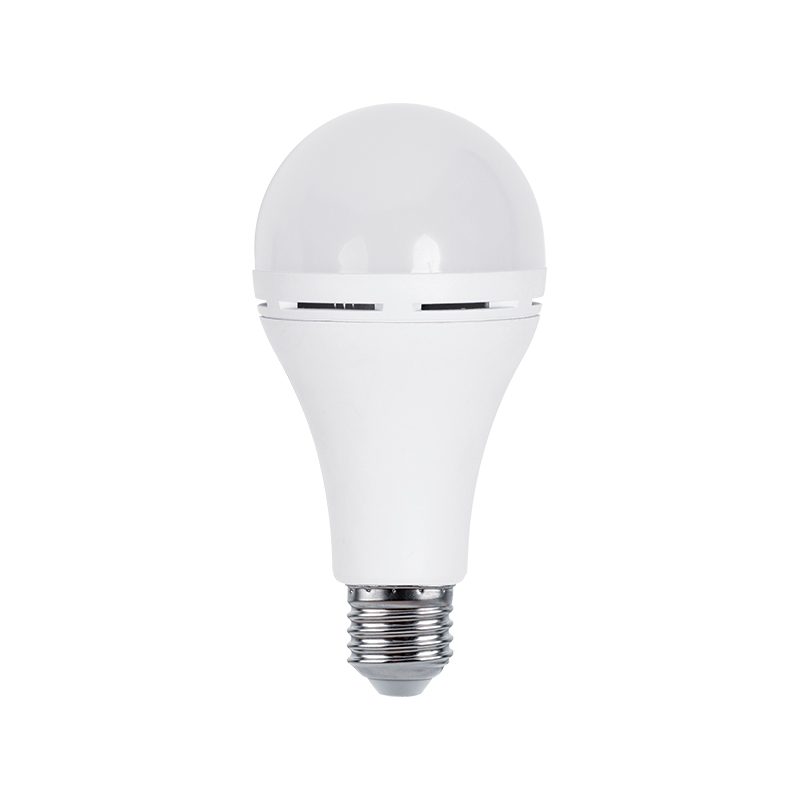
Standard Replacement Bulbs (A19, BR30, PAR)
General-purpose replacement light bulbs have the best thermal design: large plastic/aluminum hybrid heat sinks and open airflow. Routine A19 led light bulb models achieve 25,000–35,000 hours, while premium "long-life" series reach 50,000 hours. For most households, that means you will replace these bulbs only once or twice in your lifetime.
4. Comparative Lifespan Data for LED Lamps Bulb Types
The table below summarizes realistic lifespan ranges (L70) for common LED types under normal residential conditions (open fixture, 25°C ambient, 8 hrs/day). Values are based on industry reliability studies and failure rate databases.
| Bulb Family | Typical L70 (hours) | Equivalent Years (8h/day) | Key Weakness |
| Decorative (candle/globe) | 15,000 – 25,000 | 5–8.5 years | Poor heat dissipation |
| Colored (RGB / fixed color) | 12,000 – 25,000* | 4–8.5 years | Electronics & color shift |
| Standard A19 (replacement) | 25,000 – 35,000 | 8.5–12 years | Driver capacitor aging |
| PAR/BR (downlight) | 30,000 – 50,000 | 10–17 years | Enclosed fixture risk |
| Filament LED (vintage style) | 15,000 – 20,000 | 5–7 years | Sensitive to overheating |
* Colored bulbs' lifespan varies strongly with color mode: red/amber monochrome often exceeds 40,000 hours, while white+color mixing reduces via added wear.
5. How to Extend Life of Your Replacement Light Bulbs: 5 Actionable Rules
Even if you already use led light bulb technology, following these five rules will help you reach the upper end of the lifespan range:
- Ensure proper ventilation: Never install enclosed-rated bulbs in fully sealed fixtures unless the bulb is marked "enclosed rated." For decorative bulbs inside glass globes, leave at least 1 inch of air gap above the bulb.
- Use compatible dimmers: Check that dimmer switches are labeled "LED compatible" and use trailing-edge dimmers for best results with most led lamps bulb designs.
- Avoid frequent switching in heavy-load areas: For closets or pantries where lights flip on/off many times per hour, choose bulbs with "high cycle" certification.
- Install surge protection: Whole-house or local surge suppressors reduce driver stress from voltage spikes, especially beneficial for expensive colored light bulbs with smart components.
- Match wattage equivalent wisely: A 100W-equivalent replacement light bulbs run hotter than 40W-equivalent. If long life is critical, over-spec by using a higher quality 800-lumen bulb instead of a cheap 1500-lumen one.
Actionable check: Measure surface temperature of a bulb after 1 hour of use. If it is too hot to touch (>60°C), lifespan will be significantly shortened. Move to a more open fixture or select a lower-wattage led light bulb.
6. Is It Dead or Just Dim? Recognizing LED Failure Modes
Because led lamps bulb products rarely fail abruptly, many people continue using degraded units that waste energy (poor efficiency) and provide insufficient illumination. Here are definitive signs that your replacement light bulbs need replacement:
- Noticeable dimming: When a new bulb of same type appears 30%+ brighter side-by-side, it’s time.
- Flickering or strobing: This indicates driver failure, not chip degradation. Flickering reduces visual comfort and can worsen until complete failure.
- Color shift: Colored light bulbs turning yellow or pink when set to white? Or white bulbs producing a greenish hue? Phosphor aging causes this.
- Delayed turn-on: If a bulb takes >0.5 seconds to light after switch-on, internal capacitors are drying out.
- Buzzing or audible noise: Electromagnetic component wear; not dangerous but indicates driver nearing end.
For decorative bulbs used in social spaces (dining rooms, entryways), consider proactive replacement every 8–10 years even without symptoms to maintain consistent light quality. For hard-to-reach fixtures, premium bulbs rated 50,000+ hours are worth the extra cost.
7. Frequently Asked Questions (Practical Longevity Answers)
Q1: Do LED lights really last 50,000 hours in real homes?
Yes, but only under ideal conditions: open fixtures, steady 77°F (25°C) ambient, proper driver quality, and ≤8 hours daily use. Many standard replacement light bulbs achieve 35,000–40,000 hours, while premium units hit 50,000. However, decorative or enclosed applications reduce this by 20–30%.
Q2: Do colored light bulbs have shorter life than white LEDs?
On average, yes. Colored light bulbs that use phosphor conversion (white chip + filter) run about 15–20% less lifespan due to reduced efficiency and extra heat. Direct-amber or direct-red LEDs, however, can exceed white LEDs. Smart RGB bulbs often have 15,000–25,000 hours because of complex wireless electronics.
Q3: How many years should I expect from decorative bulbs in a chandelier?
With 4 hours of evening use, a quality decorative bulbs (candle shape) rated at 20,000 hours will last about 13 years. In real conditions (some heat accumulation), expect 8–10 years — still excellent compared to incandescent which only lasted ~1,200 hours.
Q4: When is it cheaper to replace rather than repair flickering LED bulbs?
Always replace. Flicker indicates driver failure, which cannot be economically repaired. Replacement light bulbs are inexpensive; keep failing units out of service to protect your electrical system.
Q5: Does keeping LED lamps bulb turned on 24/7 reduce lifespan?
Surprisingly, constant operation often increases total lifespan because thermal cycling (heating and cooling) stresses solder joints. 24/7 use at moderate temperatures can actually help some led lamps bulb designs last longer, but energy cost outweighs the benefit unless required for security.
Q6: How do I verify the lifespan rating before buying replacement bulbs?
Look for the "L70" hours on packaging or technical data sheet. Reliable replacement light bulbs clearly state "25,000 hrs L70" or similar. Avoid products with no lifespan metric — they often last less than 8,000 hours. Also check for "Energy Star" or similar certifications that enforce minimum 15,000-hour ratings.
Final Engineering Takeaway
The lifespan of led light bulb products ranges from 12,000 hours (compact colored smart bulbs) to over 50,000 hours (well-ventilated standard A19). Decorative bulbs and colored light bulbs require extra attention to heat management, while general replacement light bulbs are exceptionally reliable. Always match bulb design to fixture type, prefer aluminum heat sink models for enclosed spaces, and replace when you see 30%+ dimming or flicker. By following these guidelines, you can avoid premature failures and enjoy the full economic benefit of LED lighting — less waste, lower energy bills, and fewer ladder trips for changes.
 GET IN TOUCH


