

An LED floodlight is an aimable luminaire that directs a controlled beam toward a scene, surface or object. It can illuminate a facade, sign, yard, work area, sports surface or architectural feature, but the word “flood” does not mean that every product produces the same wide distribution.
The Illuminating Engineering Society describes exterior floodlights as projectors used to make a scene or object considerably brighter than its surroundings. It notes that floodlight beam spreads can range from relatively narrow to very wide. That range is the first clue that selecting a floodlight by wattage alone is unreliable.
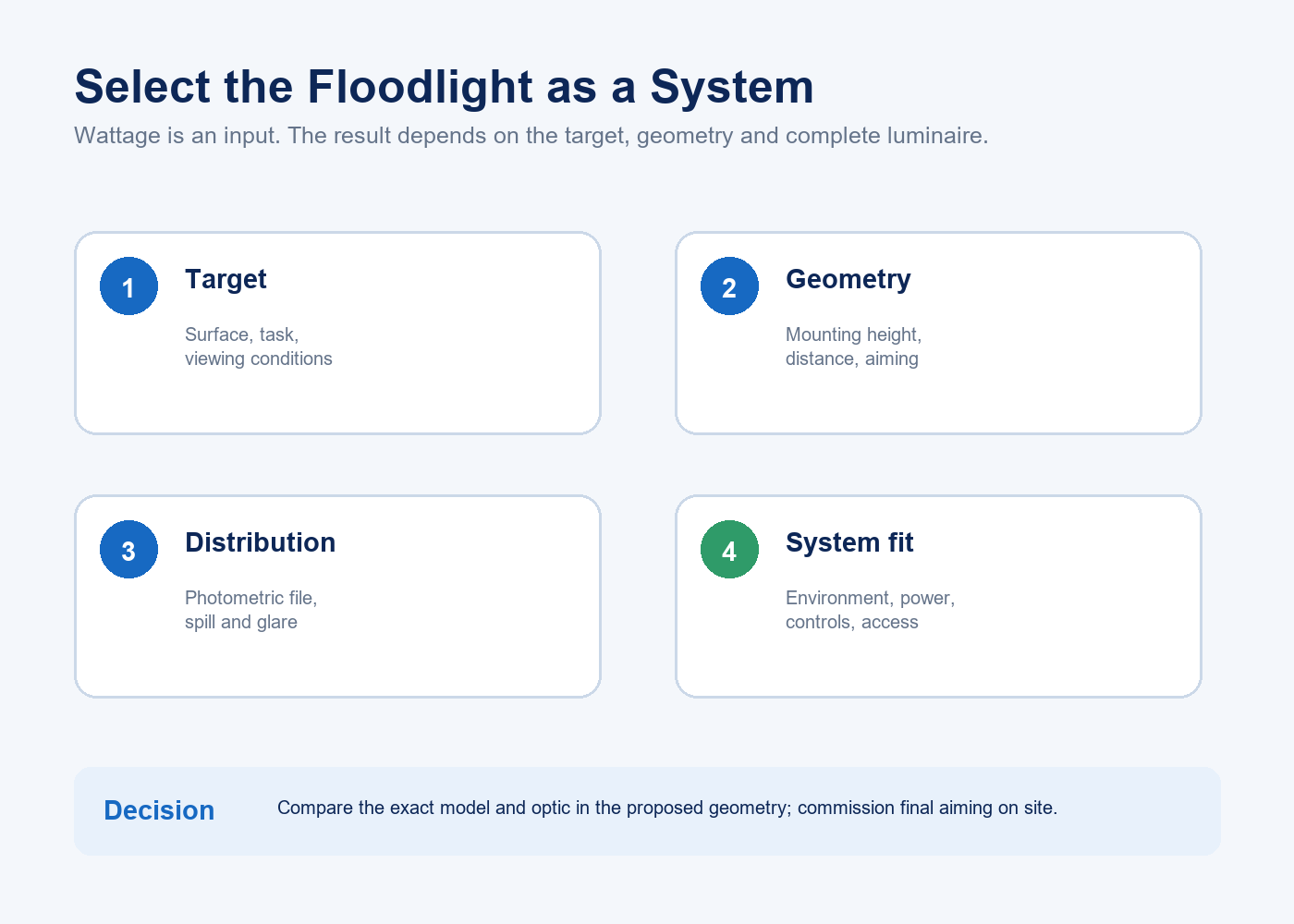
A useful selection process considers the target, geometry, optical distribution, aiming, environment, electrical system, controls and maintenance access. This guide explains those elements and the evidence a buyer should request.
The practical decision is not “How many watts?” Start with the surface or task, establish the mounting geometry, compare the exact photometric distribution, and then verify the enclosure, electrical, control and service interfaces as one system.
How an LED Floodlight Works
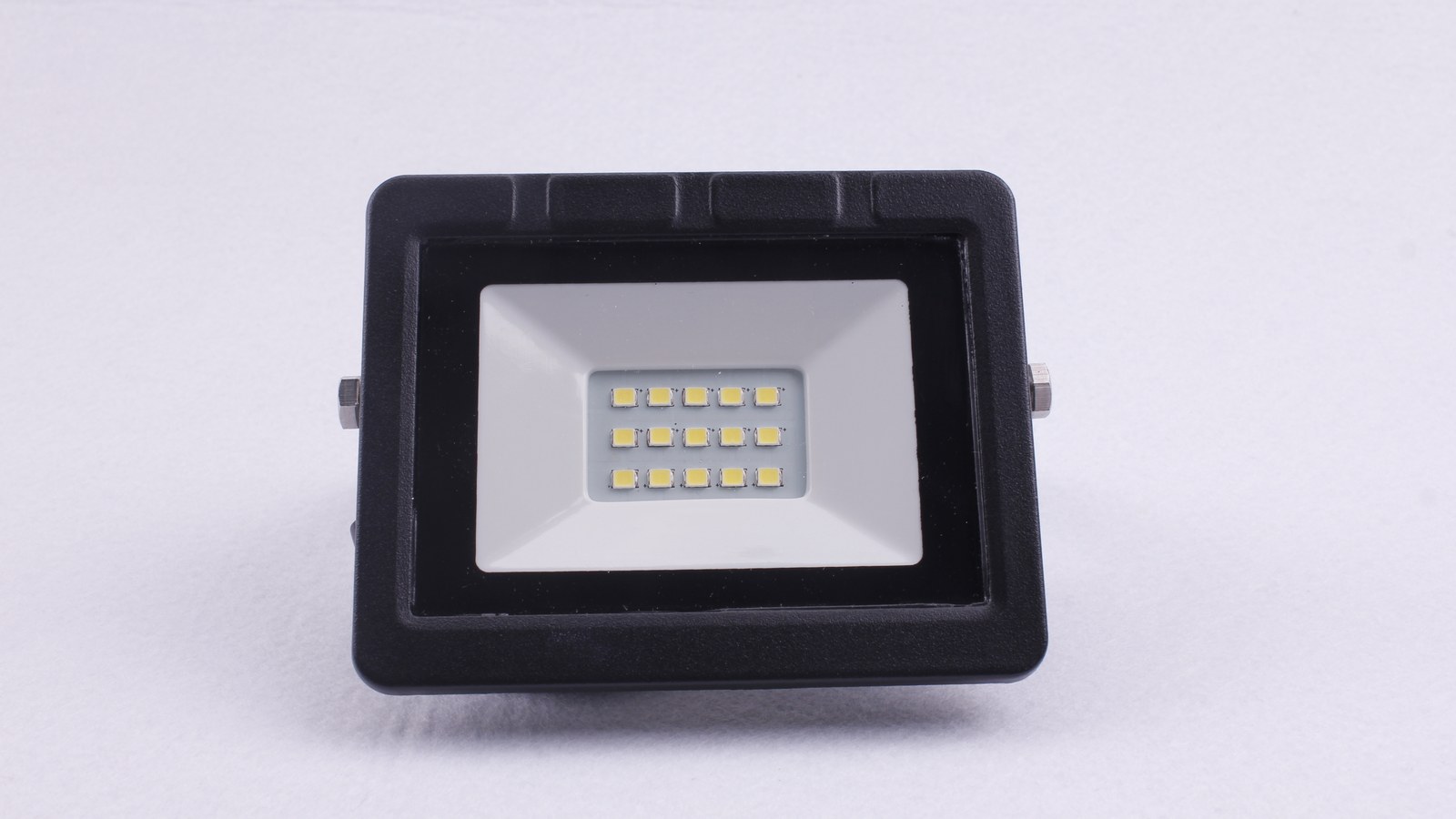
An LED floodlight combines several subsystems. The LED source converts electrical energy into light. A driver supplies and regulates power. Lenses, reflectors or other optical elements shape the distribution. The housing and thermal path remove heat from sensitive components. Seals and cable entries help protect the assembly for its intended environment. A bracket, yoke or mounting system establishes position and aiming.
These parts operate as one luminaire. Changing the LED board without considering the driver and heat path can change performance. Changing an optic can alter the illuminated area and glare. Changing a seal, cable entry or mounting orientation can affect environmental suitability. For this reason, a complete model specification is more useful than a list of headline component names. The New Lights LED floodlight range can be used to identify possible product families before model-level evidence is compared.
Floodlight, Spotlight and Area Light: What Is the Difference?
The terms are sometimes used loosely, but their optical jobs differ.
A spotlight generally concentrates light into a relatively narrow beam to emphasize a small target or project over distance. A floodlight can use a narrow, medium or wide distribution depending on the scene. An area luminaire is usually designed around a defined roadway, parking or site-lighting distribution rather than an aimable projector concept.
Product labels alone do not establish the result. Review beam and field information, photometric data and aiming geometry. A product marketed as a floodlight may create a concentrated beam, while another may spread light across a broad nearby surface.
| Luminaire type | Primary optical job | Typical selection evidence | Common mistake |
|---|---|---|---|
| Spotlight | Concentrate light on a smaller target or over distance | Beam and field angles, intensity distribution, aiming geometry | Treating the category name as proof of the actual beam |
| Floodlight | Aim a controlled beam from narrow to wide at a scene or surface | Model-specific photometric file, optic code and accessory configuration | Selecting by wattage or nominal beam angle alone |
| Area luminaire | Cover a defined site, parking or circulation pattern | Classified distribution, mounting layout and calculation | Substituting an aimable floodlight without checking glare and uniformity |
The Main Parts of an LED Floodlight
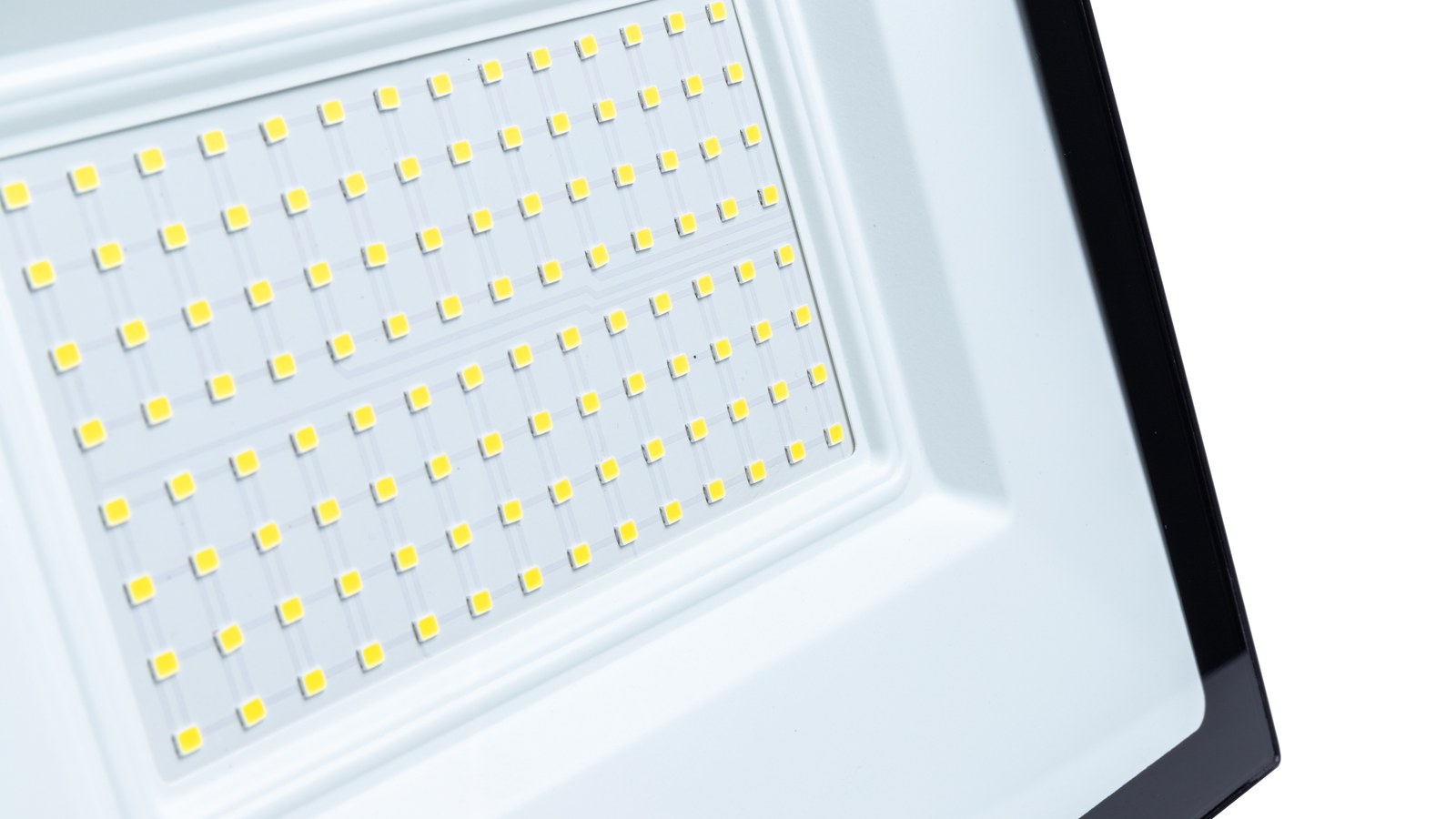
LED source and board
The source package, board layout, drive current, color characteristics and optical relationship influence the emitted light. Buyers should evaluate the finished luminaire data rather than assuming that an LED package rating transfers unchanged to the complete product.
Driver and electrical system
The driver affects starting, regulation, power quality, dimming and protection behavior. Required input voltage, frequency, switching, dimming method and control interface must match the project. If the driver is replaceable or remote, access and connection details should be documented.
Optical system
Lenses and reflectors direct light toward the target. Distribution may be symmetric or asymmetric and may vary from narrow to wide. The selected optic should correspond to target dimensions, distance and mounting position. A broad beam is not automatically better: it can send more light outside the intended area.
Thermal path
LED systems produce heat that must move from the source through the board, interfaces and luminaire structure to the surrounding environment. DOE solid-state-lighting guidance treats electrical, thermal and optical integration as connected parts of luminaire performance.
Thermal suitability cannot be judged only by counting fins or touching an operating housing. The design should be assessed for the actual construction, drive condition, mounting orientation and ambient environment. Model-specific test evidence is more useful than a generic claim that an aluminum housing “ensures long life.”
Housing, seals and cable entry
The enclosure supports components and interfaces with the environment. Its suitability depends on more than material name. Joint design, lens or cover, gaskets, fasteners, cable entry, drainage considerations and installation orientation can all matter.
Environmental suitability depends on the exact model’s documentation, rating scope and installation instructions. Compare those records with rain, dust, irrigation, corrosion, impact and temperature conditions at the site.
Mounting and aiming hardware
Floodlights are commonly mounted with an adjustable bracket or yoke. The hardware must support the luminaire and maintain the intended angle. Confirm permissible mounting positions, fasteners, structural support, cable routing and access for adjustment.
Why Beam Distribution Matters More Than Wattage Alone
Wattage describes electrical input, not where light lands. Two luminaires with similar input power can have different output, intensity patterns and optical losses. Even two products with similar lumen values can produce different results if one concentrates light and the other spreads it broadly.
Beam angle is a useful descriptor, but it is not a complete design. It does not by itself show intensity across the field, spill outside the target, uniformity or the effect of tilt and distance. Photometric data allow a designer to evaluate the distribution in the proposed geometry.
For a simple comparison, define:
- target width and height;
- mounting distance and height;
- horizontal and vertical aiming angles;
- required illuminance or luminance criteria;
- acceptable uniformity;
- observer positions and glare risk;
- boundaries where spill light must be controlled.
Then compare photometric files or reports for the exact model and optic. An IES file is a digital representation of a luminaire’s light distribution that calculation software can apply to the project geometry. If a shield or louver will be installed, the design should account for that accessory rather than using unshielded data as if performance were unchanged.
Aiming, Glare and Spill Light
An aimable luminaire creates flexibility, but poor aiming can waste light and produce discomfort. IES guidance emphasizes accurate aiming and identifies shields or louvers as tools that may reduce offsite spill, glare and uplight.
Aim toward the target rather than above it. Consider what people see when approaching, working near or looking from neighboring properties. High-output equipment mounted low or aimed across common viewing directions can create severe brightness contrast even when the target receives sufficient light.
The correct solution may involve changing mounting location, selecting a different distribution, reducing output, adding control accessories or using more luminaires at lower intensity. A field aiming and commissioning plan is often more reliable than assuming the installation crew will reproduce a rendering. The outdoor lighting installation checklist covers the site information that should be recorded before commissioning.
Common LED Floodlight Applications
Facades and architectural features
Floodlights can reveal walls, columns, signs, monuments and textured surfaces. Distribution and mounting distance should match the feature. Surface reflectance, color and texture influence the visible result, so a mock-up may be appropriate for prominent projects.
Yards and work areas
Aimable floodlights can support temporary or permanent work zones and selected industrial areas. The project should define the task, required coverage, mounting security, glare limits and environmental exposure. General brightness is not a substitute for a task-based lighting design.
Signs and displays
A sign requires suitable coverage without excessive spill beyond its edges. Asymmetric optics or carefully placed luminaires may improve uniformity. Access for cleaning and aiming should be considered where signs are mounted high or exposed to traffic and weather.
Sports and recreation
Sports lighting involves visibility, uniformity, glare, vertical illumination and sometimes broadcast or competition requirements. It is not solved by selecting several high-wattage floodlights from a catalogue. A qualified design based on the specific field, level of play and applicable requirements is needed.
Landscape and feature lighting
Floodlights can highlight trees, walls and landscape objects, but placement should account for public access, maintenance, plant growth, irrigation and light leaving the site. Low-mounted fixtures may require added protection against damage or tampering.
Temporary event lighting
Portable or temporarily mounted floodlights may support construction, events and emergency work. Cable management, stability, electrical protection, weather exposure and safe aiming require explicit planning. A permanent exterior product is not automatically suitable as portable equipment, and the reverse is also true.
How to Choose an LED Floodlight
1. Define the target and visual task
Record what must be illuminated, its dimensions, material and viewing conditions. State whether the objective is task visibility, security support, architectural emphasis, signage or another defined purpose.
2. Establish the geometry
Document mounting position, height, distance, permitted tilt and physical obstructions. Geometry affects both the beam footprint and the likelihood of glare.
3. Select distribution with photometric evidence
Compare optics using model-specific data. Do not choose solely by the words narrow, medium or wide because naming conventions can differ. Where calculations are required, use the actual photometric file for the proposed configuration.
4. Match output to the design
Determine output after distribution and geometry are understood. More lumens or watts can increase spill and glare without improving the target. Controls or multiple output options may help commissioning, but compatibility and configuration must be verified.
5. Verify environment and construction
Define exposure to water, dust, temperature, corrosion, impact and vibration. Check ratings, installation instructions, cable entry and mounting orientation for the exact model. Identify any accessory needed to maintain the claimed protection.
6. Confirm electrical and control requirements
Specify supply, switching, dimming, sensors, timers or network controls. Confirm surge-protection strategy and project electrical requirements with qualified parties. Avoid assuming that a control option shown for one variant is standard across the family.
7. Plan installation and maintenance
Review bracket adjustment, fasteners, structural support, driver access, cleaning and future replacement. Record final aiming angles where repeatability matters.
8. Review model-level evidence
Request datasheets, drawings, photometric files, installation instructions and relevant test or compliance documents. Confirm that model numbers and options match across the quotation and evidence set.
What to Put in an RFQ
A useful floodlight RFQ should include:
- application and target dimensions;
- mounting position, distance and aiming limits;
- required lighting criteria or design file;
- preferred distribution and requested photometric data;
- supply voltage and control method;
- installation environment and exposure;
- finish, bracket and accessory requirements;
- target market and documentation needs;
- quantities, packaging and labeling;
- sample or mock-up requirements.
Ask the supplier to identify assumptions, deviations and included accessories. This makes competing offers easier to compare and reduces the risk that the lowest quotation represents a different system.
| RFQ decision | Record before quotation | Confirm before order |
|---|---|---|
| Optical result | Target, mounting geometry and design criteria | Exact optic code, output option and photometric file |
| Environment | Water, dust, temperature, corrosion and impact exposure | Rating scope, installation orientation, cable entry and accessories |
| Electrical and control | Supply, switching, dimming, sensor or network requirement | Driver or control option, wiring boundary and commissioning method |
| Mechanical interface | Structure, bracket position, fasteners and aiming limits | Drawing, weight, adjustment range and access plan |
| Evidence and delivery | Destination market, documents, quantity and packaging | Model mapping, included files, sample status and inspection plan |
For project context beyond one fixture, review the outdoor, garden and solar lighting solution and the comparison of floodlights, work lights and outdoor security lighting. Public product documents are available through the download center.
Frequently Asked Questions
Is every LED floodlight designed for outdoor use?
No. Many floodlights are built for exterior applications, but suitability must be verified for the exact model, rating, installation orientation and exposure. The product name or housing appearance is insufficient evidence.
Is a floodlight always wider than a spotlight?
Not necessarily in everyday product naming. IES notes that exterior floodlight beams can range from relatively narrow to very wide. Compare documented distribution and photometric data instead of relying only on category labels.
Does higher wattage mean a brighter target?
Not by itself. Electrical input, luminaire output, optical distribution, distance, aiming and losses all affect the target. Evaluate the complete product in the proposed geometry.
Why is thermal management important in an LED floodlight?
Heat generated in the LED system must move through the luminaire’s thermal path. Operating temperature interacts with source, driver, materials and ambient conditions. Lifetime evaluation therefore requires model-specific thermal and operating evidence rather than an inference from external shape.
What data are needed for a lighting calculation?
Use model-specific photometric data together with mounting geometry, target surfaces and project criteria. Confirm that the file represents the selected optic, output and accessory configuration.
Treat the Floodlight as a Complete System
An LED floodlight is more than a bright LED in a weather-resistant housing. It is an aimable optical, electrical, thermal and mechanical system. The appropriate model is the one that places the required light on the target while controlling glare and spill, operating in the real environment and supporting the project’s installation and maintenance plan.
For a product discussion based on target geometry, distribution, environment, controls and destination-market requirements, contact New Lights.
—
Editorial Sources
- Illuminating Engineering Society, “Floodlight (Exterior Lighting)”: https://ies.org/definitions/floodlight-exterior-lighting/
- Illuminating Engineering Society, ANSI/IES RP-8-22: https://www.ies.org/wp-content/uploads/2023/04/RP-8-22-comprimido_compressed.pdf
- Illuminating Engineering Society, “Learn About IES Files”: https://ies.org/education/learn-about-ies-files/
- U.S. Department of Energy, “Solid-State Lighting 2016 R&D Plan”: https://www.energy.gov/eere/ssl/articles/solid-state-lighting-2016-rd-plan
- U.S. General Services Administration, “LED Lighting and Controls Guidance for Federal Buildings”: https://www.gsa.gov/system/files/LED%20and%20Controls%20Guidance%20for%20GSA.pdf