


 English
 Español
 Deutsch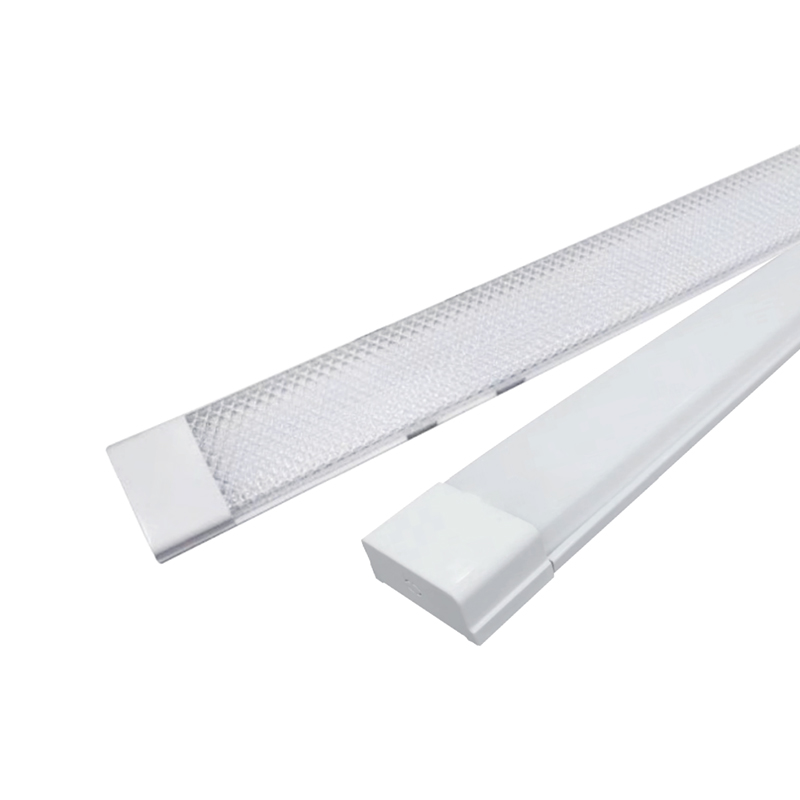
We sincerely look forward to establishing a long-term development partnership with you with good quality and professional services.
The T8 integrated LED fixture has become a pivotal component in modern lighting solutions due to its energy efficiency, long lifespan, and low maintenance requirements. Among the many factors that influence its performance, the beam angle is particularly critical as it directly impacts the distribution and quality of light within a space.
What is the beam angle in a T8 integrated LED fixture?
The beam angle of a T8 integrated LED fixture refers to the angular extent over which the light emitted from the fixture is distributed. It determines how wide or narrow the light spreads in a space. A narrow beam angle concentrates light over a smaller area, providing high-intensity illumination, whereas a wide beam angle disperses light over a larger area, offering more uniform coverage but with reduced intensity.
In practical terms, the beam angle influences not only the aesthetic appeal of a space but also its functional performance. Spaces that require focused lighting, such as workstations or corridors, benefit from narrower beam angles, while wide-open areas like offices, retail spaces, or classrooms are better served with fixtures that have broader beam angles.
How beam angle affects light distribution
Uniformity of illumination
One of the primary impacts of the beam angle in a T8 integrated LED fixture is its effect on light uniformity. Fixtures with wide beam angles produce evenly distributed light, reducing shadows and minimizing bright spots or dark corners. This uniformity is particularly important in commercial and educational environments, where consistent lighting levels are essential for comfort and productivity.
Conversely, a narrow beam angle creates more focused light, which can result in uneven illumination if not carefully planned. In applications where task-specific lighting is required, such as assembly lines or inspection stations, this characteristic is advantageous. By concentrating light where it is needed most, narrow beam angles enhance visibility and reduce eye strain.
Lighting intensity and coverage area
Beam angle also determines the intensity of light across a given space. Narrower angles concentrate the fixture’s output, increasing luminance in the targeted area. This makes a T8 integrated LED fixture with a narrow beam ideal for highlighting specific zones, displays, or work surfaces. Wider angles, on the other hand, spread the light over a larger area, lowering the intensity per unit area but providing a more diffused and softer effect.
Selecting the appropriate beam angle requires balancing light intensity and coverage requirements. For instance, in a retail environment, fixtures with varied beam angles can be combined to ensure both general illumination and accent lighting, enhancing both functionality and aesthetic appeal.
Visual comfort and glare reduction
Another significant consideration is visual comfort, which is influenced by how light spreads from a fixture. A poorly chosen beam angle can lead to glare, eye discomfort, or uneven lighting patterns. Wide beam angles reduce sharp contrasts between bright and dark areas, providing a more comfortable environment for occupants.
In contrast, narrow beams, while beneficial for focused lighting, may cause discomfort if improperly positioned. Facility designers often use diffusers or specific fixture placements to mitigate potential glare from a T8 integrated LED fixture. This ensures optimal visual comfort while maintaining the desired lighting effect.
Factors influencing the choice of beam angle
Application type
The intended application is the most critical factor in selecting the beam angle for a T8 integrated LED fixture. Environments such as offices, classrooms, or conference rooms typically require wide beam angles to ensure broad, uniform lighting coverage. In contrast, specialized areas like laboratories, workstations, or display cases may benefit from narrow beam angles for targeted illumination.
Ceiling height and room dimensions
Room geometry, including ceiling height and overall dimensions, affects how beam angle impacts light distribution. In high-ceiling spaces, a fixture with a wider beam angle may be necessary to cover the floor area adequately. Conversely, in smaller rooms with standard ceilings, a narrower beam angle may be sufficient to avoid light spillage and maintain visual comfort.
Fixture placement and spacing
The positioning of T8 integrated LED fixtures relative to one another influences how beam angles interact across the lighting layout. Proper spacing and alignment ensure that narrow beams do not leave dark gaps and that wide beams overlap effectively for uniform coverage. Advanced lighting simulations can help designers predict how different beam angles will perform in specific layouts, optimizing both aesthetics and functionality.
Lens and diffuser design
Many T8 integrated LED fixtures incorporate lenses or diffusers to modify light distribution. These components can adjust the effective beam angle and influence the quality of illumination. Fixtures with well-designed optics provide a balance between beam spread and intensity, allowing for consistent light distribution without compromising visual comfort or efficiency.
Practical implications for buyers and facility managers
Energy efficiency
The beam angle of a T8 integrated LED fixture can indirectly impact energy efficiency. Narrow beam angles focus light on specific areas, potentially reducing the number of fixtures required for task-specific applications. However, in spaces requiring uniform coverage, wide beam angles may reduce the need for multiple fixtures, also conserving energy. Choosing the correct beam angle minimizes energy wastage while ensuring adequate illumination.
Maintenance and replacement considerations
Properly selected beam angles reduce over-illumination and wear on fixtures, extending the effective life of a T8 integrated LED fixture. By avoiding overly concentrated or poorly distributed lighting, maintenance requirements can be optimized, reducing costs and downtime.
Compliance with lighting standards
Many industries adhere to specific lighting standards for workspace safety, productivity, and visual comfort. Beam angle directly affects illuminance levels, uniformity, and glare, all of which are evaluated in compliance assessments. Selecting the appropriate beam angle ensures that T8 integrated LED fixtures meet these standards, supporting regulatory compliance and creating a safe working environment.
Common beam angles and their applications
| Beam angle | Typical application | Benefits |
|---|---|---|
| 30° | Display cases, task lighting | Focused illumination, high intensity |
| 60° | Workstations, corridors | Balanced coverage, moderate intensity |
| 120° | Offices, classrooms | Uniform light distribution, minimal glare |
| 150°+ | Retail spaces, open areas | Wide coverage, soft diffused light |
This table illustrates that the choice of beam angle is closely tied to the specific requirements of a space. Buyers and designers can use this information to match fixture specifications with functional needs effectively.
Industry trends related to beam angle optimization
Modern T8 integrated LED fixtures increasingly incorporate adjustable or modular beam angle designs. This allows facilities to adapt lighting layouts without replacing entire fixtures, providing flexibility for evolving operational needs.
Smart lighting controls, including occupancy sensors and dimming systems, complement beam angle considerations by optimizing energy use and enhancing the user experience. These technologies allow for dynamic adjustment of light intensity in response to occupancy or daylight, maximizing the benefits of both narrow and wide beam angles.
Summary
The beam angle of a T8 integrated LED fixture is a critical determinant of light distribution, influencing uniformity, intensity, visual comfort, and energy efficiency. Buyers and facility managers must consider factors such as application type, ceiling height, room dimensions, and fixture placement when selecting an appropriate beam angle. Advanced lens designs, diffusers, and smart lighting controls further enhance the effectiveness of these fixtures.
By understanding the implications of beam angle, stakeholders can make informed decisions, ensuring optimal illumination, energy savings, and regulatory compliance. The thoughtful selection of beam angles not only enhances lighting quality but also supports sustainable and efficient building operations.
Conclusion
Choosing the correct beam angle for a T8 integrated LED fixture is not merely a technical specification; it is a strategic decision that impacts lighting performance, occupant comfort, and operational efficiency. Whether used in commercial, industrial, or educational settings, understanding how beam angles influence light distribution enables designers, engineers, and buyers to achieve optimal lighting outcomes. The integration of appropriate beam angles with advanced fixture design and intelligent controls ensures that T8 integrated LED fixtures continue to deliver high-quality, energy-efficient, and adaptable lighting solutions.
 GET IN TOUCH


