


 English
 Español
 Deutsch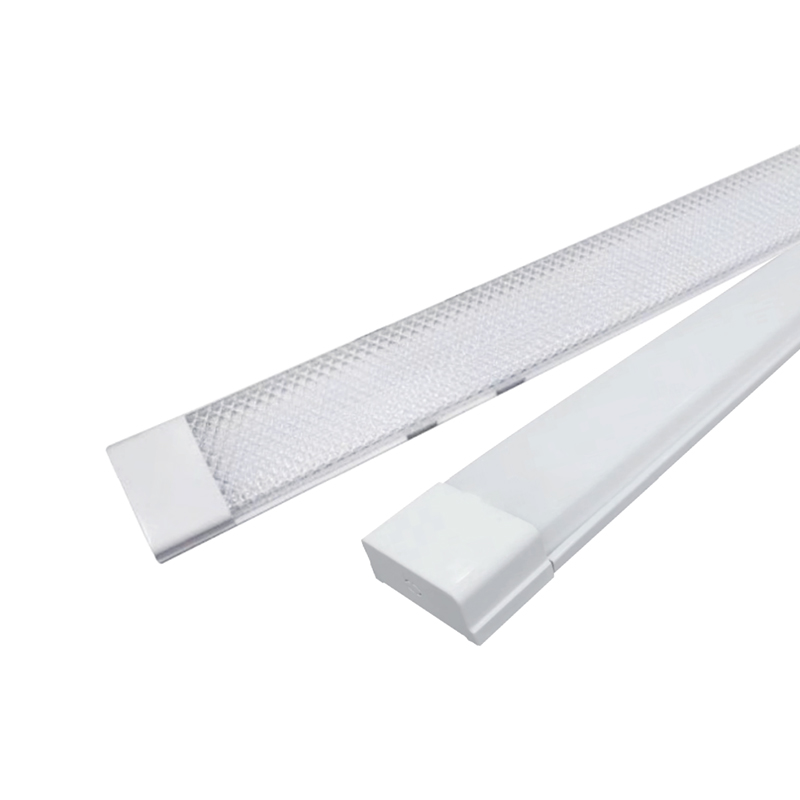
We sincerely look forward to establishing a long-term development partnership with you with good quality and professional services.
In commercial retail spaces, lighting systems have always been one of the core elements of building consumer scenarios. Traditional store lighting solutions often face two major difficulties: first, fixed lamp layouts are difficult to adapt to the rapidly iterating shelf display needs; second, local lighting adjustments require overall system transformation, resulting in high maintenance costs and time consumption. Connectable LED shop lights transform lighting units into dynamically reorganizable space components through innovative modular design concepts, bringing revolutionary solutions to the field of commercial lighting. This technological breakthrough is not only reflected in the innovation of hardware structure, but also builds a new way of dialogue between lighting systems and commercial spaces.
From the perspective of technical architecture, the core innovation of connectable LED shop lights lies in their node-based network design. Each lamp has a built-in intelligent communication module, which realizes the dual functions of physical connection and data interaction through standardized interfaces. This design breaks through the isolated operation mode of traditional lamps and makes each lighting unit an intelligent node in the lighting network. When the lamps are plugged in through male and female connectors, not only power transmission is realized, but also the handshake of the communication protocol is completed synchronously, forming a distributed lighting system that can be coordinated autonomously. The advantage of this architecture lies in its openness - users can freely increase or decrease the number of lamps according to space requirements, and the system will automatically identify the network topology and adjust the power distribution to ensure seamless connection of lighting effects.
In terms of spatial adaptability, the physical flexibility of the product directly translates into improved efficiency of commercial operations. Taking retail shelf adjustment as an example, traditional lighting systems often require rewiring or replacement of lamps when shelves are reorganized, while the connectable LED store light system can be adapted by simply extending cables or adjusting the spacing between lamps. When a certain area needs to strengthen display lighting, operators do not need to dismantle the original system, but only need to insert enhancement modules at designated locations, and the system will automatically balance the brightness of each node to form a gradient lighting effect. This “plug and play” feature enables the lighting system to keep pace with the rapid iteration of product display, which is particularly suitable for retail scenarios such as fast fashion and electronic products that require high-frequency adjustment of display solutions.
A deeper technical breakthrough is reflected in the system’s intelligent collaboration capabilities. The light sensor built into each lamp node can monitor the ambient light intensity in real time and dynamically adjust the output power through a distributed algorithm. When a certain area has insufficient illumination due to changes in natural light, adjacent lamps will automatically increase brightness to compensate, forming an adaptive lighting network. This intelligent adjustment mechanism not only optimizes energy consumption performance, but also creates a consistent visual experience. In key exhibition area applications, the system supports setting special lighting modes through the main control module, so that the enhanced module forms a light and dark contrast with the basic lighting, effectively guiding the flow of consumer vision. This dynamic lighting effect is difficult to achieve with traditional fixed lamps.
From the perspective of commercial value, the modular design of this product significantly reduces the cost of the entire life cycle. In the initial deployment stage, standardized lamp units can reduce the demand for customized production and shorten the project delivery cycle; in the operation and maintenance stage, the failure of a single node will not affect the operation of the entire system. Maintenance personnel only need to replace the faulty module to restore the function. This “hot plug-in” feature reduces the mean time to repair (MTTR) to minutes. For chain retail brands, standardized lamp modules can be deployed across stores, further improving asset utilization.
In terms of spatial aesthetics, the connectable LED store light system creates a new form of lighting expression. Through the combination of different forms of lamps, artistic lighting effects such as linear light strips, geometric matrices or three-dimensional light sculptures can be formed. The connection nodes of the lamps are hidden, so that the light strips present a continuous visual effect without breakpoints. This design language is particularly suitable for high-end brand flagship stores or art exhibition spaces. When a specific atmosphere needs to be created, the system supports the preset of multiple lighting scenes through the main control terminal, such as morning mode, business mode, promotion mode, etc. The switching between different scenes can be achieved through timed tasks or remote control, making the lighting system an active shaper of the space atmosphere.
In terms of technological evolution, connectable LED store lights are moving towards a higher level of intelligence. The new generation of products has integrated wireless communication modules, supporting virtual previews of lighting layouts through mobile terminals. Operators can drag and drop lamp icons in the APP to simulate the actual installation effect, and the system automatically generates wiring plans and power calculation reports. More advanced versions are exploring deep integration with the Internet of Things (IoT) platform, enabling the lighting system to interact with inventory management systems and customer flow analysis systems, such as automatically adjusting lighting focus based on product display data, or dynamically adjusting regional illumination based on store customer flow density.
The innovative essence of this lighting system lies in redefining the relationship between “light” and “space”. Traditional lighting solutions regard lamps as decorative elements of space, while the connectable LED shop light system transforms them into dynamic responders of spatial form. When commercial space needs to adjust functional zoning, the lighting system is no longer a limiting factor, but an active participant in space reconstruction. This transformation is not only reflected in the technical level, but also heralds a paradigm shift in the concept of commercial lighting design - future shop lighting will no longer be a static light environment creation, but an intelligent system that can work in real time with business operation strategies.
In terms of sustainable development, the modular design of this product perfectly fits the concept of circular economy. The main body of the lamp adopts a standardized aluminum alloy shell with a service life of more than 50,000 hours. When a certain LED module reaches the end of its life, only the light-emitting component needs to be replaced without discarding the entire lamp. This design significantly reduces the generation of electronic waste and reduces material consumption. In terms of energy management, the system supports linkage with smart meters, automatically adjusts power output according to the peak and valley electricity prices of the power grid, and provides commercial users with additional energy-saving benefits.
The emergence of the connectable LED shop light system marks the official entry of commercial lighting into the era of modularization and intelligence. This technological innovation not only solves the pain points of traditional lighting solutions in terms of spatial adaptability and operational efficiency, but also creates a new paradigm for the deep integration of lighting systems and commercial spaces. With the continued penetration of technologies such as the Internet of Things and artificial intelligence, future store lighting will evolve into an intelligent entity with spatial perception capabilities. While providing basic lighting functions, it will become a key infrastructure for optimizing consumer experience and improving operational efficiency. This transformation not only requires lighting manufacturers to break through the limitations of hardware design, but also requires the entire lighting industry to establish new technical standards and service systems to jointly promote commercial lighting in a smarter, more flexible and more sustainable direction.
 GET IN TOUCH


