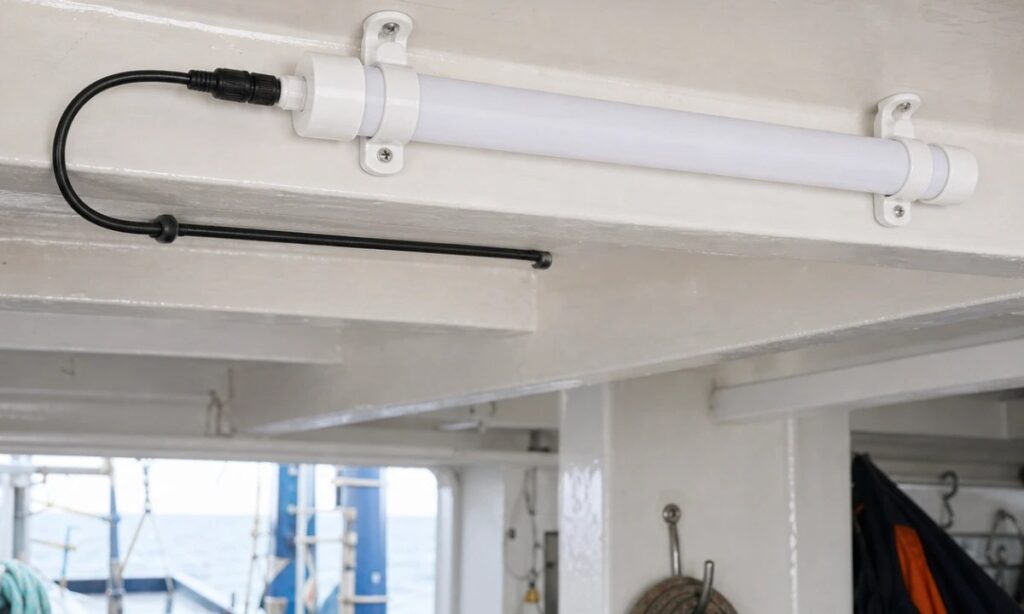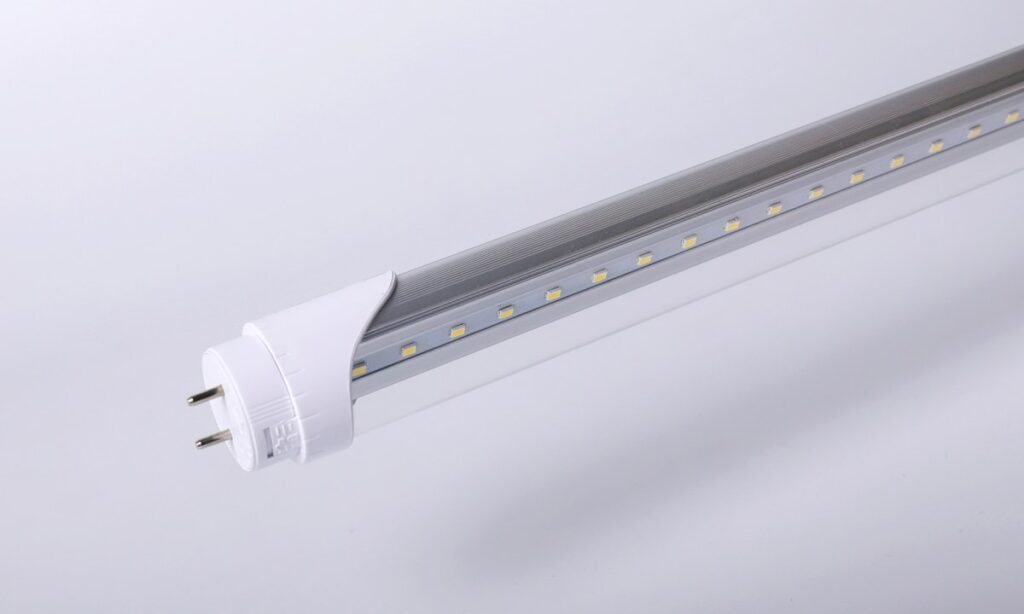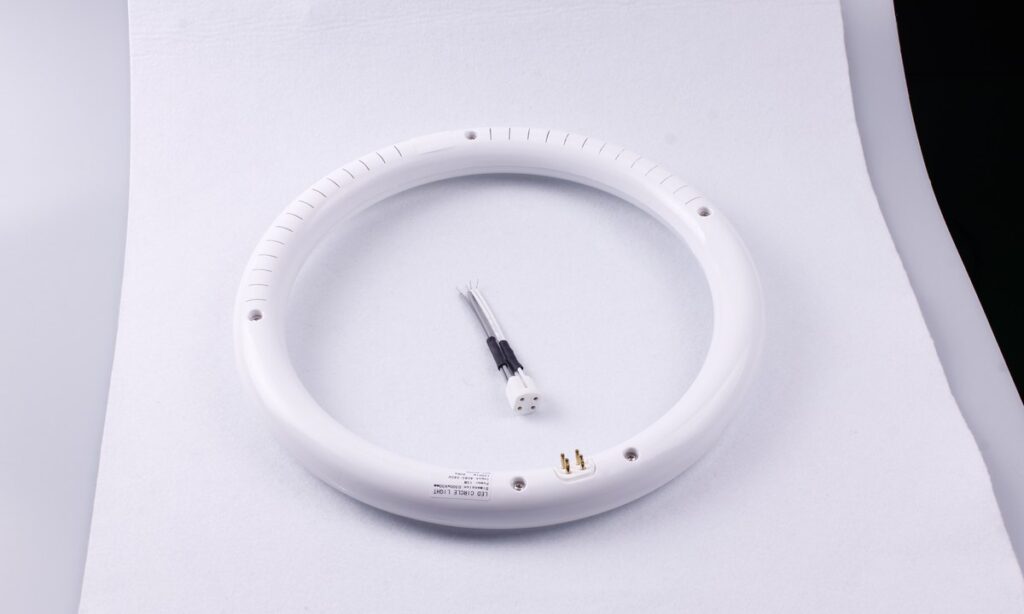


The 25 July 2028 US general service lamp deadline is not simply a higher efficacy number. It is a product-scope, basic-model, testing, certification and production-control task. Importers should first determine which exact lamps are covered, then connect each product class to the applicable requirement and preserve one traceable identity from sample through sale.
The US Department of Energy states that compliance with the amended energy-conservation standards for general service lamps is required on and after 25 July 2028. DOE also makes clear that the rule applies to newly manufactured or imported products rather than prohibiting consumers from continuing to use lamps manufactured earlier. This guide is a procurement workflow, not legal advice; current DOE regulations and counsel should be checked for the exact product and transaction.
Start with a dated product-scope decision
DOE describes general service lamps as including general service incandescent lamps, compact fluorescent lamps, general service LED lamps, OLED lamps and other lamps used for applications traditionally served by general service incandescent lamps. The definitions and exclusions are technical. A marketing label such as “decorative,” “specialty,” “retrofit” or “smart” does not by itself decide whether a lamp is covered.
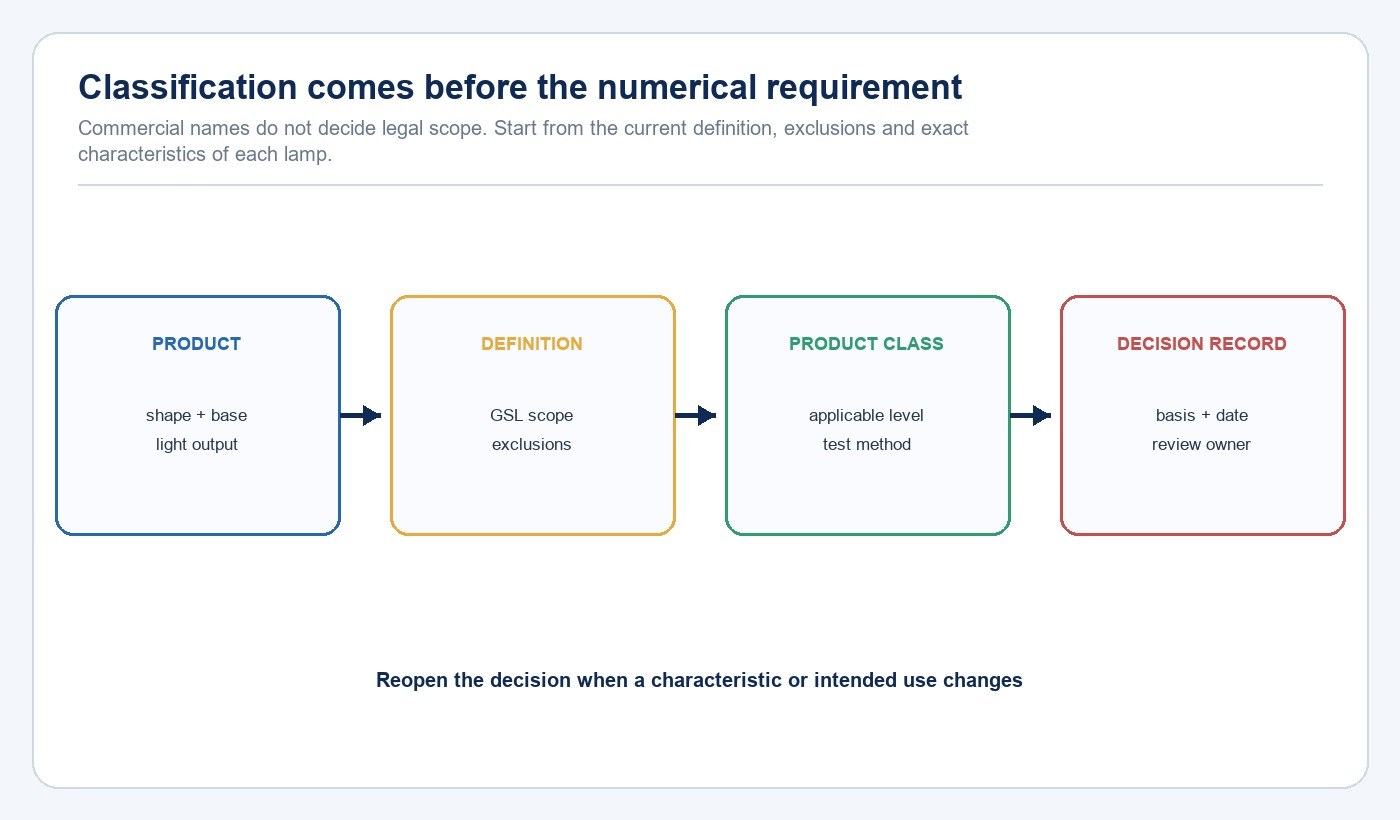
Create one row for each meaningful configuration. Record shape, base, light output, wattage, voltage, color function, controls, intended application and any feature used to support inclusion or exclusion. Cite the regulatory provision and the date reviewed. If a characteristic or intended use changes, reopen the scope decision.
| Scope field | Dokumentation | Escalate when |
|---|---|---|
| Produktidentität | Model, shape, base, voltage and rated output | The commercial name hides multiple constructions |
| Intended function | General illumination or a defined special purpose | Marketing and technical use are inconsistent |
| Definition | Current GSL definition and relevant product class | The lamp may sit near a boundary |
| Exclusion | Exact exclusion text and supporting characteristics | Exclusion depends only on a label or unsupported claim |
| Review control | Reviewer, source version and review date | A rule or product characteristic changes |
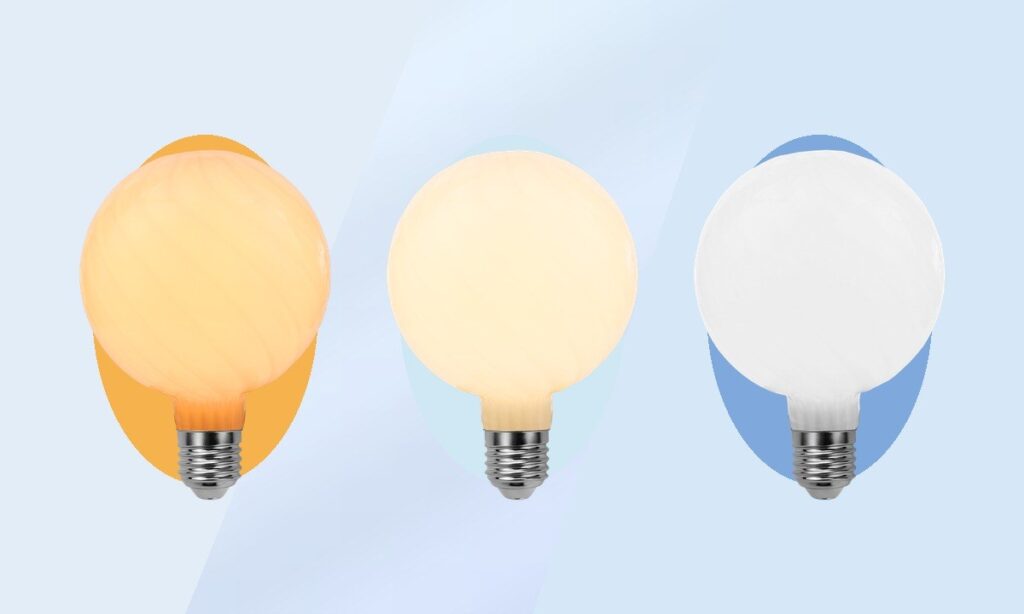
For decorative general-lighting products, the New Lights LED Filament Bulb General Lighting family is a commercial starting point. Coverage, testing and ratings must still be determined for the exact US configuration.
Separate current obligations from the 2028 amended standards
The 2028 date does not pause requirements that already apply. DOE’s current GSL page identifies the present standards and test procedures, while the amended levels have their own compliance date. A readiness matrix should therefore show the rule in force now, the amended requirement, the affected product class, the test procedure used and the first production or import date under each decision.
This prevents two opposite mistakes: applying a future requirement too early without understanding the current obligation, or treating the future date as permission to ignore today’s certification and recordkeeping duties. The Checkliste für Konformitätsunterlagen zu LED-Produkten provides a broader method for connecting regulations, reports, declarations, labels and instructions to an exact order code.
Work backwards from the launch date
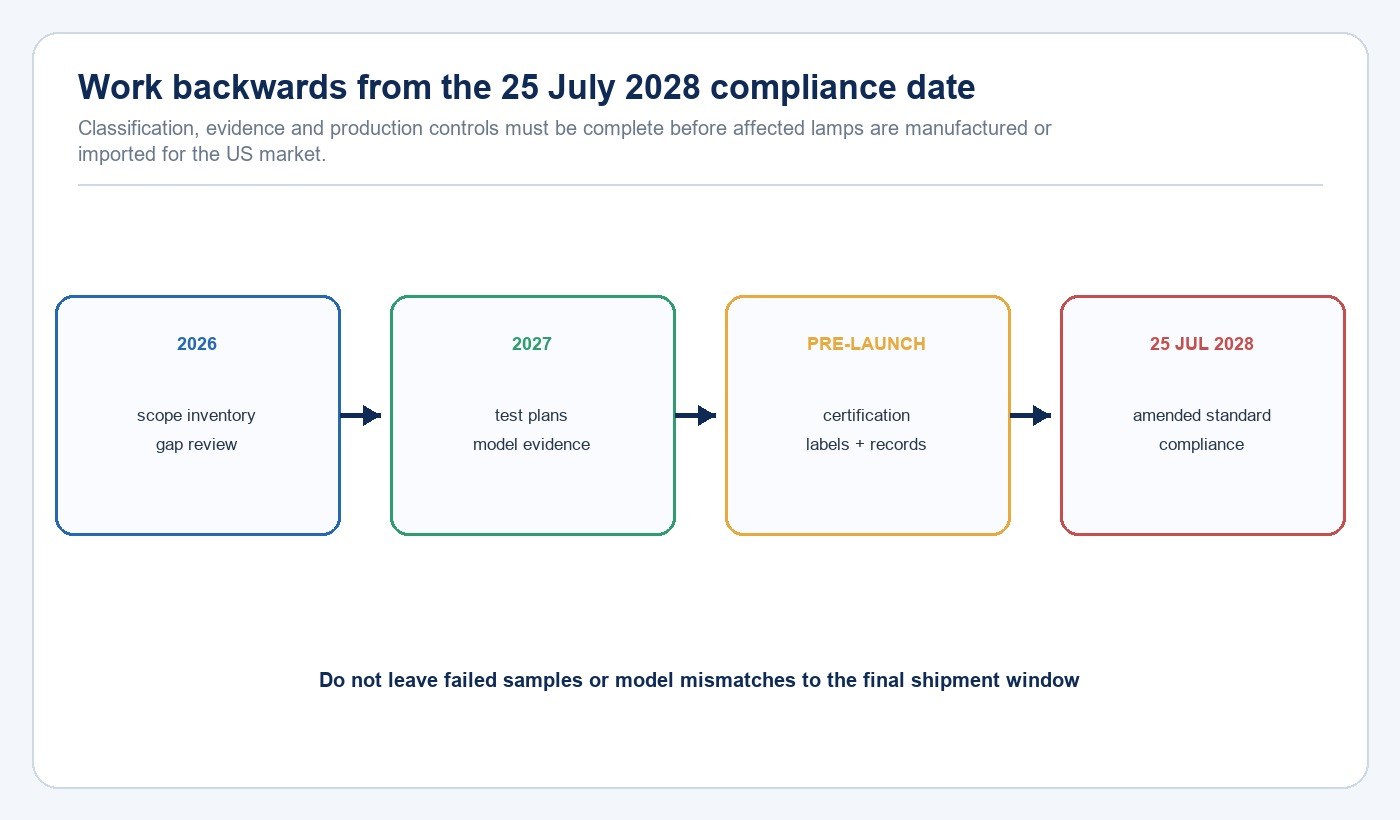
Do not plan from 25 July 2028 backwards using laboratory lead time alone. The critical path may include definition questions, sample failures, product redesign, retesting, basic-model grouping, certification-account preparation, packaging revisions, customer approvals and inventory transitions.
A practical plan can use five gates:
- Complete the covered-product inventory and scope decisions.
- Freeze the intended US configurations and basic-model strategy.
- Approve representative samples and applicable test procedures.
- Review data, certification fields, labels and commercial claims together.
- Release production only after the approved evidence and configuration match.
Die Identität des Grundmodells festlegen
A compliance file is useful only when it maps to what is manufactured and sold. Quotations, drawings, bills of materials, test samples, laboratory reports, certification records, packaging and online listings should use the same controlled reference or a documented relationship.
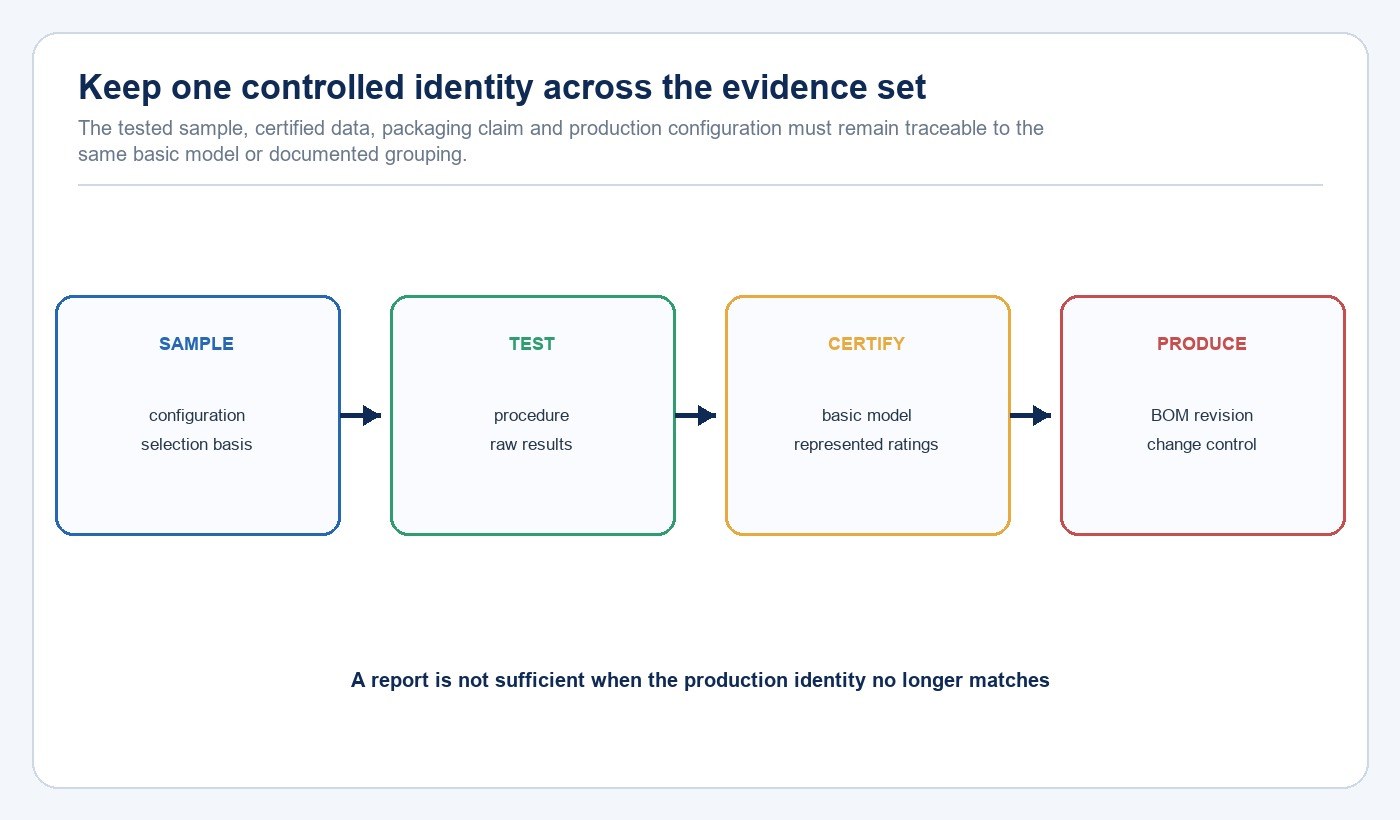
Basic-model grouping should not be treated as a clerical shortcut. The importer should understand which variants are represented, how ratings are assigned and which changes could invalidate the relationship. A report for one construction does not automatically support unrelated shapes, powers, optical systems or driver designs.
Die supplier evaluation guide explains why sample approval and mass-production consistency are separate risks. The Checkliste zur Bewertung von LED-Beleuchtungsmustern can be used to record the physical and documentary identity of the evaluated unit.
Define the evidence hierarchy before testing
Agree which evidence controls each claim. The regulation and current DOE guidance define the legal framework. The applicable test procedure defines how the regulated value is determined. Laboratory records document the tested sample and result. Certification records communicate represented values. Production records show whether shipped goods remain within the approved definition.
| Nachweisgrundlage | Core question | Minimum control |
|---|---|---|
| Regulation | Is this product covered, and what requirement applies? | Current citation and dated scope decision |
| Testmethode | How must the regulated value be determined? | Procedure edition and sample plan |
| Laboratory | What exactly was tested and what were the results? | Sample identity, raw data and report revision |
| Zertifizierung | Which basic model and ratings are represented? | Submission record and responsible party |
| Product/label | Do claims and markings match the represented values? | Approved artwork and model mapping |
| Produktion | Does the shipped configuration remain represented? | BOM revision, inspection and change control |
Die EU product-data and digital product passport guide covers a different jurisdiction, but its model-data discipline is relevant: product records should remain machine- and human-readable, revision-controlled and tied to the correct configuration. It must not be used as a substitute for US DOE requirements.
Treat test procedure changes as controlled inputs
DOE published clarifications to GSL test procedures in 2025, including instructions for colored-lamp treatment, additional components and certain non-integrated lamps. The DOE GSL page identifies when those amendments became mandatory for product testing. A readiness file should therefore record the procedure and date used rather than referring generically to a “latest test.”
Ask the laboratory and supplier to confirm the exact product class, procedure appendix, sample configuration, auxiliary settings and represented ratings. If testing spans a rule transition, document which procedure supports which submission or decision.
Link engineering changes to compliance impact
LED packages, drivers, current settings, optics, thermal parts, firmware and control functions can affect power, light output or represented performance. A component with the same commercial description is not automatically equivalent.
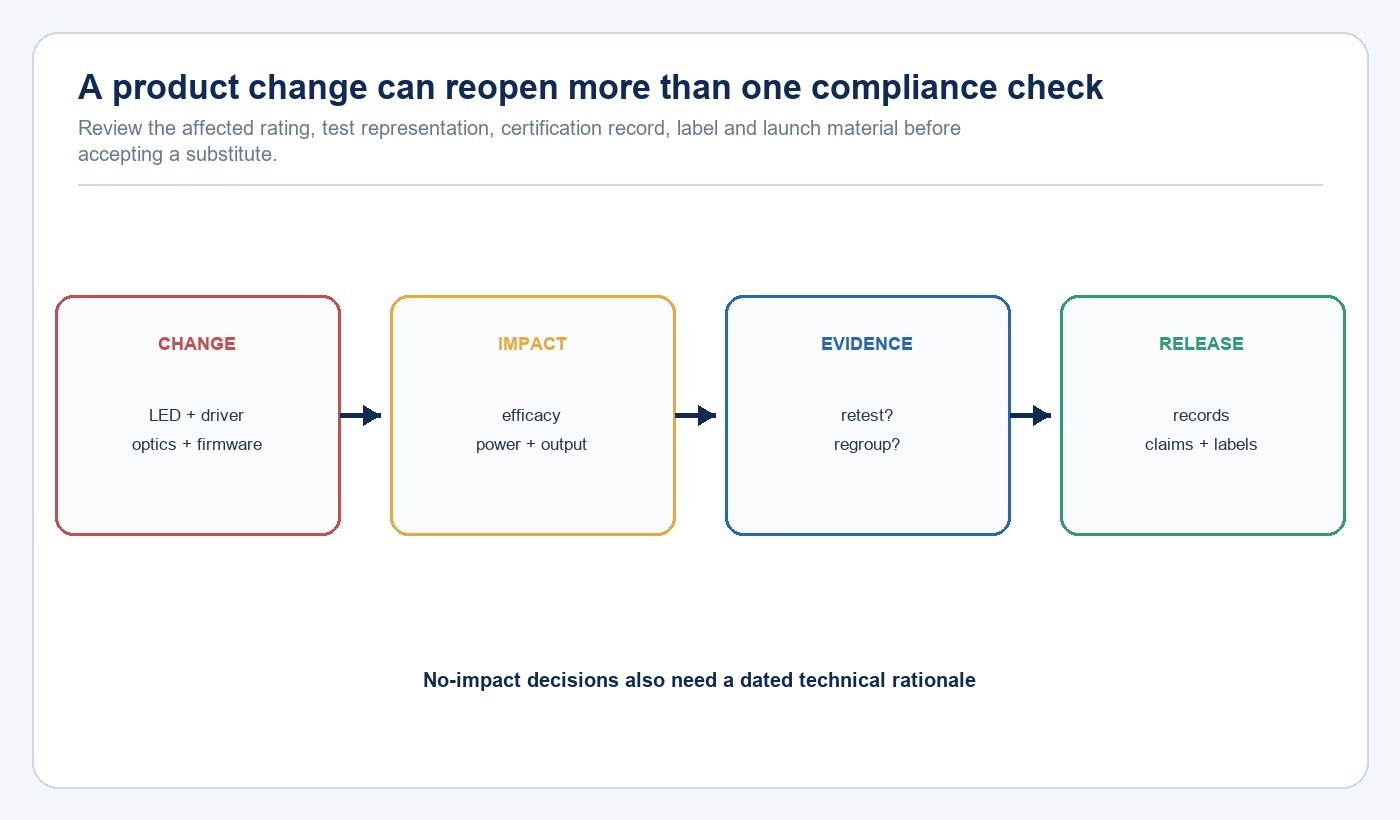
The change request should identify the old and new parts, affected models, technical rationale, expected effect, required verification, certification impact and approval owner. Even when the conclusion is “no retest required,” preserve the dated rationale and evidence used.
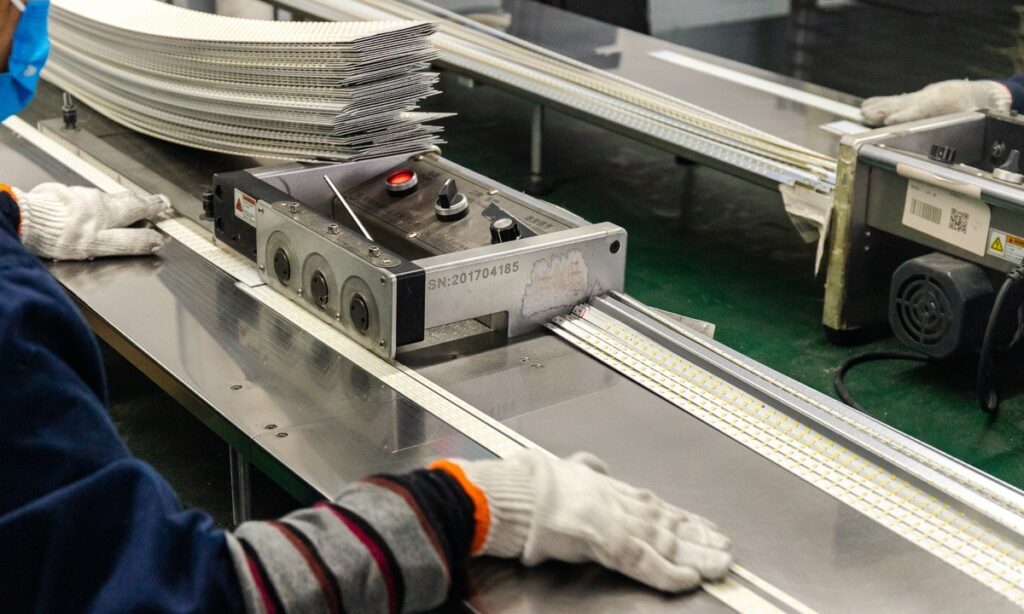
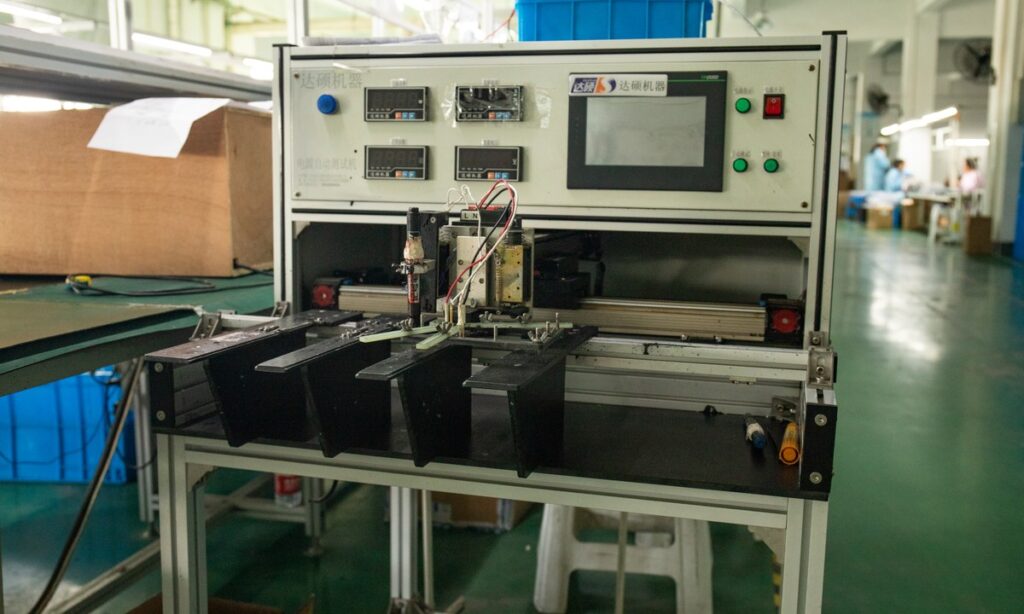
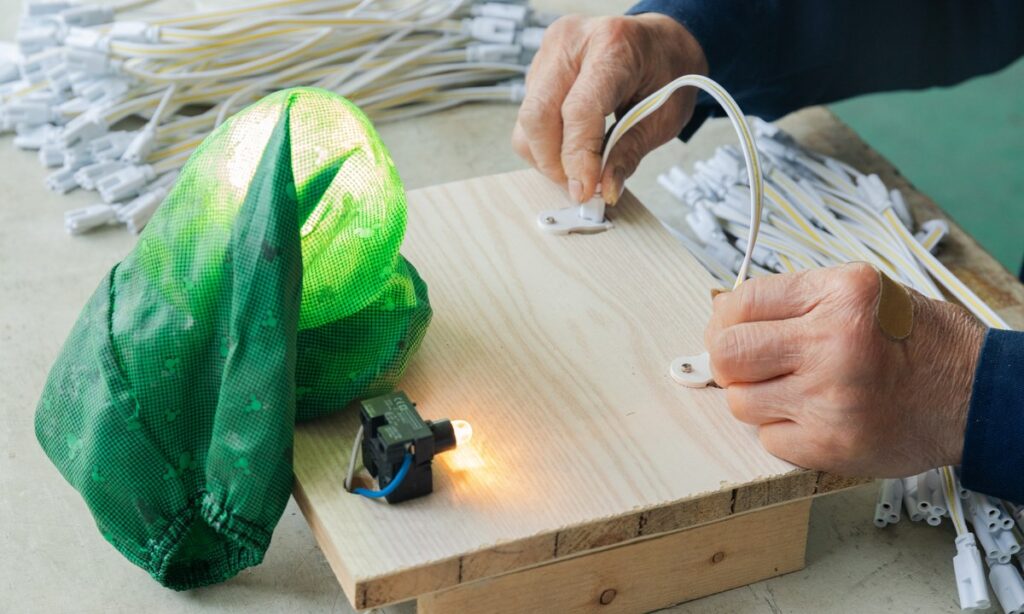
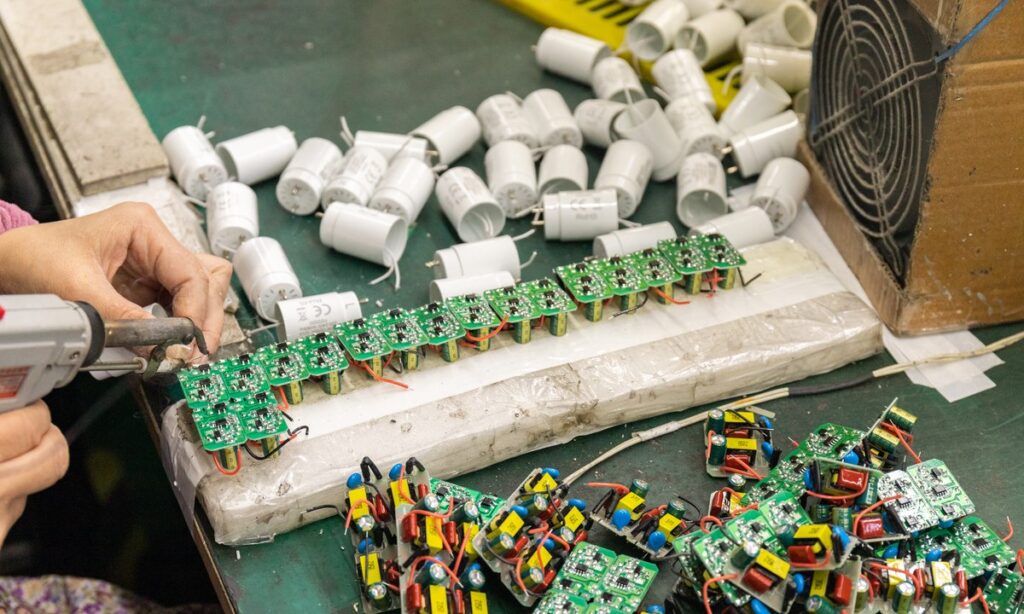
Buyers can review the New Lights factory and manufacturing overview when discussing BOM control, inspection and traceability. Available product files can be checked through the download centre.
Checkliste für die Importbereitschaft
- Build a complete list of US-bound lamp configurations.
- Record a dated inclusion, exclusion and product-class decision for each.
- Separate current requirements from the standards effective 25 July 2028.
- Freeze model identity, variants and basic-model relationships.
- Confirm the applicable test procedure and representative sample plan.
- Map every report and represented rating to an exact configuration.
- Align certification fields, packaging, listings and customer data.
- Define component and firmware change-control triggers.
- Plan inventory and manufacturing dates around the compliance boundary.
- Assign owners for regulatory monitoring, testing, certification and release.
Häufig gestellte Fragen
Does every LED bulb fall within the GSL rule?
No. Coverage depends on the current definition, exclusions and exact product characteristics. “LED bulb” or “decorative lamp” is not a complete classification.
Is 25 July 2028 only a sales deadline?
DOE describes the amended standards as applying to newly produced or imported GSLs from that date. The exact treatment of inventory and transactions should be checked against current official requirements and legal advice.
Can one test report cover an entire family?
Only when the grouping and represented ratings are permitted and technically supported. The importer should document which configurations are represented and why.
Does a compliant laboratory result complete the process?
No. The result must map to the basic model, certification records, product claims, labeling and current production configuration.
When should readiness work begin?
Begin with scope and data-gap review now. Testing and redesign schedules should include time for failed samples, new evidence, artwork changes and customer approvals rather than assuming one successful laboratory cycle.
Prepare the model inventory now
For a US-bound lamp review, Kontaktieren Sie New Lights with the intended product configurations, bases, shapes, output range, control functions, launch timing and evidence requirements. The first useful deliverable is a controlled model matrix—not a generic promise of 2028 readiness.