

Overseas sourcing is not complete when a supplier accepts a target price and sends a sample. The buyer still needs to connect the exact product configuration to technical evidence, destination-market review, commercial responsibilities, production controls, inspection, packaging and shipment records.
Treat the order as one traceable approval package. If the model, driver, wiring architecture, label, factory or packaging changes, the evidence and approval decision may also need to change.
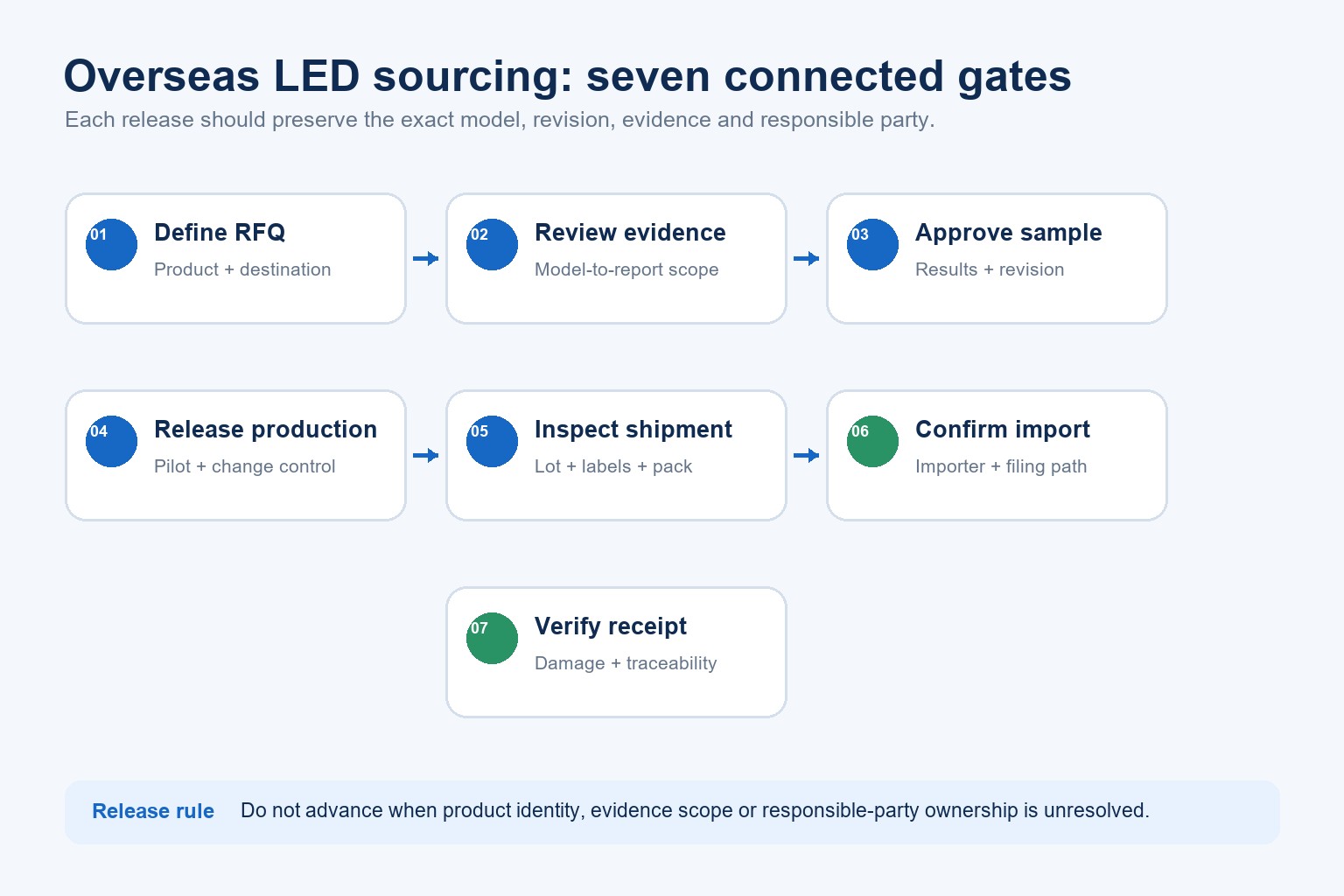
Start With a Sourcing Gate Map
The sequence below prevents an early commercial commitment from outrunning technical and import preparation.
| Gate | Approval question | Minimum record |
|---|---|---|
| RFQ definition | Is the exact product and application clear? | Specification, drawing, architecture and destination |
| Evidence review | Do reports and certificates match the quoted model? | Model-to-evidence matrix and scope notes |
| Sample approval | Does a controlled sample meet the agreed criteria? | Sample ID, results, deviations and approved revision |
| Production release | Can the approved configuration be repeated? | BOM revision, pilot record and change-control agreement |
| Shipment release | Does the finished lot match the approval package? | Inspection, labels, packaging and document reconciliation |
| Import readiness | Are responsible parties and current requirements confirmed? | Importer/broker review and filing instructions |
| Receipt | Did the shipment arrive intact and traceable? | Incoming inspection, lot record and claim evidence |
The gates can overlap, but none should disappear. A low-risk repeat order may use a shorter review than a new private-label program, while the records should still show what was approved and what was shipped.
Define Exactly What Is Being Purchased
Begin with a structured RFQ. Identify whether the order covers LED replacement tubes, tubes with compatible fixtures, retrofit kits, complete LED luminaires, drivers, sensors, emergency components or installation accessories. Separate included items from options.
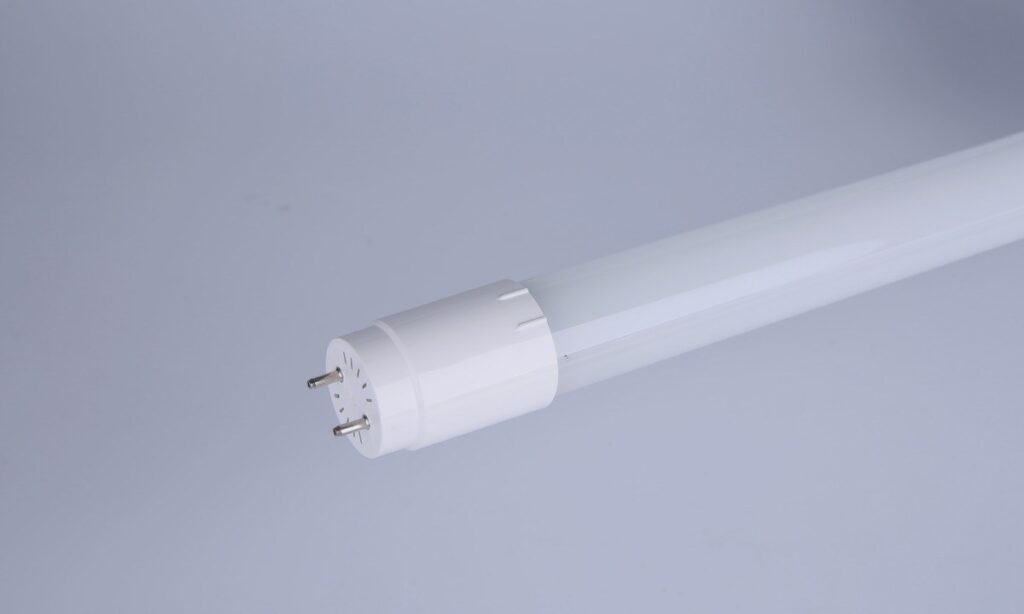
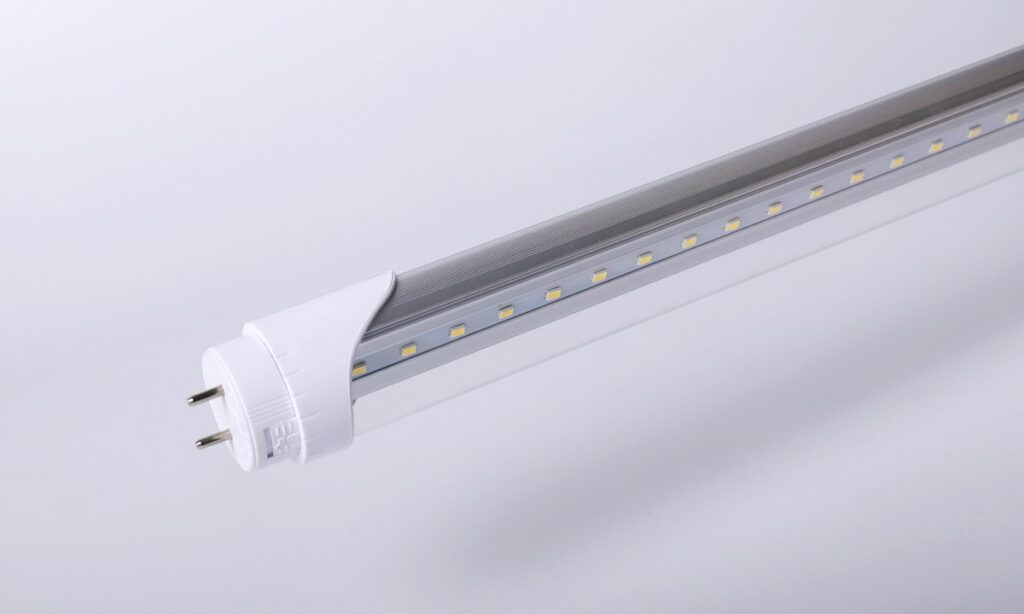
For every quoted product, define the model structure, dimensions, lamp base or connector, electrical architecture, input, output, color characteristics, controls, mounting, environment, required evidence, label and packaging requirements. The New Lights LED tube range can help frame the available product families, but the purchase decision must remain tied to the exact quoted configuration.
For tubular LED retrofits, identify whether the proposed product uses a Type A, Type B, Type C or another architecture. U.S. Department of Energy guidance distinguishes these routes because ballast, wiring, driver and installation boundaries differ. A quotation that says only “T8 LED tube” is not complete enough for approval.
Document the Existing Fixture and Application
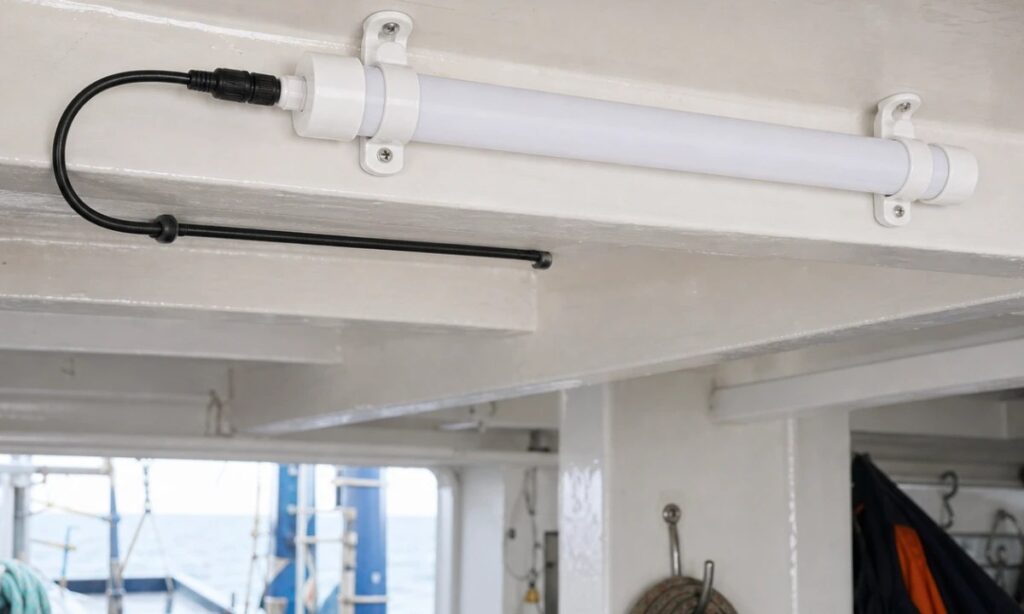
When the products will retrofit an installed system, collect the fixture and ballast model, socket type, lamp dimensions and quantity, input voltage, controls, reflector or lens, emergency arrangement, mounting height, room layout and target tasks.
Type A ballast compatibility cannot be assumed. Bare-lamp output also does not describe complete-fixture performance because fixture optics can trap or redistribute light. Use the LED retrofit options guide to decide whether a replacement lamp, conversion, retrofit kit or new luminaire is the correct project route before placing the overseas order.
For repeated installations, validate representative fixtures and conditions. A sample that works in one easy fixture may not represent older ballasts, different lampholders, emergency circuits, dimming systems or unusual access conditions across the site.
Qualify the Supplier and the Exact Model Separately
Company due diligence asks whether the supplier can support the project. Product approval asks whether the exact model and configuration meet the requirement. One does not replace the other.
Company review can cover legal identity, manufacturing location, process controls, relevant references, production planning and change-management practices. The LED tube supplier evaluation guide provides a deeper model-to-evidence and production-control workflow.
For the product, map each exact model to its datasheet, drawing, photometric information, electrical and safety evidence, compatibility information, installation instructions, label artwork, packaging specification and controlled BOM revision. Check model codes, applicants, factories, report dates and covered variants. A logo or a report for a similar wattage leaves the shipment model’s evidence scope unresolved.
Assign Destination-Market Responsibilities
The buyer should identify the importer, customs broker, responsible certifier, laboratory, freight forwarder and other relevant parties before production release. Their roles depend on the market, product and transaction.
For U.S. imports, Customs and Border Protection describes reasonable care as an importer responsibility. Classification, value, origin, marking, admissibility, duties and records depend on the facts of the entry. No generic article can determine those items for every LED product or shipment.
CPSC eFiling is also conditional. As of July 8, 2026, importers of regulated consumer products subject to CPSC certification requirements must electronically file certificate data, with a later date for applicable Foreign Trade Zone entries. This does not mean every LED tube or commercial luminaire falls under the same CPSC rule. Confirm whether the exact product is in scope and who must issue, maintain and transmit the relevant data.
Use current official guidance and qualified trade or compliance advisers where necessary. Recheck the decision before shipment because classification, filing systems and enforcement instructions can change.
Build a Responsibility Matrix
An Incoterms® rule allocates defined delivery, risk, cost and transport responsibilities, but it does not by itself settle every issue in the sale. ICC guidance recommends stating the chosen rule, named place or port and the `Incoterms® 2020` edition clearly in the contract.
| Responsibility | Buyer/importer decision | Supplier record | Specialist input when needed |
|---|---|---|---|
| Product definition | Approve application and exact configuration | Quotation, drawing and BOM revision | Engineer or installer |
| Compliance scope | Confirm destination rules and responsible party | Model evidence and label files | Laboratory or compliance adviser |
| Import entry | Confirm classification, value, origin and filing path | Accurate product and shipment data | Customs broker |
| Transport | Select term, named place, mode and insurance approach | Export and handover records | Freight forwarder or insurer |
| Inspection | Set acceptance criteria and release authority | Production and lot access | Independent inspector if used |
| Claims | Preserve receipt, damage and shortage evidence | Packing and dispatch records | Carrier, insurer or surveyor |
Write each responsibility into the purchase order or supporting agreement. Avoid vague phrases such as “supplier handles shipping,” because they do not define the named place, risk transfer, import entry, product filings, inspection or claims process.
Control Samples and Payment Milestones
An attractive engineering sample represents one configuration at one point in time. Production consistency requires a staged approval sequence: functional sample, document review, controlled golden sample, pilot lot and then mass-production release.
Test the sample in representative fixtures and controls. Check fit, output, distribution, color, flicker, temperature, markings, packaging and instructions according to the project criteria. Record the sample identity and revision. If a failed sample is rebuilt, document what changed before retesting.
The LED sample evaluation checklist helps keep results tied to the tested configuration. Payment milestones can then correspond to defined events such as specification acceptance, document approval, golden-sample approval, pilot acceptance, production completion, passed inspection and receipt of the required shipping-document package.
The payment structure is a commercial decision, not a universal formula. It should state acceptance criteria, correction steps and what happens when a gate fails.
Define Inspection Before Production Starts
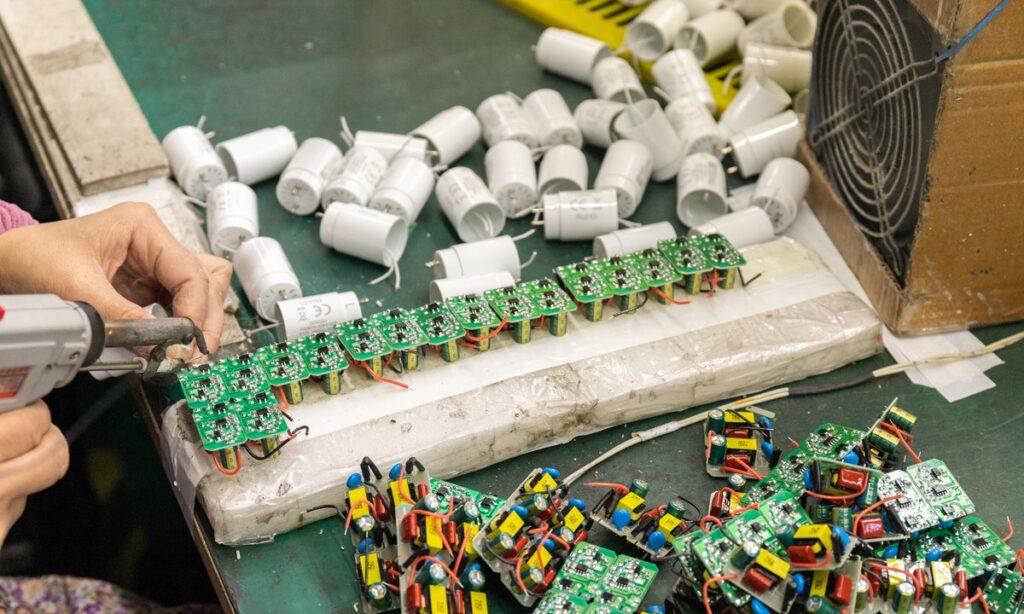
The inspection plan should identify the lot, sampling method, critical/major/minor defect definitions, measurements, test equipment, model and marking checks, appearance and dimensional checks, functional tests, packaging review, accessory count and retest rules.
A final inspection cannot replace product qualification or production control. It can, however, identify shipment-level deviations before release. Inspectors need the approved specification, sample and evidence package; a generic visual check may miss a different driver, wiring configuration, compatibility label or model suffix.
For critical programs, connect inspection findings to corrective action and release authority. A failed result should not be closed by changing the report wording or replacing a few samples without identifying the affected lot and cause.
Engineer Packaging and Shipment Records
LED tubes and linear fixtures can be vulnerable to bending, impact, end-cap damage, pin deformation, abrasion and moisture. Packaging should be designed around the product, distribution route, handling method and customer requirements.

Define unit protection, carton construction, internal supports, pallet pattern, moisture protection, orientation marks, barcode and lot labels, spare parts and any packaging trial or test. Container density should not be optimized at the expense of deformation, carton stability or traceability.
Before dispatch, reconcile the purchase order, inspection result and shipping records. Typical records include the commercial invoice, packing list, transport document, origin documents where applicable, insurance evidence where applicable, inspection report, lot record and carton-label photographs. The export packaging and documentation guide covers this handoff in more detail.
Inspect Receipt and Preserve Traceability
At destination, document the seal or shipment condition, count cartons, photograph visible damage, quarantine uncertain goods and sample-check model, markings, configuration, function and packaging against the approved order.
Record lot numbers and warehouse location so field feedback can be connected to the shipment. Open freight, shortage or quality claims within the applicable contractual and carrier time limits. Repeated issues should trigger containment and root-cause review rather than isolated replacement.
Traceability also supports change control. Require advance notice when an LED package, driver, PCB, insulation, housing, pins, optics, factory, process, label or packaging changes in a way that could affect the approved result. Define which changes require updated documents, samples, testing, certification review or buyer approval.
Overseas LED Sourcing Checklist
- Define the exact product, architecture, application and destination.
- Map every model to current drawings, reports, labels and instructions.
- Confirm importer, broker, filing and compliance responsibilities.
- Validate classification, origin, value and duty treatment for the actual entry.
- State the trade rule, named place and edition in the contract.
- Approve controlled samples and a production-intent pilot where appropriate.
- Link payment and release gates to objective records.
- Complete pre-shipment inspection against the approved configuration.
- Reconcile invoice, packing list, inspection, labels and shipment data.
- Perform incoming inspection and preserve lot traceability.
- Require advance change notification and revalidation rules.
For a destination-specific procurement brief, contact New Lights with the market, importer role, product architecture, fixture context, required evidence, quantity, packaging and delivery terms.
Frequently Asked Questions
Does the overseas supplier handle all import compliance?
No. Responsibilities depend on the market and transaction. The importer and other designated parties must determine and meet their own obligations.
Do all imported LED tubes require CPSC eFiling in the United States?
No. The requirement applies to imported regulated consumer products that are subject to CPSC certification requirements. Product scope must be determined first.
Can the supplier choose the HS classification?
The supplier can provide accurate product facts, but the responsible importer should validate classification using current official guidance and qualified trade support where needed.
Is a pre-production sample enough?
No. A controlled sample is one gate. Production-intent validation, shipment inspection and incoming verification are needed in proportion to project risk.
Which Incoterms® rule is best?
There is no universal best rule. Choose it according to transport capability, control, risk, cost and importer arrangements, and state the named place and edition.
How can buyers prevent component substitutions?
Freeze critical components and revisions, require advance change notification, and define which changes trigger documents, samples, testing or approval.
Editorial Sources
- U.S. Customs and Border Protection, “Importing into the United States”: https://www.cbp.gov/sites/default/files/documents/Importing%20into%20the%20U.S.pdf
- U.S. Consumer Product Safety Commission, “Certificates of Compliance and eFiling”: https://www.cpsc.gov/Business–Manufacturing/Business-Education/Business-Guidance/Certificates
- U.S. Consumer Product Safety Commission, “eFiling Frequently Asked Questions”: https://www.cpsc.gov/FAQ/eFiling-Frequently-Asked-Questions-FAQ
- U.S. Department of Energy, “LED Retrofit Kits, TLEDs, and Lighting Controls”: https://betterbuildingssolutioncenter.energy.gov/sites/default/files/attachments/led_troffer_retrofit_guide.pdf
- International Chamber of Commerce, “How best to incorporate the Incoterms® rules”: https://library.iccwbo.org/clp/clp-incoterms-qa-2020.htm