

A filament LED bulb is still an LED bulb. The main difference is how its light-emitting components are arranged and presented. In this article, “standard LED bulb” means the conventional diffused LED bulb used as the comparison format.
Use a filament LED as the starting point when the bulb is exposed and its visible filament appearance is part of the design. Use a standard LED as the starting point when the light source is hidden or a diffused bulb surface is preferred.
Whichever format fits the visual role, approve the exact model by its lumens, watts, base, voltage, dimensions, dimming compatibility and fixture conditions. Buyers can first review the broader LED bulb families and the LED filament bulb range, then use the criteria below to compare exact models.
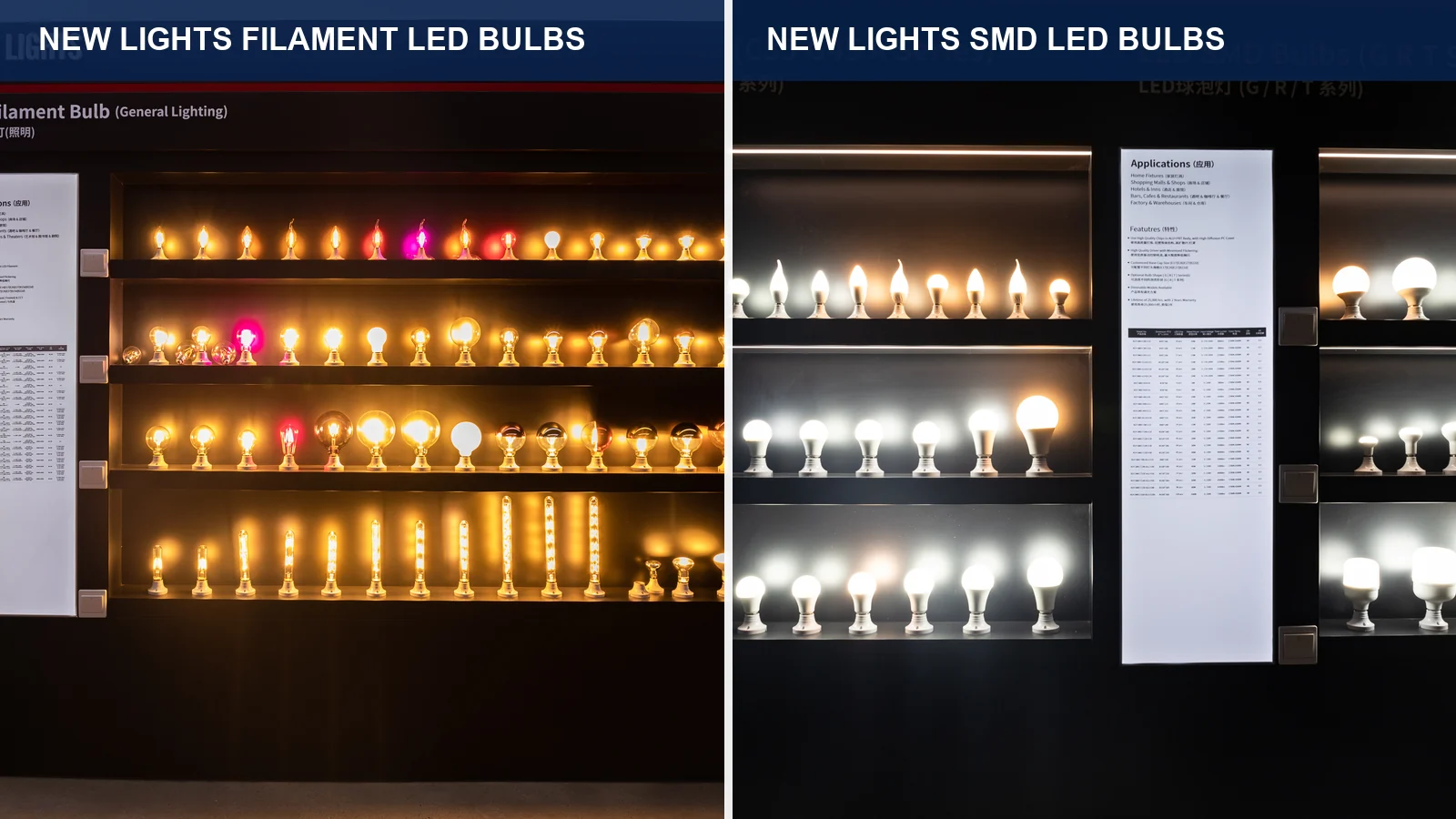
Filament LED and Standard LED at a Glance
| Selection point | Filament LED bulb | Standard LED bulb |
|---|---|---|
| Visible construction | Elongated LED emitters are usually visible through the envelope | LED packages are commonly concealed behind a diffuser |
| Typical visual role | Useful when the bulb itself is part of the fixture's appearance | Useful when a diffused, less exposed light source is preferred |
| Light distribution | Depends on filament position, envelope and fixture | Depends on LED board, diffuser, housing and fixture |
| Heat management | Depends on the filament, gas or envelope design, driver and operating conditions | Depends on the LED board, body, heat path, driver and operating conditions |
| Dimming | Only when the model is specified as dimmable and compatible with the intended dimmer | The same compatibility check is required |
| Enclosed fixtures | Use only when the product is rated for that application | Use only when the product is rated for that application |
| Best comparison method | Compare model-level lumens, watts, color, CRI, life and compatibility | Compare the same model-level information |
The Construction Difference
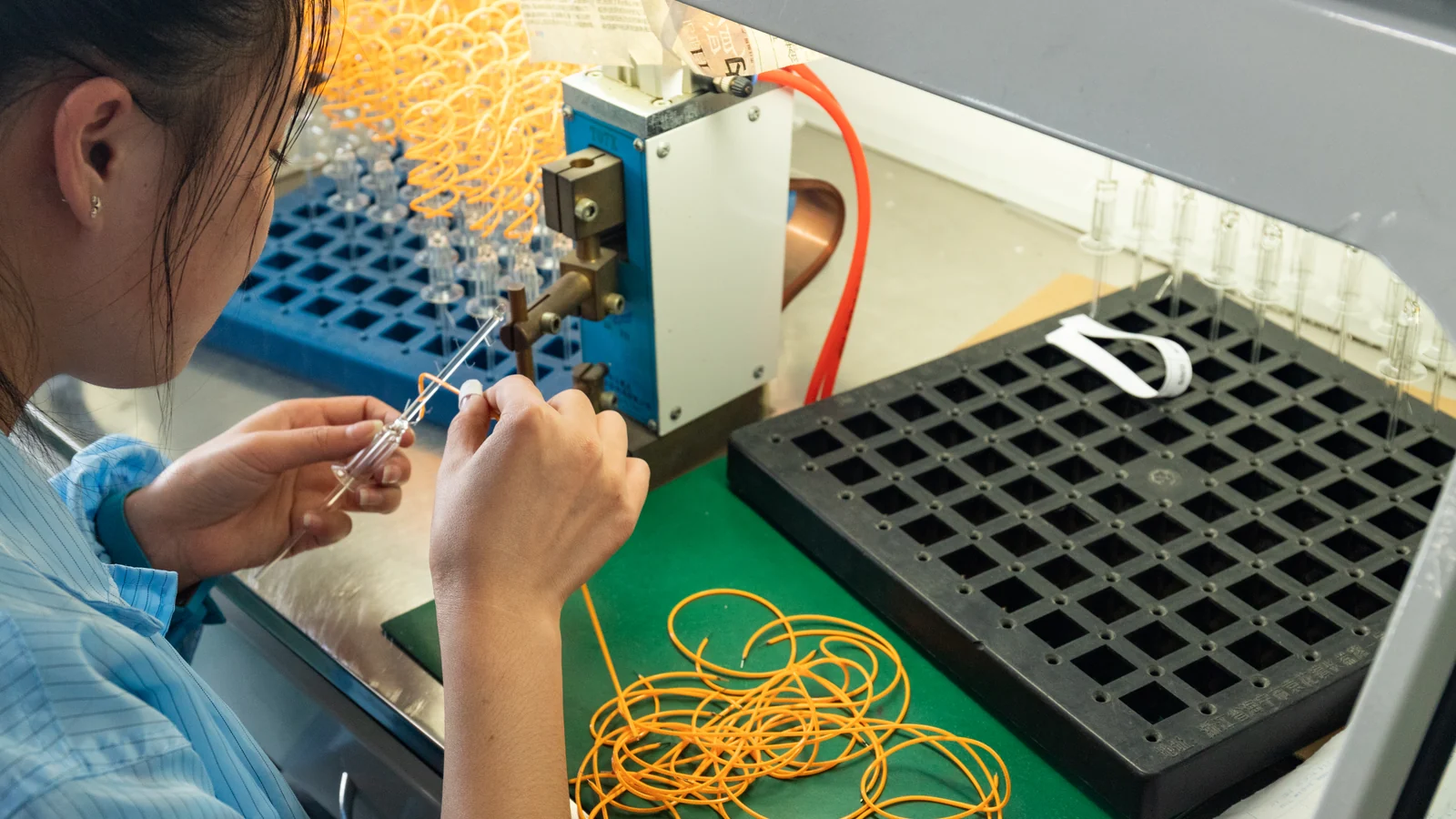
An LED filament is an elongated LED light-emitting element. A 2025 Dalton Transactions study that included filament LEDs separately examined components such as LED chips and phosphor-containing material. The exact substrate, encapsulation and internal assembly vary by product. Several elongated emitters can be arranged inside a clear or coated envelope to recall the visible structure of a traditional incandescent bulb, although LEDs produce the light instead of a heated tungsten wire.
A common standard LED design places LED packages on a board behind a diffuser, with the driver and heat-dissipation structure concentrated in the base or body. Component placement varies by product, while the diffuser, LED spacing and optical design determine how clearly individual LED points remain visible.
For buyers, the practical question is not simply which construction is newer. It is whether the lamp's appearance, dimensions, light distribution and electrical design suit the intended fixture.
Appearance and Light Distribution
Filament LED bulbs are often considered for pendants, chandeliers, wall lights and table lamps where the bulb remains visible. Clear glass can make the internal filaments a prominent part of the design. Frosted, tinted and shaped envelopes can change that effect.
Standard LED bulbs usually place a diffuser between the LEDs and the viewer. This can be useful when the goal is to make the emitting points less visible or when the bulb sits inside a shade or functional fixture.
Neither label guarantees a particular beam angle or uniformity. A filament arrangement may distribute light broadly around the bulb, but the base can still block part of the output. A standard LED lamp may be designed for broad or directional distribution depending on its board, diffuser and housing. Buyers should use the model's photometric information when distribution matters to the project.
Do Filament LED Bulbs Produce Less Heat?
There is no reliable blanket answer for every filament and conventional LED bulb.
Both formats convert part of their electrical input into heat. Their temperatures are influenced by power, efficacy, driver design, component layout, envelope, ambient temperature, mounting position and the fixture around the lamp. The place where heat is concentrated can also differ, so touching one part of two lamps is not a valid performance comparison.
Fixture conditions matter. U.S. Department of Energy purchasing guidance notes that fully enclosed fixtures trap heat and that this buildup can affect the performance and life expectancy of certain LED products. A bulb should therefore be used in an enclosed fixture only when its packaging or technical specification permits it.
If heat is a project concern, compare the intended models under the same operating conditions. Do not infer suitability from the words “filament LED” or “standard LED” alone.
Efficiency and Rated Life Are Model-Specific
Both products use LED technology, but the format name does not determine the final efficacy or rated life. Chip selection, drive current, optical losses, thermal conditions and component quality all contribute to the result.
Start with lumens and watts. FTC consumer guidance distinguishes lumens as a measure of brightness from watts as a measure of energy use. Comparing wattage alone can therefore lead to the wrong conclusion.
For covered products in the US, the FTC Lighting Facts guidance identifies model-level fields such as brightness, estimated energy cost, life, light appearance and energy use. For a commercial sourcing decision, the supplier's model-level datasheet and test evidence should perform the same comparison role. Use values that apply to the exact voltage, base, color temperature and configuration being quoted.
Rated life is also conditional. A published rating does not mean every lamp will operate for exactly that number of hours in every fixture. Operating temperature and fixture conditions can affect real-world service. If lifetime is important to a project, request the rating basis and verify that the intended fixture conditions are within the product's stated limits.
Light Appearance: Check More Than the Bulb Style
A visible filament can create a particular decorative character, but bulb style alone does not define light quality. Compare at least the following:
- Correlated color temperature, which describes whether the light appears warmer or cooler.
- Color rendering information, including CRI when it is relevant to the application.
- Clear, frosted, tinted or coated glass.
- Lumen output and distribution.
- Visible glare when the bulb is in the viewer's line of sight.
- Color consistency across samples and production batches.
Warm-looking filament products are common, but not every filament lamp has the same color temperature or rendering performance. The same is true of conventional LED bulbs. Use the actual specification and, for appearance-sensitive projects, review a physical sample in the intended fixture.
Dimming and Electrical Compatibility
“Dimmable” is a model feature, not a property shared by every LED bulb.
Even when a lamp is marked dimmable, its behavior depends on the dimmer, driver and electrical conditions. DOE purchasing guidance therefore recommends checking compatibility with the intended dimming system. Review the lamp manufacturer's compatibility information and test the proposed lamp-dimmer combination before approving a project quantity.
The same caution applies to voltage and base. Confirm:
- Supply voltage and frequency.
- Lamp base and socket.
- Dimmable or non-dimmable configuration.
- Dimmer type and tested compatibility.
- Minimum and maximum load conditions where applicable.
- Physical clearance inside the fixture.
Replacing an Incandescent Bulb
An LED filament bulb can reproduce the visible-bulb character of an incandescent lamp without using a heated tungsten filament as the light source. That visual similarity does not make every filament LED a direct replacement for every incandescent bulb.
Select a replacement by lumen output rather than by wattage alone. Then verify the base, voltage, dimensions, envelope shape, color temperature, dimming requirement and fixture rating. If the bulb will be enclosed, installed base-up, or used in a fixture with limited ventilation, confirm that the LED model is approved for those conditions.
Use lumens to compare brightness and treat the fixture's maximum wattage as a limit rather than a brightness target. Staying below that wattage does not remove the need to check physical fit, enclosed-fixture suitability or dimmer compatibility.
Which Type Should You Choose?
Choose by application and specification rather than by assuming one construction is better.
Consider a Filament LED When
- The bulb is exposed and its internal appearance is part of the fixture design.
- A clear or decorative envelope is required.
- The project needs a traditional bulb silhouette with LED technology.
- The selected model meets the required output, color, dimming and fixture conditions.
Consider a Standard LED Bulb When
- The light source is hidden by a shade or fixture.
- A diffused bulb surface is preferred.
- The required output or physical configuration is better supported by a standard LED model.
- The selected lamp has the necessary fixture, dimming and environmental ratings.
These are selection tendencies, not absolute rules. Either format can be unsuitable if the individual model does not meet the project's electrical, optical or thermal requirements.
A Buyer's Comparison Checklist
Before approving a filament or standard LED bulb, compare the same fields for both candidates:
- Bulb shape and exact dimensions.
- Base type, voltage and frequency.
- Initial lumens and input watts.
- Color temperature and color rendering data.
- Clear, frosted, tinted or coated envelope.
- Dimmable status and dimmer compatibility.
- Enclosed-fixture and mounting-position limits.
- Rated life and the conditions behind that rating.
- Required certifications for the destination market and exact model.
- Sample appearance and operation in the intended fixture.
For OEM or distribution projects, record these requirements before requesting a quotation. It prevents a decorative preference from being mistaken for a complete technical specification.
Frequently Asked Questions
Is a filament LED bulb the same as an incandescent filament bulb?
No. A filament LED uses LED emitters arranged to create a visible filament-like structure. An incandescent bulb produces light by heating a metal filament. Similar appearance does not mean the two lamps use the same light-generating technology.
Are filament LED bulbs more energy-efficient than standard LED bulbs?
Not as a universal rule. Compare lumens and watts for the exact models. The construction label alone is not enough to determine efficacy.
Do filament LED bulbs last longer?
Rated life is model-specific. Driver design, component temperature, operating conditions and fixture type can all affect service life. Compare published ratings and their test conditions rather than assuming one format always lasts longer.
Can a filament LED bulb be used in an enclosed fixture?
Only if the exact product is rated for that use. Enclosed fixtures can trap heat, which may affect LED performance and life.
Are all filament LED bulbs dimmable?
No. Check that the exact model is marked dimmable and that it is compatible with the intended dimming system.
Is filament LED better for decorative lighting?
It is often useful when the visible bulb and filament appearance are part of the design. Final selection should still account for glare, output, color, dimensions, dimming and fixture conditions.
Prepare the Specification Before Requesting Samples
For a project comparison, send the target bulb shape, base, voltage, lumen output, color temperature, glass finish, dimming system, fixture type and destination-market requirements when you contact New Lights. Our team can match the requested configuration to available bulb options and identify any points that need sample or engineering confirmation.
Do not approve a large quantity from a visual reference alone. A sample tested in the intended fixture is the clearest way to confirm appearance, fit and operating behavior before production.
Editorial Sources
- U.S. Federal Trade Commission, “Shopping for Light Bulbs”
- U.S. Federal Trade Commission, “The FTC ‘Lighting Facts’ Label: Questions and Answers for Manufacturers”
- U.S. Department of Energy FEMP, “Purchasing Energy-Efficient Light Bulbs”
- Dalton Transactions (2025), “Advanced approach for phosphor recovery and characterization of LED components”